Yes, lab-grown diamonds get IGI certified — the International Gemological Institute issues a dedicated Laboratory Grown Diamond Report and grades the stone on the same 4Cs scale used for natural diamonds. What most buyers miss: that report is a different document from a natural diamond's IGI report, and the two aren't interchangeable when it comes to insurance, resale, or matching set paperwork.
- IGI certifies lab-grown diamonds through a dedicated Laboratory Grown Diamond Report, using the same 4Cs standard as natural stones.
- The report and the girdle inscription both state "laboratory grown" — IGI never certifies a grown stone as natural.
- An IGI lab-grown report and an IGI natural diamond report look different and serve different purposes for insurance and resale.
- Anyone asking do lab grown diamonds get igi certified in 2026 should check the report number on IGI's own verification tool before paying.
Why this matters
Lab-grown diamond jewellery moved from niche to mainstream in Indian bridal and gifting purchases through 2026, and IGI certification is the paperwork most buyers lean on to confirm what they're actually buying. Confusion still shows up at the counter: some shoppers assume a lab-grown stone can't carry the same lab's name as a natural one, or that an IGI report automatically means "natural." Neither is true.
Shoppers weighing whether lab-grown diamond jewellery is worth it usually start here, because certification is the first trust signal they check before price or design. IGI certifies lab-grown diamonds on the same grading standards it applies to natural stones, but it flags origin clearly on every document it issues. Auram Jewellery, like most Indian jewellers now stocking lab-grown diamond jewellery, only ships stones that carry this paperwork.
Do lab-grown diamonds get IGI certified?
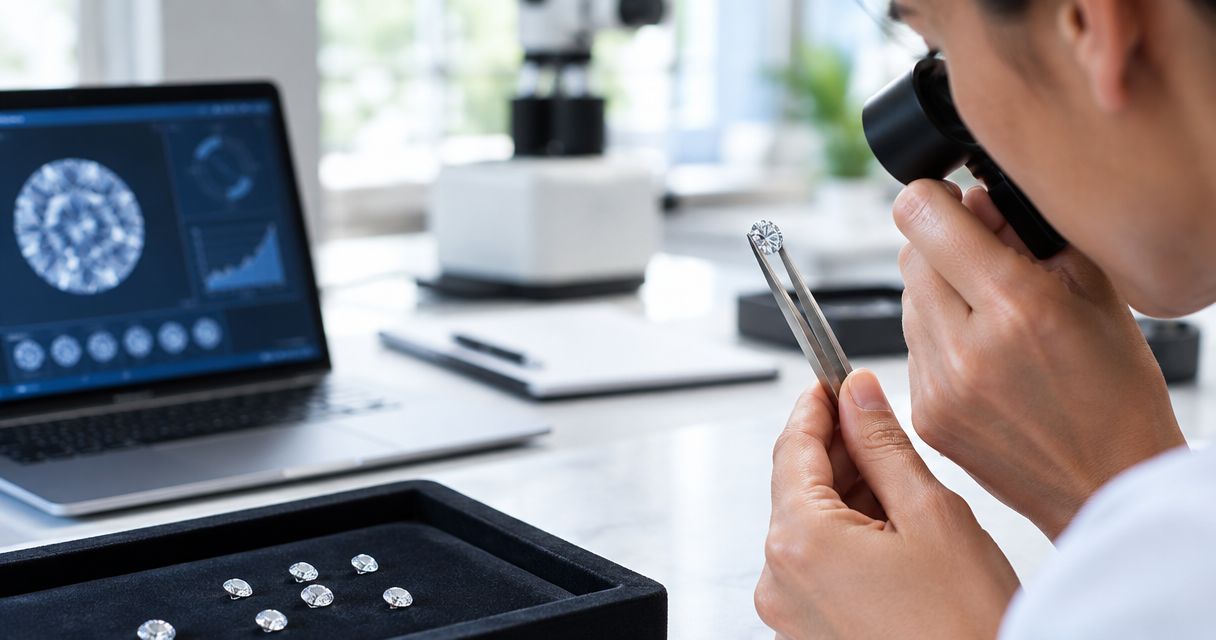
IGI has certified lab-grown diamonds through a report line that runs the same grading process — carat weight, color, clarity, and cut — that it applies to natural stones. The report isn't a downgraded or "lite" version of a natural diamond certificate; it's a full grading document, just clearly headed as a lab-grown report instead of a natural diamond report. This distinction is standard trade practice across labs in 2026, not something specific to IGI.
| Feature | IGI Natural Diamond Report | IGI Laboratory Grown Diamond Report |
|---|---|---|
| Report title | "Diamond Report" | "Laboratory Grown Diamond Report" |
| 4Cs grading | Yes | Yes |
| Origin stated on document | Natural | Laboratory grown |
| Girdle inscription | Report number (optional) | Report number plus "Lab Grown" (standard) |
| Typical use case | Heirloom and investment-grade pieces | Budget-conscious bridal and everyday diamond jewellery |
The header line is the fastest way to tell the two apart at a glance — everything else on the document can look nearly identical.
What an IGI Laboratory Grown Diamond Report includes
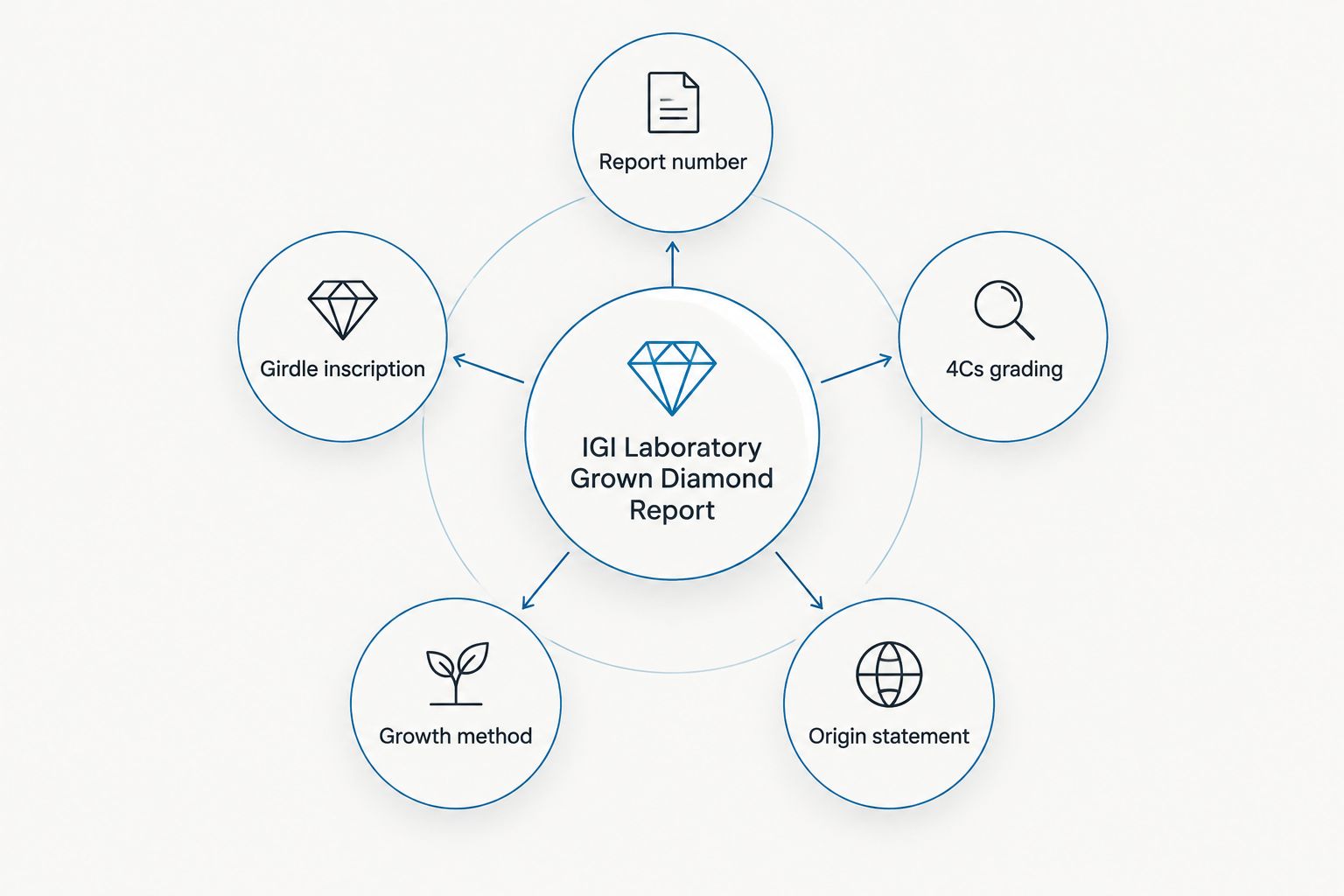
An IGI lab-grown report typically covers:
- Report number matching the laser inscription on the stone's girdle
- Shape and measurements
- Carat weight, color grade, clarity grade, and cut grade
- Growth method (CVD or HPHT), when determinable
- Any post-growth treatment applied to the stone
- The words "Laboratory Grown" printed clearly on the document header
Auram Jewellery's diamond pieces, including lab-grown stones, carry IGI certification as standard — the report ships with the piece rather than as an optional add-on. Before paying for any lab-grown stone anywhere, match the report number on paper against IGI's own database; the how to check your diamond's IGI certificate number walkthrough covers the exact steps.
Why lab-grown and natural IGI reports still get confused
The confusion isn't about IGI's accuracy — it's about how the paperwork gets handled after it leaves the lab:
- Both report types share the same laboratory name and grading scale, so the header line is the only visual cue at a glance
- Some resellers fail to disclose origin when a lab-grown stone changes hands outside a jeweller's dedicated lab-grown line
- Older lab-grown stones bought before the report line was widely adopted may carry no certification at all
- Buyers assume "IGI certified" always means natural, since that was the more familiar use of the term for years
- Online listings sometimes crop or blur the report header when photographing the certificate
- Insurance and resale forms often ask "IGI certified: yes/no" without asking which report type, which pushes the confusion downstream
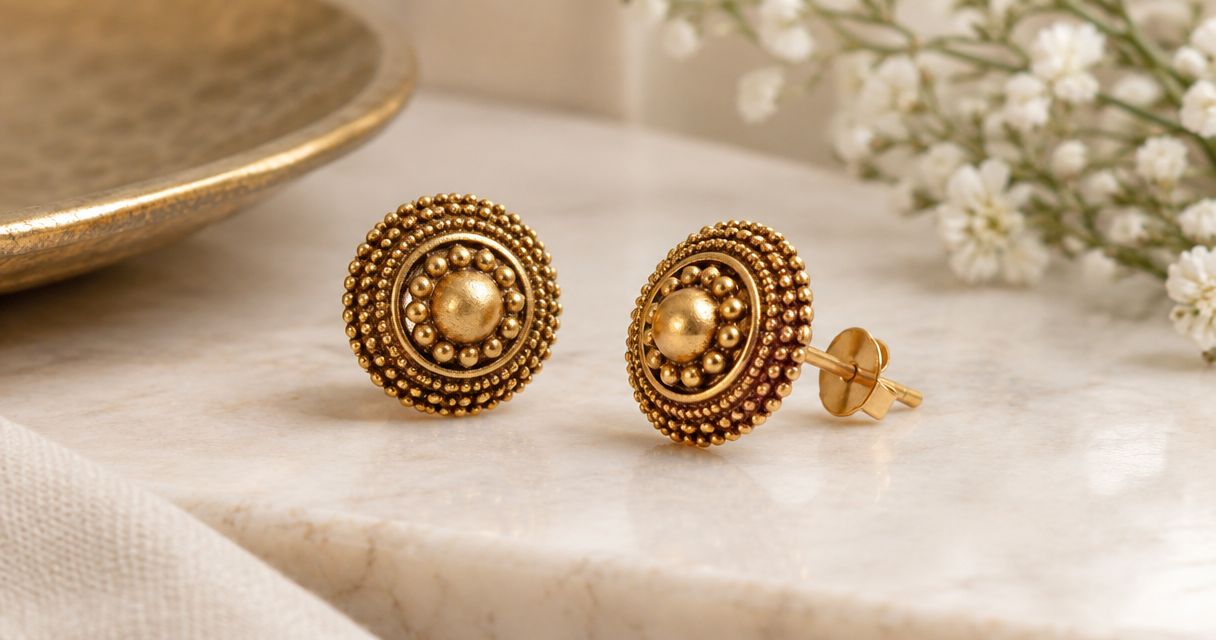
A piece like a lab-grown diamond earring set should always come with its report attached before it leaves the store — asking to see it upfront closes most of this confusion in one step.
Related questions
Is an IGI-certified lab-grown diamond as trustworthy as a natural one?
Yes, an IGI-certified lab-grown diamond is exactly as trustworthy as a natural one for the claims the report actually makes: carat, color, clarity, and cut. What the report doesn't claim is that the stone is natural, and treating the two report types as identical is the real buyer risk, not the certification's accuracy.
Can IGI tell a lab-grown diamond apart from a natural diamond?
Yes, IGI's labs use specialized equipment to determine growth origin before issuing either report type, which is exactly why lab-grown stones get their own report line instead of being folded into natural diamond certificates. This determination happens before grading begins, not after.
Do lab-grown diamonds hold resale value the way IGI-certified natural diamonds do?
No, lab-grown diamonds typically resell for less than natural diamonds of comparable size and grade, even when both carry IGI certification. Supply of lab-grown stones isn't capped by geology the way natural diamond supply is, and that keeps resale prices softer regardless of paperwork.
If you're evaluating a lab-grown diamond piece from Auram Jewellery or anywhere else, ask for the report before committing to a design — not after the piece is already mounted.
Considering a certified lab-grown diamond piece?
Review IGI-certified diamond ring options before you commission a design.
FAQ
Do lab grown diamonds get IGI certified?
Yes, IGI certifies lab-grown diamonds through a dedicated Laboratory Grown Diamond Report graded on the same 4Cs scale as natural stones. The document clearly states "laboratory grown" rather than leaving origin ambiguous.
Is an IGI lab-grown diamond report the same as an IGI natural diamond report?
No, the two are separate documents with different headers, even though both use IGI's 4Cs grading process. Checking the header line is the fastest way to tell which one you're holding.
Does a lab-grown diamond get laser inscribed?
Yes, IGI's standard practice for lab-grown stones includes a laser inscription on the girdle showing the report number plus "Lab Grown." This matches the wording used on the certificate itself.
Can a jeweller sell a lab-grown diamond as natural if it has an IGI report?
No, an authentic IGI Laboratory Grown Diamond Report states the origin plainly, so misrepresenting a certified lab-grown stone as natural means ignoring what the paperwork already says.
Is IGI certification enough proof that a diamond is lab-grown and not natural?
Yes, an authentic IGI Laboratory Grown Diamond Report is sufficient proof, provided the report number on the document matches the inscription on the stone and verifies on IGI's own database.
Do lab-grown diamonds hold value the way IGI-certified natural diamonds do?
No, lab-grown diamonds generally resell for less than comparable natural diamonds even with matching IGI certification, since lab-grown supply isn't limited by geology.
How do you check a lab-grown diamond's IGI certificate number?
Match the number laser-inscribed on the stone's girdle against the number printed on the report, then confirm both against IGI's own online verification tool before paying.
One last thing
The report number is the only field IGI controls end-to-end — QR codes on a store's marketing card can be reprinted, but the number on IGI's own verification portal can't. In 2026, that single check, done before you pay rather than after, is worth more than any assurance a salesperson can offer across the counter.