Buying a diamond on the strength of "IGI certified" alone is how a lot of buyers end up with a report that doesn't match the stone in the box. Instead of taking a jeweler's word for it, pull up the IGI verification portal, match the report number printed on the certificate against the number laser-inscribed on the stone's girdle, and confirm every carat, clarity and colour field before you pay.
- IGI certificate verification takes under 2 minutes on IGI's own report-check portal at igi.org.
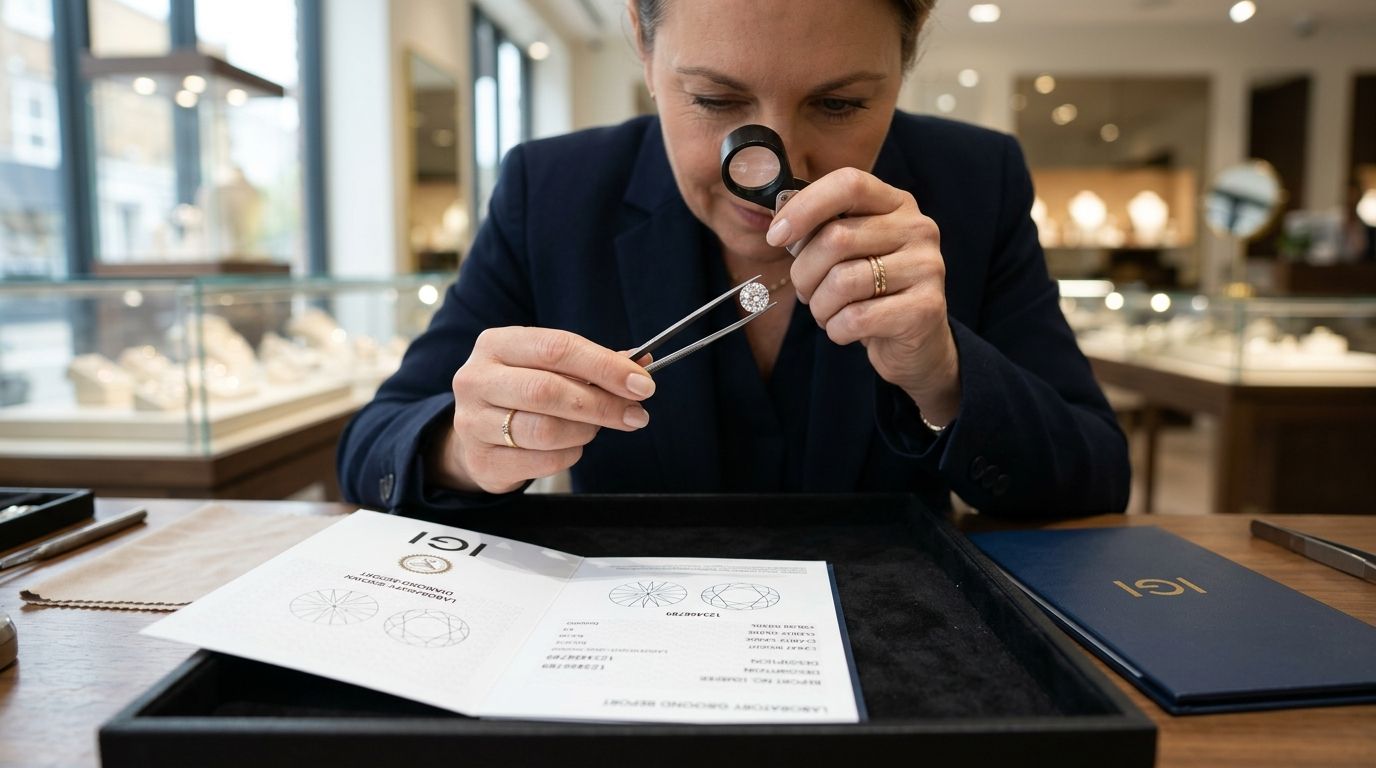
- Match the report number on the paper certificate against the laser inscription on the diamond's girdle under 10x magnification.
- Auram Jewellery issues IGI-certified diamond jewellery with the report number printed on both the invoice and the certificate.
- A mismatch in carat, colour or clarity between the certificate and the physical stone is grounds to walk away, not negotiate.
- Verify before you pay a deposit, not after delivery - refunds on certified stones are harder to argue post-sale.
Why this matters
An IGI certificate is only worth something if the report number on it actually resolves to the stone in your hand. Certificate numbers get typed wrong on invoices, photocopies get passed off as originals, and in rarer cases a low-grade stone gets paired with a certificate meant for something better. The report number is the single data point that lets you check any of that in under two minutes, for free, using IGI's own database.
This is not paranoia aimed at any one jeweler. IGI-certified diamond jewellery moves through several hands between the lab and the showroom case - the cutter, the setter, the retailer - and every handoff is a chance for a paperwork error. Auram Jewellery ships IGI-certified diamond jewellery with the report number matching both the physical certificate and the sales invoice, and that is exactly the standard you should hold any jeweler to in 2026, including this one.
Before you start
- Get the actual report number, not just an "IGI certified" line on a tag. It is an alphanumeric code printed on the certificate, usually near the top under "Report Number" or "IGI Report No."
- Bring a 10x loupe or ask the jeweler for one. You need it to read the laser inscription on the girdle, which is too small to see with the naked eye.
- The gotcha: a report number that returns a valid result on IGI's site does not automatically mean it belongs to the stone in front of you. The database confirms the report exists and shows its recorded specs. It does not confirm which physical diamond you are holding. That link only happens when the inscribed number on the stone matches the number on the paper.
Set up your verification check
Locate the report number on your certificate
- Find the printed IGI Report Number field on the certificate. It sits near the top, below the IGI logo and above the shape and measurements section.
- Note it exactly as printed, including any prefix letters. Report numbers are exact strings, not approximations.
- Cross-check that the same number appears on your invoice or purchase receipt in the item description. If the invoice shows a different number than the certificate, stop and ask why before going further.
Expected result: you have one confirmed report number that appears identically on both the certificate and the invoice.
Verify on IGI's report-check portal
- Go to IGI's official verification page - search "IGI report check" or type igi.org directly. Never use a link a seller sends you.
- Enter the report number into the Report Number field exactly as it appears on your certificate.
- Click Verify.
- Compare the results screen against your physical certificate: shape, carat weight, colour grade, clarity grade, cut grade and measurements should match line for line.
Expected result: the portal returns a report summary matching your certificate's stated specs. If it returns no record, the certificate is fake, altered, or the number was mistyped. Do not proceed assuming it is a glitch on IGI's end.
Cross-check the laser inscription against the stone
- Ask the jeweler for a loupe at 10x minimum, or a jeweler's microscope.
- Locate the girdle - the thin band around the widest part of the diamond, between the crown and the pavilion.
- Look for a laser-inscribed number, often prefixed with IGI followed by the report number.
- Match this inscribed number, digit for digit, against the report number on your paper certificate.
Expected result: the inscription matches the certificate number exactly. This is the step that proves the certificate belongs to the diamond you are buying, not merely that the certificate itself is real.
Match the stated specs to the physical stone
- Ask the jeweler to weigh the stone in front of you on a certified scale and compare it against the carat weight on the certificate.
- Check the stated measurements in millimetres against a caliper reading if the jeweler has one.
- Confirm the clarity characteristics shown in the certificate's plotting diagram - inclusions and their positions - are visible under the loupe in roughly the same spots.
Expected result: weight, measurements and clarity plot all line up. A large gap in carat weight is a red flag, not a rounding issue.
Verifying a certificate for an online purchase
When you buy diamond jewellery online instead of in a showroom, run the same IGI report-check portal search before checkout using the report number shown in the listing or supplied on request. Ask specifically for a photo of the laser inscription under magnification. A serious seller of IGI-certified diamond jewellery has this on file and sends it without pushback. If a seller cannot produce an inscription photo or hedges on the report number, treat that as a decision point, not a follow-up for later.
| Certification lab | Known for | Best for |
|---|---|---|
| IGI (International Gemological Institute) | Grading both natural and lab-grown diamonds, widely used in Indian retail | Best for most retail and bridal diamond purchases in 2026 - fast, verifiable reports on both stone types |
| GIA (Gemological Institute of America) | Stricter grading reputation, primarily natural diamonds | Buyers who want the most conservative grading on a natural stone |
| HRD (Hoge Raad voor Diamant) | European-based grading, common on imported stones | Buyers dealing with diamonds sourced through European supply chains |
“A report number that checks out on IGI's site only proves the paperwork is real - the laser inscription is what proves it belongs to your stone.”
Troubleshooting
- The portal returns no record. Retype the number carefully - the most common misread is the letter O against the digit 0. If it still fails, the certificate is not verifiable and the purchase should not proceed on its strength.
- The inscription is too faint to read. Ask for a jeweler's microscope instead of a loupe. Do not accept "trust the certificate" as a substitute for seeing the inscription.
- The invoice number and certificate number do not match. This does happen as a clerical error, but correcting it in writing is the jeweler's job, before you pay.
- The certificate carat weight is higher than the scale reading. That is the clearest sign of a substituted stone. Decline the purchase.
- An online seller will not send an inscription photo. Request it in writing before final payment. A seller unwilling to provide it on an IGI-certified diamond jewellery listing is not one to buy from.
Customize your verification routine
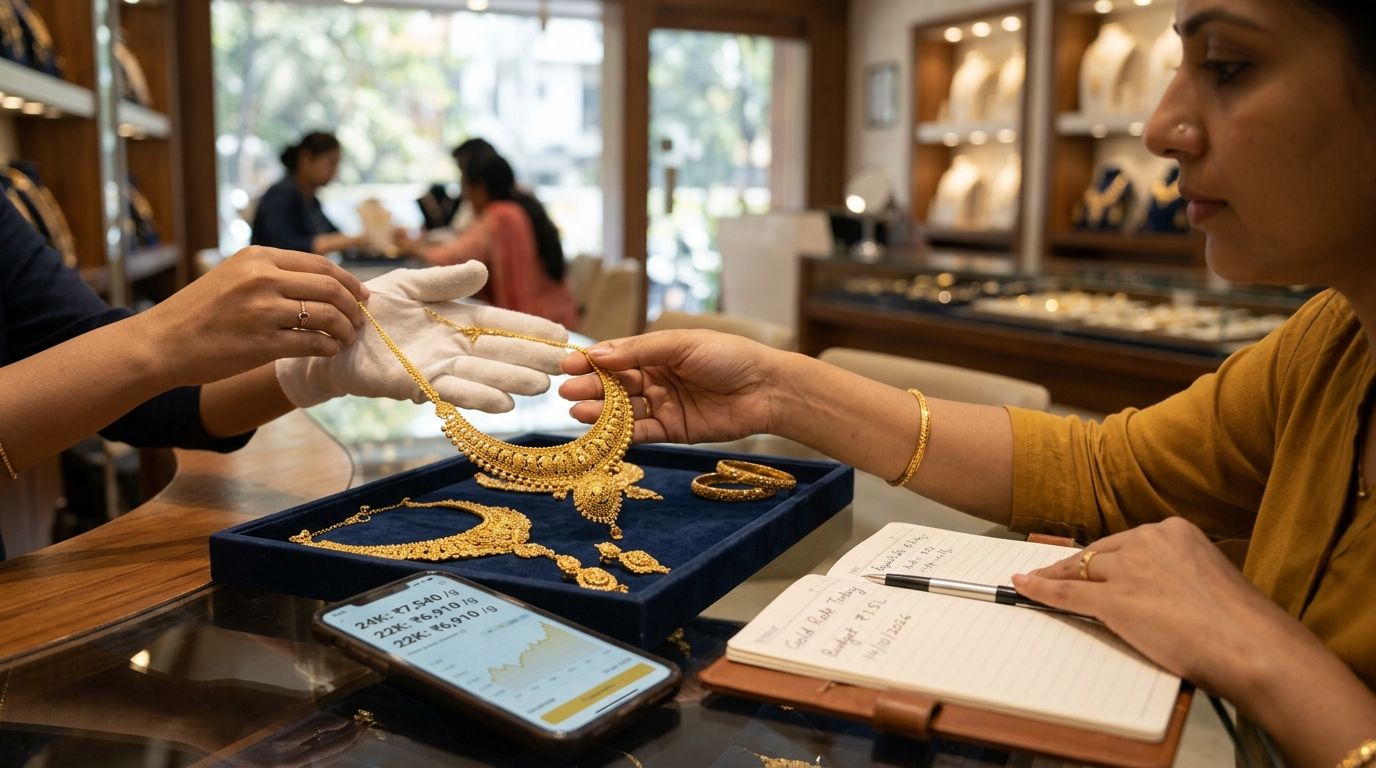
Once report-number verification is routine, extend the same discipline to the metal. A diamond can be perfectly certified while the gold setting around it is unverified. Checking BIS hallmarked gold jewellery works the same way - a HUID number you look up independently of anything the seller tells you. On a large purchase such as diamond engagement rings, run both checks before the deposit clears, not after the piece ships.
Auram Jewellery's current collections show IGI-certified diamond and BIS hallmarked gold pieces together, which is a useful reference point for what the paperwork should look like alongside the product.
Shop IGI-certified diamond jewellery
Handcrafted pieces with verifiable report numbers and inscriptions.
FAQ
How do I verify an IGI certificate number?
Enter the report number exactly as printed on your certificate into IGI's official report-check portal at igi.org and compare the returned specs against the paper certificate. Then match that same number against the laser inscription on the diamond's girdle to confirm the certificate belongs to that specific stone.
Is IGI certification as reliable as GIA?
IGI and GIA both grade diamonds against accepted 4Cs standards, though GIA carries a reputation for stricter natural-diamond grading while IGI is widely used for both natural and lab-grown stones. Either report is only as useful as your own verification of the report number.
What does it mean if the IGI portal shows no record for my certificate?
It means the report number does not exist in IGI's database, was mistyped, or the certificate is not genuine. Do not proceed with the purchase until the jeweler resolves the discrepancy in writing.
Can a laser inscription be faked?
Genuine laser inscriptions are etched at microscopic scale by the certifying lab and are hard to replicate convincingly. If the marking looks scratched or uneven under a loupe, ask a second jeweler to inspect it before buying.
Does Auram Jewellery provide IGI certificates with its diamond jewellery?
Auram Jewellery sells IGI-certified diamond jewellery with the report number shown on both the certificate and the invoice, alongside BIS hallmarking on the gold setting. Ask for the inscription photo the same way you would with any seller.
How much does IGI certificate verification cost?
Checking a report number on IGI's official portal is free. There is no fee to verify a certificate before or after a purchase, and no jeweler needs to be involved for you to run the check.
What is the difference between a lab-grown and natural diamond IGI certificate?
IGI certificates state the origin of the stone explicitly on the report. The 4Cs are graded the same way regardless of origin, but the document always discloses which type of diamond it covers.
Should I verify the certificate before or after buying diamond jewellery online?
Verify before you pay. Ask for the report number and an inscription photo during the buying process, since returns on certified stones are far harder to negotiate once the sale has closed.
One last thing
Most buyers stop after the portal check and skip the girdle inscription entirely. That second step is the one that ties the paperwork to the stone in your hand, and it costs thirty seconds with a loupe. Run both on every IGI-certified diamond jewellery purchase in 2026, however established the jeweler looks.