Lab-grown diamond earrings in 2026 carry the same hardness, fire, and IGI certification as mined stones, so the real decision isn't lab versus mined — it's which earring shape actually earns a place on your ear on a regular Tuesday versus a wedding morning.
- Solitaire lab-grown diamond studs top this list as the best lab-grown diamond earrings for everyday wear in 2026.
- Halo-set lab-grown diamond studs deliver a bigger face-up look without a bigger center stone.
- Lab-grown diamond jhumka-style earrings suit Bengali and North Indian bridal functions in 2026.
- IGI certification with a traceable report matters more than brand name when you compare lab-grown diamond earrings.
- Cluster-set lab-grown diamond earrings give the fullest diamond coverage for a set budget.
Why This Matters
Lab-grown diamonds are graded on the same 4Cs scale as mined stones, and IGI issues certification reports for both — the report is what actually protects you, not the origin story. Auram Jewellery works this from the bespoke side: a commission starts with the wearer's face shape and the occasion, and the stone gets matched to that brief rather than the other way round.
That order matters more for earrings than for any other diamond piece. Earrings sit closest to the face and get judged at conversation distance, not across a room, so a poorly matched setting shows up faster than it would on a ring or pendant. Cut quality decides how much of that carat weight actually shows up as sparkle — a well-cut smaller lab-grown diamond throws more light than a poorly cut bigger one, and that's true in 2026 exactly as it was a decade ago.
What Makes the Best Lab-Grown Diamond Earrings
- Cut over carat — a well-graded cut reflects more light than raw stone size
- IGI certification with a traceable report number, ideally laser-inscribed on the girdle
- Hallmarked or sterling setting metal — BIS-marked 18KT or 22KT gold, or sterling silver
- Prong or bezel security matched to how often the piece actually gets worn
- Honest face-up size versus real carat weight, especially in halo and cluster settings
- Fit for the occasion — a daily stud and a bridal jhumka are not interchangeable purchases
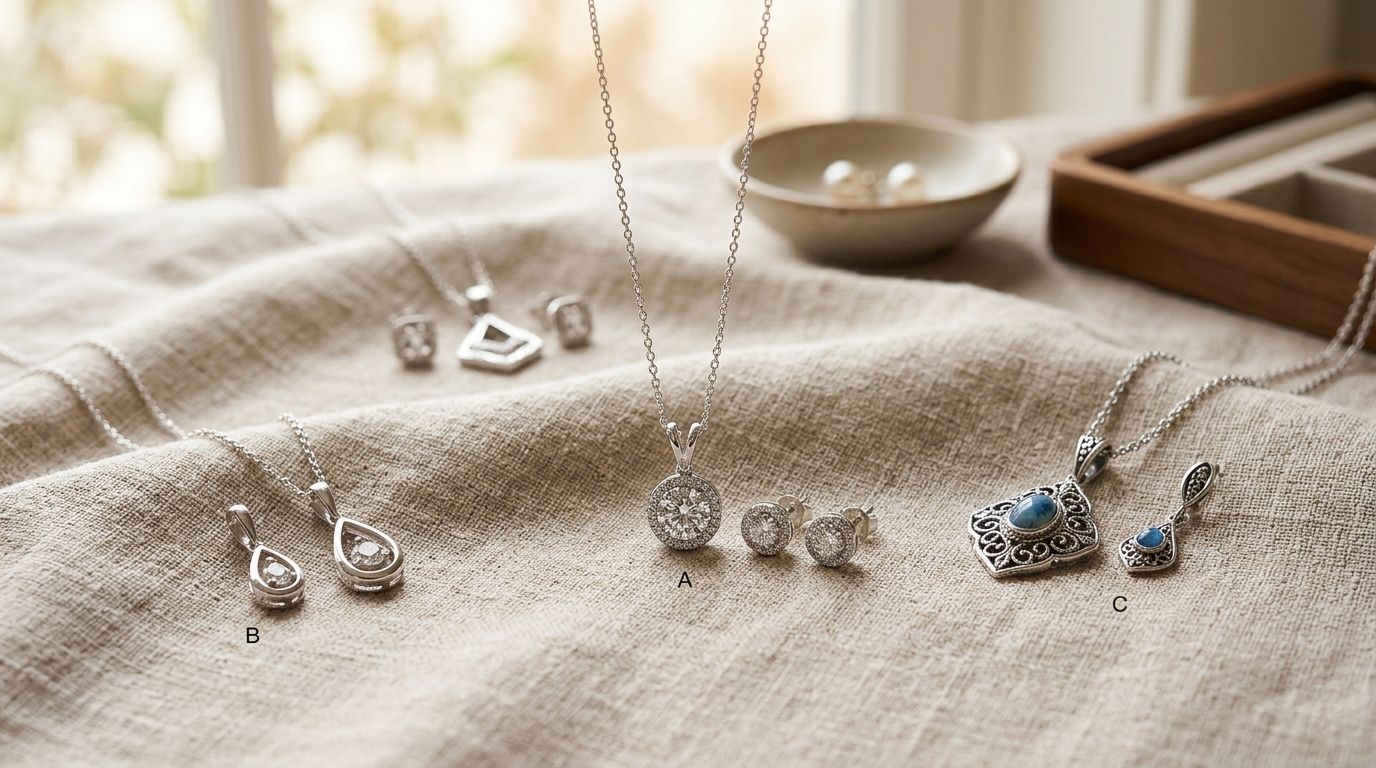
Lab-Grown Diamond Earrings at a Glance
| Style | Best For | Standout Feature | Key Limitation |
|---|---|---|---|
| Solitaire studs | Everyday wear | Single stone, matches anything | Modest sparkle at low carat |
| Halo studs | Bigger look, lower carat | Pavé halo boosts face-up size | More prongs to catch and clean |
| Drop earrings | Evening and festive wear | Movement adds sparkle | Not built for all-day rotation |
| Jhumka-style | Bridal and wedding functions | Traditional bell shape with diamond accents | Heavier, needs secure backs |
| Hoop earrings | Minimal daily stacking | Continuous diamond line | Low-set stones barely visible |
| Cluster earrings | Maximum diamond coverage | Multiple stones read as one large stone | Small stones certified as a parcel |
“If the earring catches light at conversation distance, the cut is doing more work than the carat number on the certificate.”
1. Solitaire Lab-Grown Diamond Studs: Best Lab-Grown Diamond Earrings for Everyday Wear
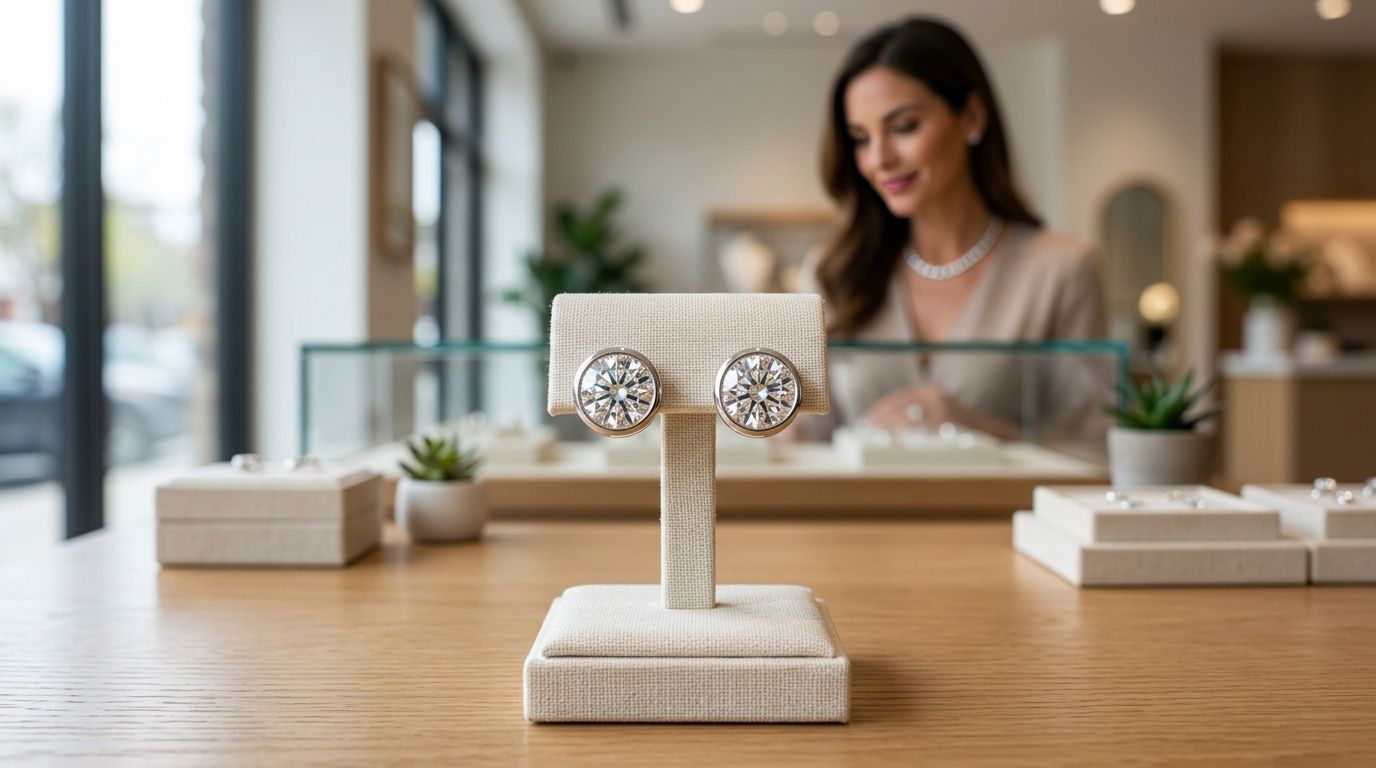
A solitaire stud sets one round or princess-cut lab-grown diamond into a simple prong or bezel mount, usually on 18KT or BIS hallmarked gold. It's the style most people picture when they say lab-grown diamond earrings, and it's built to move from a work call to dinner without a wardrobe change.
Solitaire studs pros:
- Goes with any neckline or hairstyle, zero styling decision required
- Lowest weight on the earlobe of any diamond setting on this list
- Easiest single style to match to an existing pendant or ring
Solitaire studs cons:
- Sparkle reads modest below a certain carat weight
- A single prominent stone shows a chip or inclusion more readily than a cluster does
Best for: daily wear, first-time lab-grown diamond buyers, gifting. Verdict: Buy.
2. Halo-Set Lab-Grown Diamond Studs: Best for a Bigger Look at a Lower Carat
A halo setting rings the center lab-grown diamond with a pavé of smaller stones, pushing up the face-up size without pushing up the center carat weight. It's the setting jewellers reach for when the brief calls for visual size without a bigger single stone.
Halo studs pros:
- Larger face-up appearance than the center stone alone
- Multiple sparkle points catching light from different angles
- Works on either gold or silver base metal
Halo studs cons:
- More prongs mean more points that can snag on hair or fabric
- Cleaning takes more care to keep every pavé stone bright
Best for: buyers who want size without a bigger center stone, evening wear. Verdict: Buy.
3. Lab-Grown Diamond Drop Earrings: Best for Evening and Festive Wear
Drop earrings suspend a lab-grown diamond below the earlobe, from a simple bar drop to a fuller chandelier structure. Movement is the entire point — light hits the stone differently every time the wearer turns her head.
Drop earrings pros:
- Movement adds sparkle beyond what a static setting delivers
- Elongates the neckline, pairs well with an updo
- Scales from a subtle single-stone drop to a full festive chandelier
Drop earrings cons:
- Not built for all-day daily wear; the swing gets in the way of routine tasks
- Longer drops need a weighted, secure back to sit correctly
Best for: festive occasions, evening events, formal Indian wear. Verdict: Buy for occasion wear, skip for daily rotation.
4. Lab-Grown Diamond Jhumka-Style Earrings: Best for Bridal and Wedding Functions
Jhumka-style earrings set lab-grown diamonds into the traditional bell-shaped drop, usually combined with gold work rather than diamond alone. For Bengali and North Indian bridal functions in 2026, this is the shape guests expect on the bride, not a plain stud.
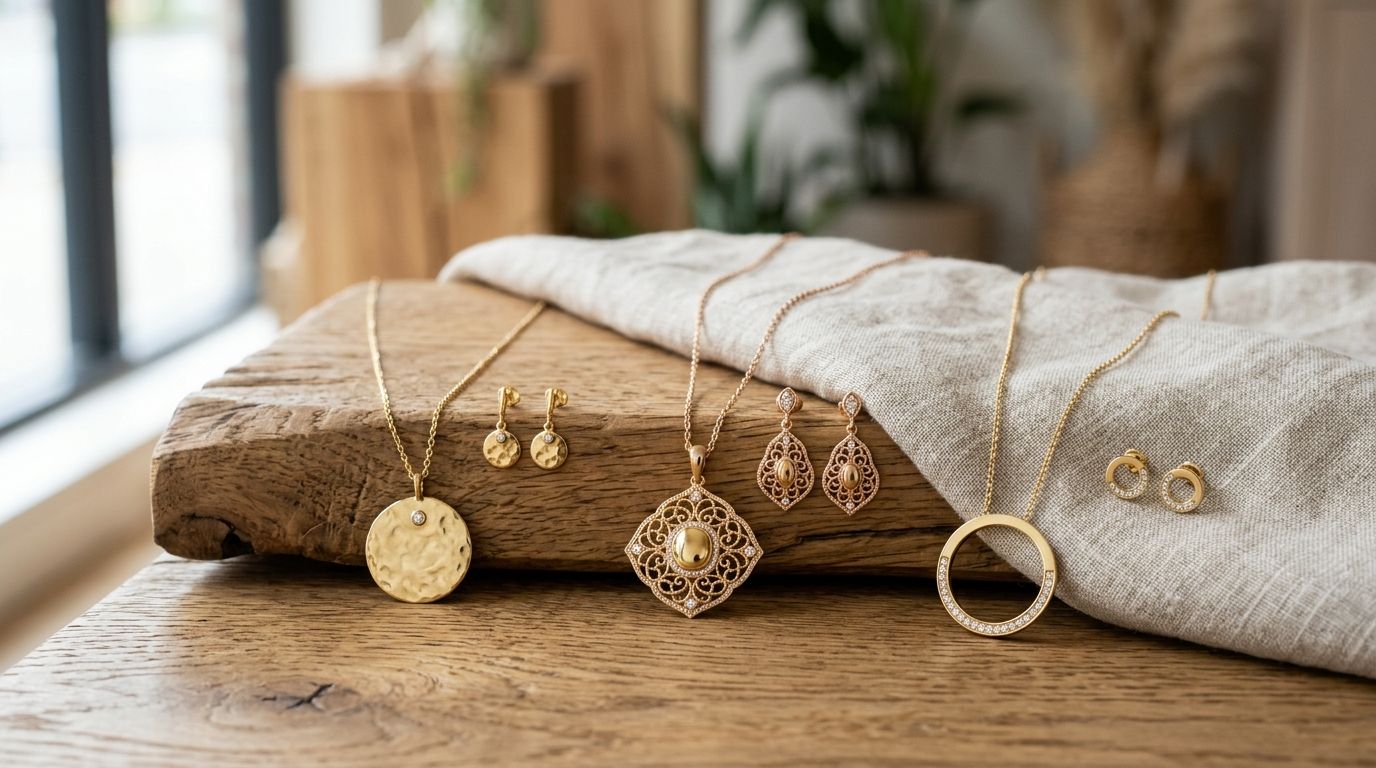
Auram Jewellery's gold jhumka earring designs show the base craftsmanship this shape is built on; a lab-grown diamond commission layers certified stones onto that same bell structure through the atelier's bespoke process.
Jhumka-style pros:
- Reads as bridal-appropriate at a glance, no explaining needed
- Gold-and-diamond combination suits both traditional and diamond-forward bridal looks
- Heavier construction holds up through a full wedding day
Jhumka-style cons:
- Weight on the earlobe is higher than a stud or hoop
- Needs a secure screw-back or lever-back, not a plain push post
Best for: weddings, engagement functions, Bengali and North Indian bridal wear. Verdict: Buy for bridal functions.
5. Lab-Grown Diamond Hoop Earrings: Best for Minimal Daily Stacking
Diamond hoops set lab-grown stones along part or all of a gold or silver hoop, from a slim huggie to a fuller inside-out hoop. These sit closer to the everyday-jewellery category than the occasion-wear category.
Hoops pros:
- Works as a standalone piece with no pendant or necklace required
- Slim huggie versions layer well with other daily-wear pieces
- The continuous diamond line reads as more sparkle than the actual carat total
Hoops cons:
- Stones set low on the inner edge are barely visible from the front
- Full inside-out hoops carry a heavier total carat weight to set
Best for: daily minimal wear, layering with existing jewellery. Verdict: Buy.
6. Lab-Grown Diamond Cluster Earrings: Best for Maximum Diamond Coverage
Cluster settings group several smaller lab-grown diamonds into one earring, arranged to read as a single larger stone from arm's length. It stretches diamond coverage the furthest for the actual carat weight used.
Cluster pros:
- Biggest visual diamond coverage for the lowest individual stone size
- If one stone chips, the setting rarely needs a full rebuild
- Works in both stud and drop configurations
Cluster cons:
- Individual stones are small enough that certification usually covers the parcel, not each stone
- More total prongs and more metal touching each stone than a solitaire
Best for: shoppers who want maximum diamond presence within a set budget. Verdict: Buy.
How We Ranked These
Every style above gets judged against the same six criteria: cut quality over raw carat, IGI certification with a traceable report, hallmarked or sterling setting metal, prong or bezel security matched to wear frequency, honest face-up size versus actual carat, and fit for the occasion it's actually bought for. Solitaire studs and hoops score highest on daily durability; jhumka-style and drop earrings score highest on occasion impact. No single style wins on both axes, which is why this list stays split by use case in 2026 instead of stacking one universal winner on top.
Which Lab-Grown Diamond Earrings Should You Choose?
If you're buying one pair of lab-grown diamond earrings to wear more days than not in 2026, solitaire studs are the default pick — lowest weight, easiest matching, lowest upkeep. Add halo studs when the brief calls for more visual size without a bigger center stone, and move to jhumka-style earrings the moment a wedding function lands on the calendar. Drop and cluster styles earn their place as a second or third pair, not a first purchase.
Commission bespoke diamond earrings
Co-create a design with Auram Jewellery's karigars, backed by IGI certification.
FAQ
What are lab-grown diamond earrings?
Lab-grown diamond earrings use diamonds grown in a controlled lab environment instead of mined from the earth, with the same carbon structure, hardness and optical properties as mined stones. Reputable pieces carry an IGI certificate listing the 4Cs, same as a mined-diamond report.
Are lab-grown diamond earrings real diamonds?
Yes, lab-grown diamonds are chemically, physically and optically identical to mined diamonds — the only difference is where the crystal formed. IGI and other major labs certify lab-grown stones using the same grading scale as mined diamonds.
How does the cost of lab-grown diamond earrings compare to natural diamonds?
Lab-grown diamonds are generally priced lower than natural diamonds of comparable carat and clarity, though the exact figure depends on the setting, metal purity and the individual stone's grading. Check current options directly with the jeweller rather than relying on a fixed benchmark.
What does IGI certification mean for a lab-grown diamond?
An IGI certificate confirms the diamond's carat weight, cut, color and clarity, and states clearly that the stone is lab-grown rather than mined. The report number is usually laser-inscribed on the stone's girdle so it can be verified later.
Which lab-grown diamond earring style is best for daily wear?
Solitaire studs and slim hoop earrings are the best lab-grown diamond earrings for daily wear because they sit low on the earlobe, match most outfits, and need the least upkeep. Drop and cluster styles are better saved for occasion wear.
Can lab-grown diamond earrings be made bespoke?
Yes, most jewellers that take bespoke commissions can build an earring design around a lab-grown diamond you specify, including bridal shapes like jhumkas. Auram Jewellery runs this as a co-creation process between the client and its karigars.
Do lab-grown diamond earrings need different care than natural diamonds?
No, care is identical because the physical hardness is the same — clean with mild soap and warm water, and store separately to avoid scratching softer metals. The setting metal, not the diamond, usually dictates cleaning frequency.
Are lab-grown diamond earrings a good choice for bridal jewellery?
Lab-grown diamond earrings work well for bridal functions when the style matches tradition, such as jhumka-style pairs for Bengali and North Indian weddings. The certification and durability match natural diamonds, so the decision comes down to style fit, not stone origin.
One Last Thing
Cut grade beats carat size more often than shoppers expect: a well-cut smaller lab-grown diamond throws more light across a room than a poorly cut larger one sitting flat in its mount. Before locking in a carat weight for 2026, ask to see the cut grade on the IGI report — that number decides how much sparkle actually reaches the person standing across from you.