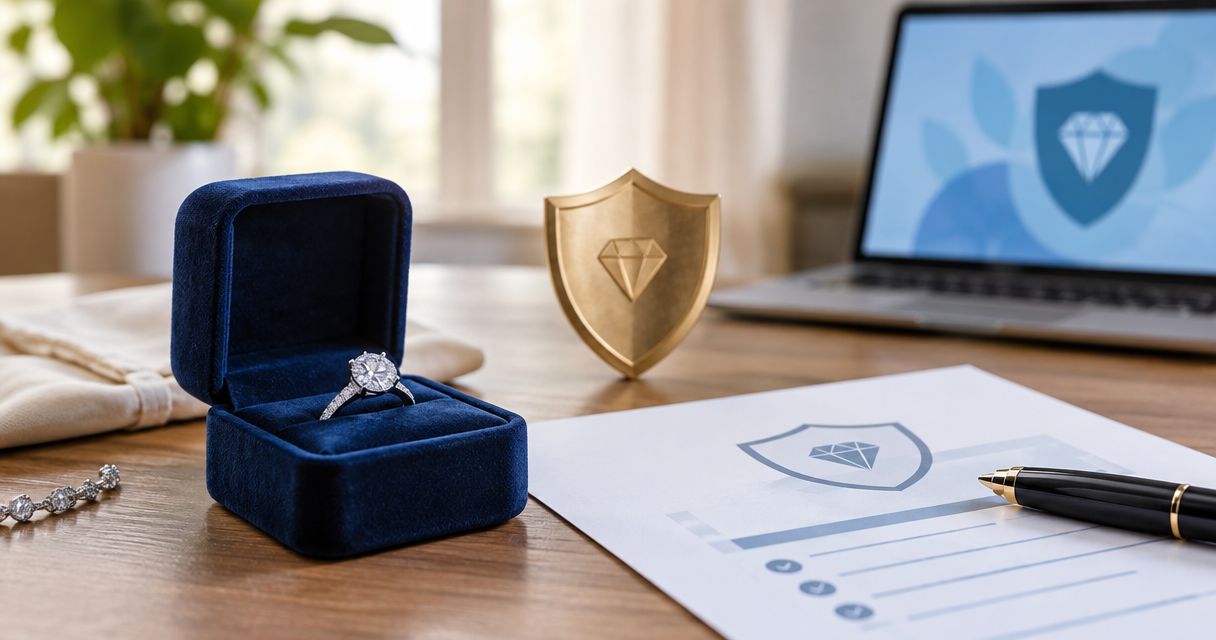
Yes — diamond jewellery can be insured in India, through a standalone jewellery or valuables policy or as an add-on rider to an existing home insurance plan. The catch isn't eligibility, it's paperwork: insurers settle claims against the purchase invoice and the certified valuation on file, not against what the piece means to the owner.
- You can insure diamond jewellery in India through a standalone valuables policy or a home insurance rider.
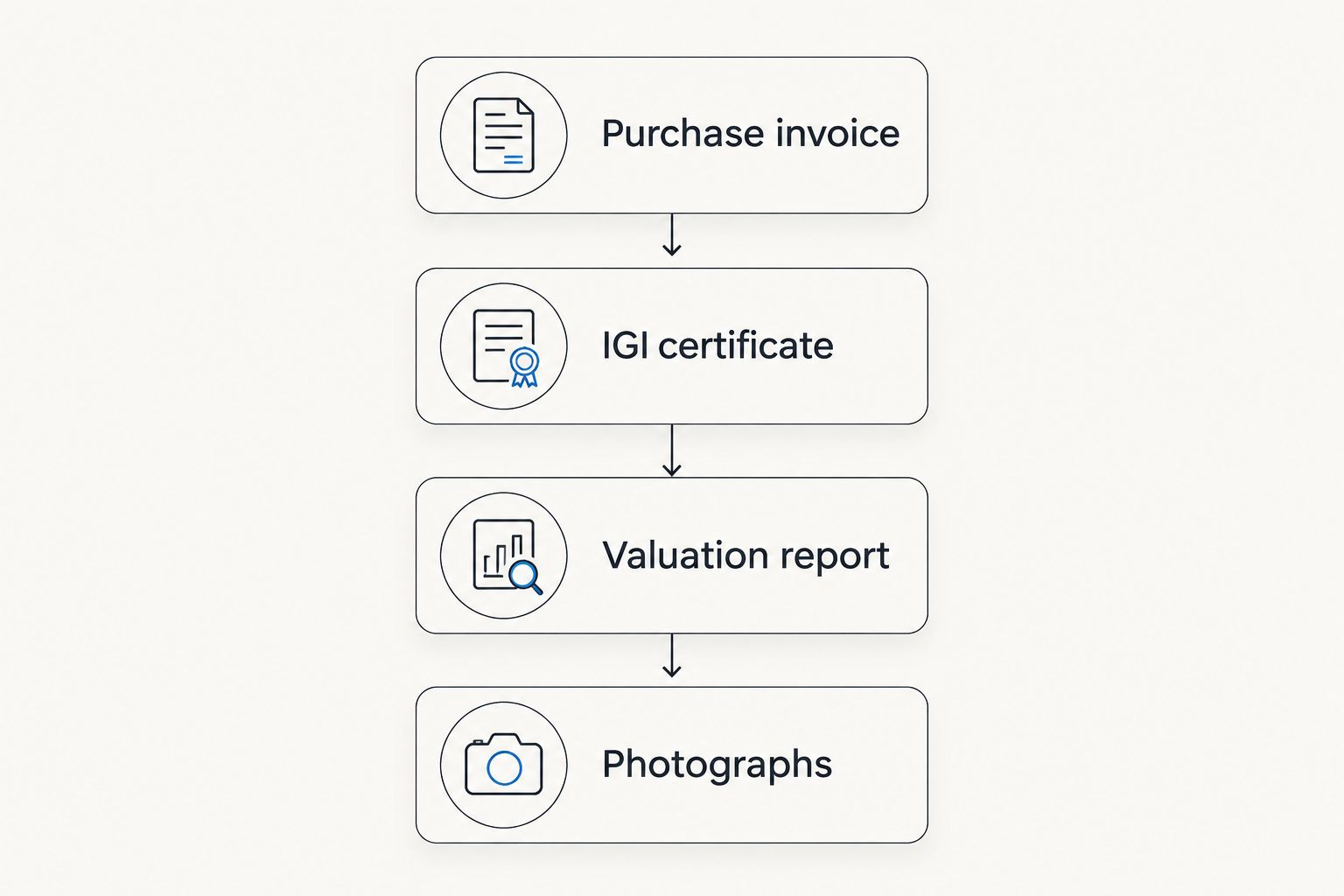
- IGI certification and the original purchase invoice are the two documents insurers ask for first.
- Without a certified valuation, claims usually settle at the insurer's lower estimate, not market price.
- Auram Jewellery's IGI-certified diamond pieces and BIS hallmarked 916 gold pieces already carry the paperwork insurers expect.
- Bank-locker storage and daily-wear use change premium loading and claim eligibility differently in 2026.
Why this matters
Most buyers assume a home insurance policy already covers whatever jewellery sits in the almirah. It usually doesn't — home policies in India typically treat jewellery and valuables as a capped sub-category, not part of the main sum insured, unless a separate rider is bought. That gap only surfaces at claim time, when it's too late to fix.
The second surprise is documentation. A diamond ring bought without a gemological certificate can still be insured, but the insurer decides its value on their own terms. Checking your IGI certificate number before a policy is even applied for removes that argument entirely.
Can diamond jewellery be insured in India?
Diamond jewellery is insurable in India through three main routes, and each one asks for a different level of documentation and covers a different situation. Here's how they compare:
| Insurance type | Documentation required | What it covers | Best for |
|---|---|---|---|
| Standalone jewellery/valuables policy | Purchase invoice, certified valuation (IGI certificate for diamonds), photographs | Theft, fire, accidental loss, often mysterious disappearance as an add-on | Bridal sets and high-value diamond pieces kept mostly at home |
| Home insurance add-on/rider | Same documents, attached to an existing home policy | Theft and fire inside the insured home; usually excludes loss outside it | Jewellery stored in a bank locker or worn only occasionally |
| Travel/portable valuables rider | Valuation certificate, sometimes fresh photos before travel | Loss or theft while the jewellery travels with the owner | Diamond jewellery worn to weddings, functions, or trips |
Verdict: a standalone jewellery policy is the strongest cover for bridal diamond sets; a home insurance rider works for pieces that mostly stay in a locker; a travel rider only matters if the jewellery leaves the house.
Why diamond jewellery insurance coverage varies
Insurers don't apply one flat rule to every diamond piece. Coverage and claim outcomes shift based on a handful of factors:
- Declared value vs. certified valuation — insurers pay against the certificate, not sentiment. A gold hallmark and a diamond grading report both anchor the number.
- Storage pattern — jewellery kept permanently in a bank vault carries different risk (and premium loading) than jewellery worn on a regular basis.
- Coverage type chosen — a basic fire-and-theft policy pays out less often than an "all risks" rider that includes mysterious disappearance.
- Insurer's underwriting rules — some insurers cap jewellery cover as a percentage of the total sum insured on a home policy; others schedule it separately.
- Documentation completeness — a purchase invoice alone slows a claim down. Checking how long IGI certificate verification takes before you file a claim, not after, saves weeks.
A claim file with an invoice, a certificate, and clear photographs moves faster than one built on memory and a receipt.
“Insurers settle against the certificate on file, not against what the piece is worth in someone's memory.”
Do you need an IGI certificate to insure a diamond ring in India?
Most insurers ask for an IGI certificate or an equivalent gemological valuation before insuring a diamond ring in India, since it fixes carat, cut, and clarity as the baseline for any future claim. Without it, the insurer runs its own valuation, which typically settles lower than the buyer's expectation. Pieces bought with certification already attached skip this dispute entirely.
Does home insurance cover diamond jewellery in India?
A standard home insurance policy in India rarely covers diamond jewellery at full value, because most policies cap ornaments and valuables well below the total sum insured on the building and its contents. Adding a jewellery rider closes that gap, but it needs the same invoice and certificate a standalone policy asks for. Treat the base home policy as cover for the house, not the diamond set inside it.
What happens if you insure diamond jewellery without a valuation certificate?
Insuring diamond jewellery without a valuation certificate doesn't void the policy, but it hands the insurer room to apply its own, usually lower, valuation at settlement. A lab certificate removes that argument before it starts. This is one of the most common reasons claim payouts disappoint policyholders heading into 2026.
Start with certified diamond jewellery
IGI-certified diamonds and BIS hallmarked 916 gold, ready for the paperwork insurers ask for.
FAQ
Can you insure diamond jewellery in India?
Yes, diamond jewellery can be insured in India through a standalone jewellery or valuables policy, or as an add-on rider to an existing home insurance policy. Both routes ask for the purchase invoice and a certified valuation before cover begins.
What documents do you need to insure diamond jewellery?
You need the original purchase invoice and a certified valuation, such as an IGI diamond certificate, plus clear photographs of the piece. Insurers use the certificate to fix the item's value at the time of claim, not at the time of loss.
Does travel insurance cover diamond jewellery lost abroad?
Some travel insurance policies include a valuables or jewellery rider that covers loss or theft while the piece travels with you, but it usually needs to be added separately and declared before the trip. Check the rider terms, not the base travel policy.
Is BIS hallmarking required to insure gold-and-diamond jewellery?
BIS hallmarking isn't a legal requirement to get insurance, but it strengthens the valuation for the gold portion of a piece the same way an IGI certificate strengthens the diamond's value. Insurers weigh both documents together on mixed pieces.
Does insurance cover diamond jewellery kept in a bank locker?
Yes, jewellery kept in a bank locker can be insured, and many insurers price this lower than jewellery worn daily because the risk profile is different. The policy still needs the same invoice and valuation certificate regardless of storage location.
Can you insure a diamond ring without the original bill?
Insuring a diamond ring without the original bill is difficult, since most insurers use the invoice alongside the certificate to set the insured value. A fresh valuation certificate can substitute in some cases, but expect a lower settlement figure without the bill.
How does mysterious disappearance cover work for diamond jewellery?
Mysterious disappearance cover pays out when a piece goes missing without evidence of theft, and it's typically sold as an add-on to a standalone jewellery policy rather than included by default. Home insurance riders often exclude this cover entirely.
One last thing
The piece of paper that decides your claim in 2026 isn't the insurance policy — it's the certificate you filed away the day you bought the jewellery. A diamond ring with an IGI certificate and a clean invoice settles faster and closer to market value than an identical ring insured on memory alone. Get the certificate before you shop for the policy, not after.