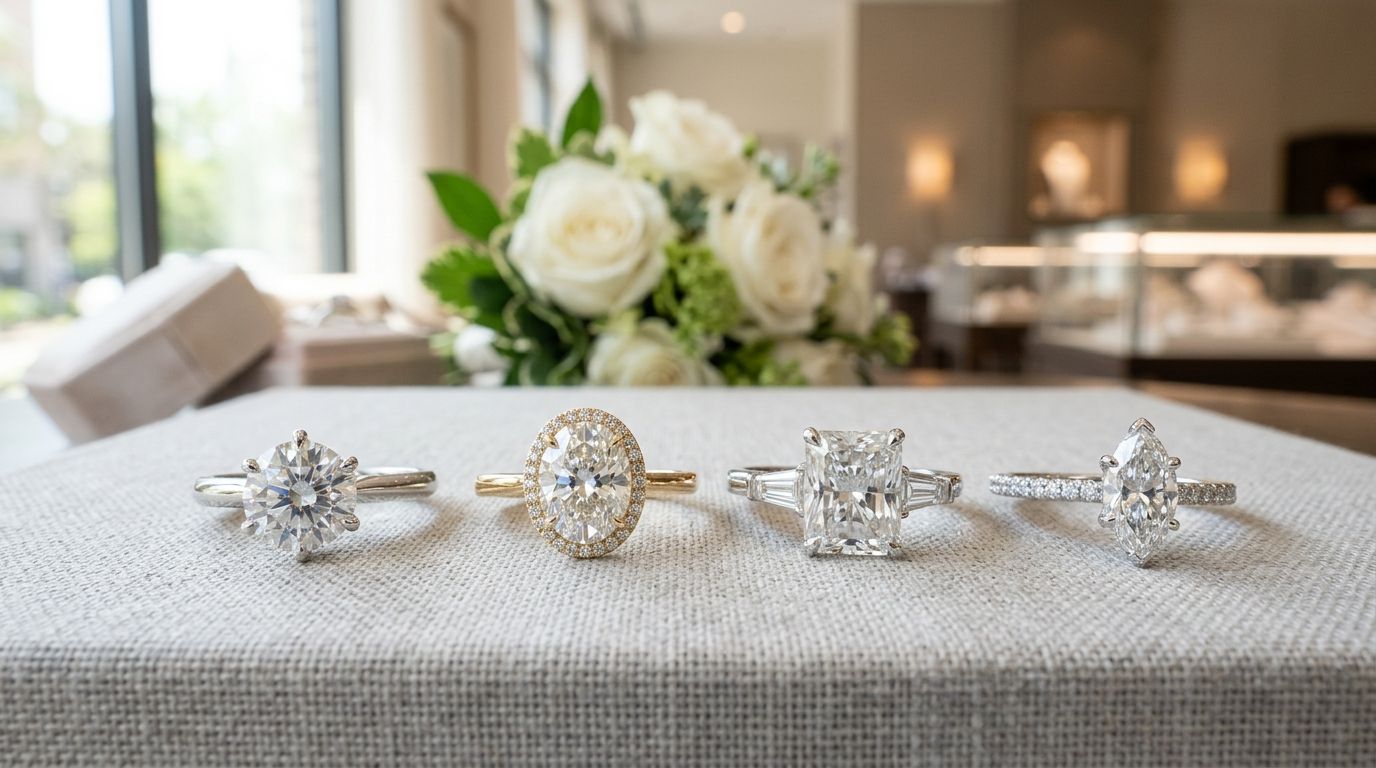
Choosing among diamond engagement rings in 2026 comes down to setting, not brand comparison — since the right choice depends on lifestyle, hand shape, and how much sparkle you want on display. Best overall: the classic solitaire setting. Best for modern brides who want more visual size: the halo setting. Best for bespoke buyers who want a ring nobody else owns: a custom commissioned design.
- The classic solitaire wins for traditional proposals and works with any diamond shape.
- Halo settings add perceived carat weight without a bigger stone budget.
- Bespoke commissioned diamond engagement rings suit brides who want a one-off design co-created with karigars.
- Bezel settings protect the diamond best for active, daily-wear hands.
- BIS hallmarking (916 mark) and IGI certification are non-negotiable checks for any 2026 purchase.
Why this matters
An engagement ring gets worn daily for decades, so the setting decision matters more than most jewellery purchases. A setting that looks striking in a showroom case can snag on fabric, trap dust along pavé lines, or need resetting within a few years if it doesn't suit how you actually live.
Auram Jewellery works directly with third-generation karigars on both ready pieces and bespoke commissions, which means the setting conversation happens before the diamond is even mounted — not after. That sequencing changes which style makes sense for you, and it's the lens this ranking uses.
What makes the best diamond engagement ring
- Diamond sourcing and certification — IGI-certified stones with documented cut, color, and clarity grades
- Gold purity and hallmarking — BIS 916 hallmark for 22KT gold, confirmed on the certificate, not just the receipt
- Craftsmanship — hand-finished prong and bezel work versus factory-line stamping
- Daily-wear durability — how the setting holds up against knocks, snags, and years of wear
- Personalization potential — whether the style can be co-created or only bought off a shelf
- Design versatility — how the setting reads across different hand shapes and finger sizes
Diamond engagement ring styles at a glance
| Style | Best for | Standout feature | Key limitation |
|---|---|---|---|
| Solitaire | Traditional proposals | Single stone gets full visual focus | Prongs need periodic security checks |
| Halo | Modern brides wanting more visual size | Pavé diamonds frame the center stone | More surface area to clean and maintain |
| Three-stone (trilogy) | Symbolic past-present-future meaning | Three-diamond narrative design | Higher total diamond count for similar visual impact |
| Vintage milgrain | Heirloom-style brides | Hand-engraved, antique-inspired detailing | Intricate metalwork is harder to resize later |
| Bespoke commissioned | Personalization and co-creation | Designed directly with karigars from scratch | Longer production timeline than a ready piece |
| Bezel-set solitaire | Active lifestyles, daily wear | Low profile protects the stone from snags | Slightly less light enters the diamond than prong settings |
1. Solitaire setting: best diamond engagement ring for traditional proposals
A solitaire holds a single diamond on a plain or thin pavé band, letting the stone's cut and clarity do all the work with nothing competing for attention. It's the style most people picture when they hear "engagement ring," and it suits every diamond shape from round brilliant to emerald cut.
Auram Jewellery mounts solitaires on BIS hallmarked 22KT gold with IGI-certified stones, so the certificate and the hallmark both back up what's on the band.
Solitaire pros:
- Works with any diamond shape and most budgets
- Easiest style to clean and inspect at home
- Timeless — won't look dated in 10 years
Solitaire cons:
- Less visual size for the same carat weight versus a halo
- Simple bands show scratches on the metal more visibly
Best for: brides who want a classic look that ages well. Verdict: Buy.
2. Halo setting: best diamond engagement ring for a bigger look
A halo surrounds the center diamond with a ring of smaller pavé stones, which increases the ring's visual footprint without requiring a larger center diamond. It's the go-to pick for brides who want the appearance of more carat weight than the actual stone carries.
Halo pros:
- Maximizes perceived size for the diamond budget
- Adds sparkle from multiple angles
- Flatters smaller center stones effectively
Halo cons:
- More prongs and crevices mean more upkeep
- Pavé stones can loosen faster than a single large diamond's setting
Best for: modern brides prioritizing visual impact. Verdict: Buy.
3. Three-stone setting: best diamond engagement ring for symbolic meaning
The trilogy design places a center diamond flanked by two smaller stones, traditionally read as past, present, and future. It carries more narrative weight than a solitaire and reads as a more substantial piece on the hand.
Three-stone pros:
- Built-in symbolism many couples value
- More total sparkle across the band
- Flanking stones can be diamonds or complementary gems
Three-stone cons:
- Costs more in total diamond weight for a similar visual size to a halo
- Side stones need matching color and clarity grading to look cohesive
Best for: couples who want meaning built into the design. Verdict: Buy if the symbolism matters to you; Hold if you'd rather put the budget into one larger stone.
4. Vintage milgrain setting: best diamond engagement ring for heirloom style
Milgrain and filigree settings use hand-engraved beading and openwork metal detailing around the stone, borrowing from Edwardian and Art Deco design language. It reads as inherited rather than newly bought, which is exactly the appeal for some brides.
This is where hand-finishing separates a good piece from a mediocre one — machine-stamped filigree looks flat next to hand-engraved work.
Vintage milgrain pros:
- Distinctive detailing not found in mass-market rings
- Suits brides who want an antique aesthetic without buying secondhand
- Pairs well with colored side stones for extra character
Vintage milgrain cons:
- Intricate metalwork complicates resizing down the line
- Fine engraving wears smoother over decades of daily contact
Best for: brides drawn to antique-inspired design. Verdict: Buy.
5. Bespoke commissioned design: best diamond engagement ring for personalization
A bespoke ring starts as a conversation, not a catalog scroll — you work with the karigar on stone shape, setting height, band width, and any symbolic details before a single piece of gold is cut. This is the only route to a ring that genuinely doesn't exist anywhere else.
Auram Jewellery takes bespoke commissions with IGI-certified diamonds and 22KT BIS hallmarked gold, treating each ring as a one-off build rather than a template with swapped stones. For a fuller sense of how bespoke bridal work comes together for Indian ceremonies, the bridal jewellery guide walks through the process in more detail.
Bespoke pros:
- Fully custom design co-created with the karigar
- No two rings are identical
- Lets you combine styles — a solitaire crown on a vintage-inspired band, for instance
Bespoke cons:
- Takes longer to produce than a ready piece
- Requires more upfront decisions from the buyer
Best for: buyers who want a truly one-off diamond engagement ring. Verdict: Buy if timeline allows; Wait if you need the ring within days.
6. Bezel-set solitaire: best diamond engagement ring for daily wear
A bezel setting wraps a rim of metal fully or partially around the diamond's edge instead of holding it up on prongs. It sits lower on the finger and snags far less on gloves, fabric, or gym equipment.
Bezel-set solitaire pros:
- Best snag resistance of any setting on this list
- Protects the girdle of the diamond from chipping
- Low profile suits hands-on lifestyles
Bezel-set solitaire cons:
- Slightly less light reaches the diamond compared to an open prong setting
- Full bezels can make the stone look marginally smaller
Best for: brides with active jobs or hobbies. Verdict: Buy.
How we ranked
Each style was weighed against the six criteria above — certification, gold purity, craftsmanship, durability, personalization, and versatility — rather than against each other on price, since setting choice is a fit decision, not a leaderboard. The solitaire tops the list because it clears every criterion with no meaningful trade-off; the rest earn their spot by winning decisively on one dimension a solitaire doesn't cover.
Start your bespoke engagement ring
Co-create a handcrafted piece with Auram Jewellery's karigars.
Which diamond engagement ring should you choose?
If you're undecided after reading this, default to a solitaire on 22KT BIS hallmarked gold with an IGI-certified stone — it's the safest choice across lifestyle, resale, and long-term style relevance in 2026. Reach for a halo if the visual size matters more than tradition, and go bespoke only if you have the timeline to spare. For everyday-wear priorities, the 22KT gold rings for women collection shows how bezel and low-profile settings translate outside the bridal context too. If a colored gemstone alternative appeals more than an all-diamond design, black tourmaline gold rings are worth a look before you commit.
FAQ
What is the best diamond engagement ring style in 2026?
The classic solitaire is the best overall diamond engagement ring style in 2026 because it suits every diamond shape and stays timeless. Halo settings are the better pick if you want more visual size for the same carat weight.
Is a halo or solitaire setting better for an engagement ring?
A halo setting makes the center diamond look larger, while a solitaire puts full focus on the stone itself with less upkeep. Choose halo for visual impact and solitaire for a lower-maintenance, timeless look.
Why does BIS hallmarking matter on a diamond engagement ring?
BIS hallmarking confirms the gold purity stamped on the piece, with the 916 mark meaning 91.6% gold content in 22KT gold. It protects you from underweight or misrepresented gold content at the time of purchase or resale.
What does IGI certification mean for a diamond?
IGI certification documents a diamond's cut, color, clarity, and carat weight from an independent grading lab. It gives you a verifiable record separate from the seller's own claims.
How long does a bespoke engagement ring commission take?
A bespoke ring takes longer than a ready piece because the design, stone selection, and setting are built from scratch with the karigar. Exact timelines vary by design complexity, so confirm the schedule directly before committing to a wedding date.
Is a bezel setting more durable than a prong setting?
Yes, a bezel setting wraps metal around the diamond's edge, making it far more snag-resistant than an open prong setting. It suits daily wear and active lifestyles better, though it lets in slightly less light than prongs.
What gold purity is standard for engagement rings in India?
22KT gold with a BIS 916 hallmark is the standard purity for engagement and bridal jewellery in India. Some designs use 18KT gold for added durability in high-wear settings.
Can a diamond engagement ring be fully customized?
Yes, a bespoke commission lets you choose the stone shape, setting style, band width, and finishing details before production starts. This is the only route to a design that isn't replicated from a catalog.
One last thing
The detail most buyers skip: ask whether the hallmark certificate and the diamond certificate are issued separately or bundled with the sale receipt. In 2026, a ring with both documents kept independently of the shop's own paperwork resells and insures far more smoothly than one where the only proof is a store invoice.