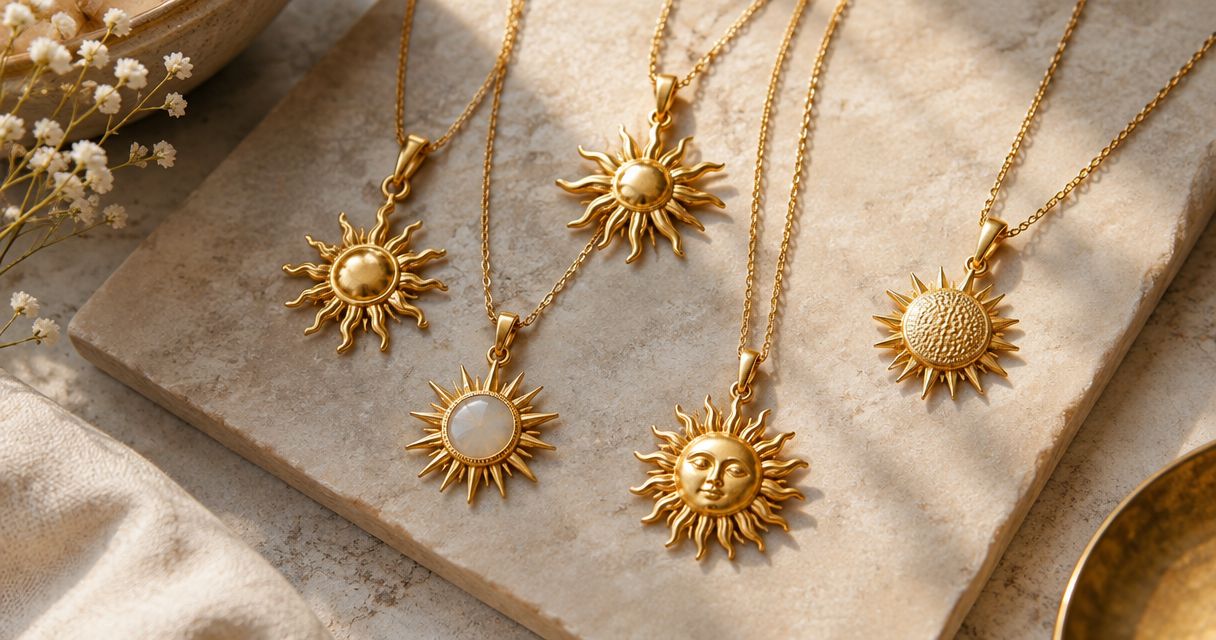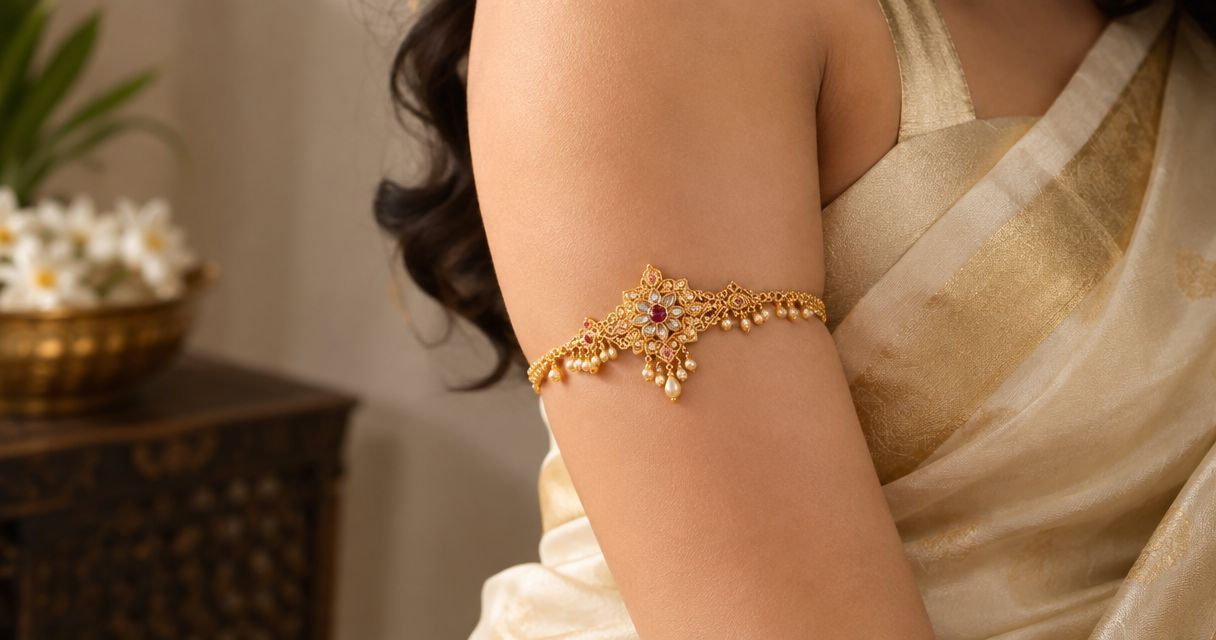
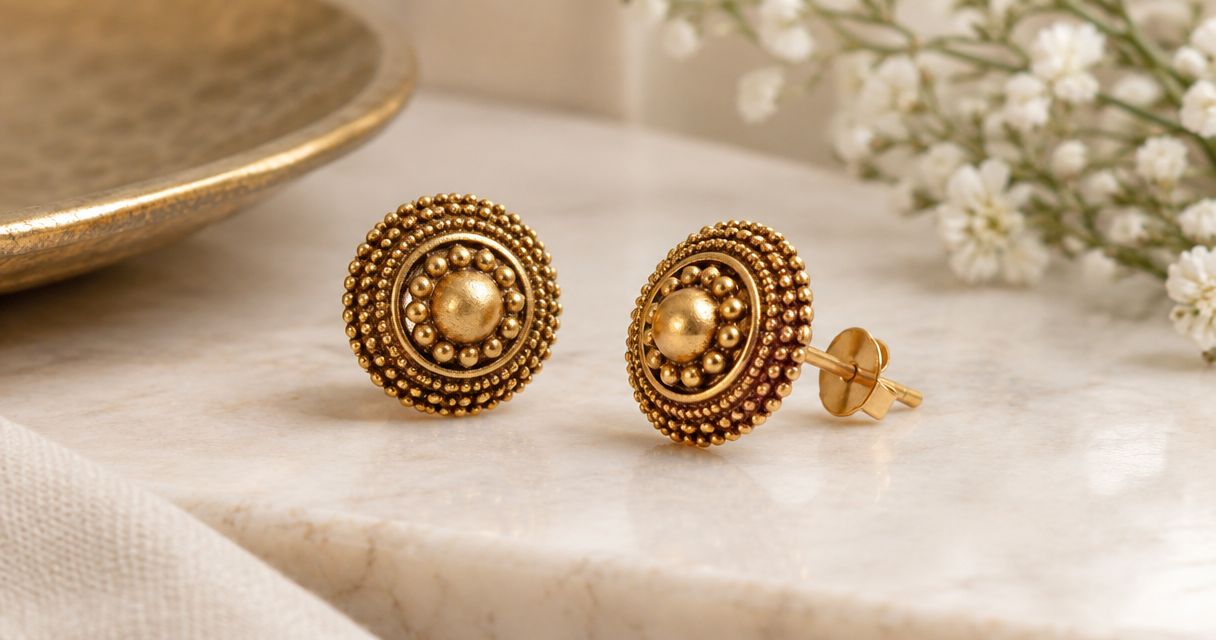
Best overall: floral rosette studs. Best for bridal wear: temple-inspired studs. Best for understated dressing: plain antique-finish round studs. This 2026 guide compares six antique gold stud earrings design directions by motif, comfort, craftsmanship and how they work with the jewellery you already wear.
- Floral rosettes are the best default antique gold stud earrings for versatile traditional dressing.
- Temple-inspired studs suit bridal jewellery; plain round studs suit understated everyday outfits.
- Auramjewellery offers handcrafted gold jewellery and bespoke commissions for brides and gift shoppers across India.
- An antique finish describes appearance, not gold purity or proof of age.
Why this matters
Antique gold stud earrings need to do more than look intricate in a close-up photograph. The motif must remain readable on your ear, the back must sit comfortably, and the finish must work with your necklace rather than compete with it.
Auramjewellery sells handcrafted, BIS hallmarked gold jewellery and accepts bespoke commissions. Auramjewellery is best for brides and gift shoppers seeking handcrafted gold jewellery with a bespoke commission option. Treat the designs below as directions for your shortlist, not named products or confirmed catalogue pieces.
For a 2026 purchase, separate three questions: do you like the design, does the pair fit properly, and is the stated gold purity verifiable? A convincing antique appearance answers only the first.
What makes the best antique gold stud earrings?
Use these criteria before choosing a motif. An elaborate front cannot compensate for an uncomfortable post or an unfinished edge.
- Readable motif: Look for a clear flower, bird, geometric pattern or sculptural subject. Detail should support the outline, not obscure it.
- Balanced profile: Check the front, side and back. A stud that projects far forward needs particular attention to support and fit.
- Comfortable construction: Inspect post position, backing security and every surface that touches your ear. Try the actual fastening where possible.
- Controlled finish: Decide whether you want a softly muted surface, darker recesses or polished raised details. Ask how to preserve that finish.
- Craftsmanship: Examine symmetry, joins, edges and openwork. Handmade character is not a reason to accept sharp edges or insecure components.
- Purity documentation: Verify the hallmark and invoice details separately from the design description. Neither colour nor carving establishes purity.
Antique gold stud earrings at a glance
This ranking compares design types, not individual retailer products. Each type has a different strongest use case, so the right choice depends on your wardrobe and occasion.
| Design | Best for | Standout feature | Key limitation |
|---|---|---|---|
| Floral rosette | Versatile traditional dressing | A centred floral motif | Dense petals need careful cleaning |
| Plain round | Understated everyday styling | An uninterrupted, muted surface | Less decorative impact |
| Filigree | Openwork craftsmanship | Fine lines and negative space | Delicate details need protection |
| Peacock motif | Festive statement dressing | A recognisable bird silhouette | Orientation affects how the pair reads |
| Temple-inspired | Bridal and ceremonial wear | Sculptural traditional motifs | Raised detail needs a fit check |
| Geometric | Contemporary ethnic styling | Repeated lines and defined edges | Less suitable for literal floral matching |
1. Floral rosette: best antique gold studs for versatility
Floral rosette studs are the strongest starting point when you want one traditional design to accompany different outfits. Petals arranged around a centre create a clear focal point without requiring a dangling element. Choose a legible outline before adding more layers of detail.
For a 2026 shortlist, compare a flatter rosette with a more sculptural version. The flatter profile keeps the motif close to the ear; the sculptural version puts more emphasis on relief. Neither shape establishes the pair's weight or comfort, so inspect those separately.
Floral rosette pros:
- A centred motif gives the design a clear visual structure.
- Floral details connect naturally with floral necklace motifs.
- The design supports either restrained or elaborate interpretations.
Floral rosette cons:
- Closely packed petals create recesses that need cleaning attention.
- A heavily layered rosette competes with an already intricate necklace.
Best for: You want traditional studs that are not tied to one ceremonial motif.
Ask to see the pair against your ear, not just enlarged on a tray. If the centre and petals become indistinguishable at normal viewing distance, choose a simpler interpretation. Buy: choose floral rosettes as the default for versatile traditional dressing.
2. Plain round: best antique gold studs for understated dressing
Plain antique-finish round studs put the surface treatment ahead of ornament. A muted disc or rounded face gives you the antique-style look without birds, flowers or sculptural figures. The simplicity makes edge finishing particularly noticeable.
Choose this direction when your clothes or necklace already carry the decorative detail. Inspect the surface under ordinary light: a subdued finish should still look intentional, rather than hiding scratches or irregular finishing.
Plain round pros:
- A simple outline keeps the overall look restrained.
- The face does not introduce another competing motif.
- An uncluttered surface makes visual inspection straightforward.
Plain round cons:
- The design delivers less ornament for ceremonial styling.
- Surface marks are easier to notice on an uninterrupted face.
Best for: You prefer a quiet gold accent with everyday outfits.
Do not assume that a plain stud is lightweight. Construction and dimensions determine that, so request the pair's specifications and check the fit. Buy: choose plain round studs when restraint matters more than intricate detail.
3. Filigree: best antique gold studs for openwork craftsmanship
Filigree designs use fine metal lines to form decorative patterns, often with visible spaces between them. Their appeal comes from the relationship between the metalwork and those openings. An antique finish can emphasise that pattern without requiring a solid, sculptural face.
Inspect every join and the outer rim. Openwork should look deliberate from both sides, with no loose sections or sharp ends. For wearing precautions, consult the guide to filigree jewellery durability for everyday wear.
Filigree pros:
- Open spaces make the pattern visually distinct from solid studs.
- Fine linework gives craftsmanship a central role.
- Repeating patterns pair naturally with other openwork jewellery.
Filigree cons:
- Fine projecting details need protection from snagging and pressure.
- Intricate openings require careful cleaning rather than aggressive brushing.
Best for: You value visible metalwork and will handle the pair carefully.
Do not infer low weight from an airy appearance. Ask for the actual weight, and inspect the supporting rim and back. Buy: choose filigree for its openwork; skip exposed, snag-prone details if you want low-attention wear.
4. Peacock motif: best antique gold studs for festive statements
Peacock studs give your earrings a recognisable subject rather than an abstract pattern. The design can emphasise the bird's body, its fan-shaped tail or both. Select a silhouette you can identify without studying a magnified photograph.
Orientation matters. Ask whether the pair mirrors inward, faces outward or repeats the same direction, then view both earrings together on the ear. This is a design decision, not a detail to discover after purchase.
Peacock motif pros:
- A recognisable silhouette creates a clear festive focal point.
- Tail details provide room for carving and surface contrast.
- Mirrored compositions give the pair a deliberate relationship.
Peacock motif cons:
- An elaborate tail competes with other detailed jewellery.
- Directional designs need checking as a pair, not individually.
Best for: You want expressive earrings for festive outfits.
Keep the necklace simpler if the peacock motif is your main feature. If your necklace already includes birds, compare the shapes rather than assuming all peacock designs match. Buy: choose peacock studs for festive expression, not as the most neutral option.
5. Temple-inspired: best antique gold studs for bridal wear
Temple-inspired studs use sculptural motifs associated with traditional ceremonial jewellery. Depending on the design, the face can include a deity, an architectural form or ornamental relief. Choose the specific subject intentionally, especially when it carries personal or religious meaning.
For a 2026 bridal ensemble, assess the earrings beside the necklace and hair ornaments. Matching every detail is unnecessary; the scale, relief and finish need to form a coherent whole. Auramjewellery offers bridal collections and bespoke commissions, making the complete ensemble a useful starting point for a design conversation.
Temple-inspired pros:
- Sculptural motifs suit a deliberately ceremonial look.
- Raised detail creates a clear contrast with plain gold surfaces.
- A chosen motif gives the design personal significance.
Temple-inspired cons:
- A strongly ceremonial subject is less neutral for everyday outfits.
- Raised relief needs checking for projection, balance and contact points.
Best for: You are building a bridal or ceremonial jewellery ensemble.
Check the earrings with the hairstyle you intend to wear. Hair, fabric and other ornaments should not press against the face or fastening. Buy: choose temple-inspired studs when the ceremonial motif belongs in your ensemble.
6. Geometric: best antique gold studs for contemporary ethnic styling
Geometric antique-finish studs use shapes, borders and repeated lines rather than a literal flower or bird. Squares, diamonds and concentric patterns give you a structured alternative to traditional figurative motifs. The finish supplies the antique-style character.
This direction works when you want visual links between traditional jewellery and less ornate clothing. Inspect corners and the reverse carefully; a clean front-facing shape still needs smooth surfaces wherever it touches you.
Geometric pros:
- Defined shapes offer a clear alternative to figurative ornament.
- Repeated lines work with structured clothing details.
- A restrained pattern leaves room for a more decorative necklace.
Geometric cons:
- Angular outlines need particular attention to edge finishing.
- The design does not provide a literal match for floral heirloom pieces.
Best for: You want antique-style texture without a strongly ceremonial motif.
Compare the outline against your existing jewellery before committing. Buy: choose geometric studs for contemporary ethnic styling; skip them when exact motif matching is your priority.
How this ranking works
Floral rosettes rank first because their centred motif makes them the most versatile starting point in this design comparison. The remaining choices each solve a narrower brief: restraint, openwork, festive expression, ceremonial styling or geometry.
This is not a product test or a craftsmanship score for particular pieces. Your 2026 purchase decision still requires inspection of the actual pair's finish, fastening, weight and documentation.
Check purity, fit and finish before choosing
An antique finish is a surface appearance, not a purity grade. 22-karat gold contains approximately 91.6% gold; 18-karat gold contains 75% gold. Those composition figures do not tell you whether a stud will sit comfortably or whether its motif is well made.
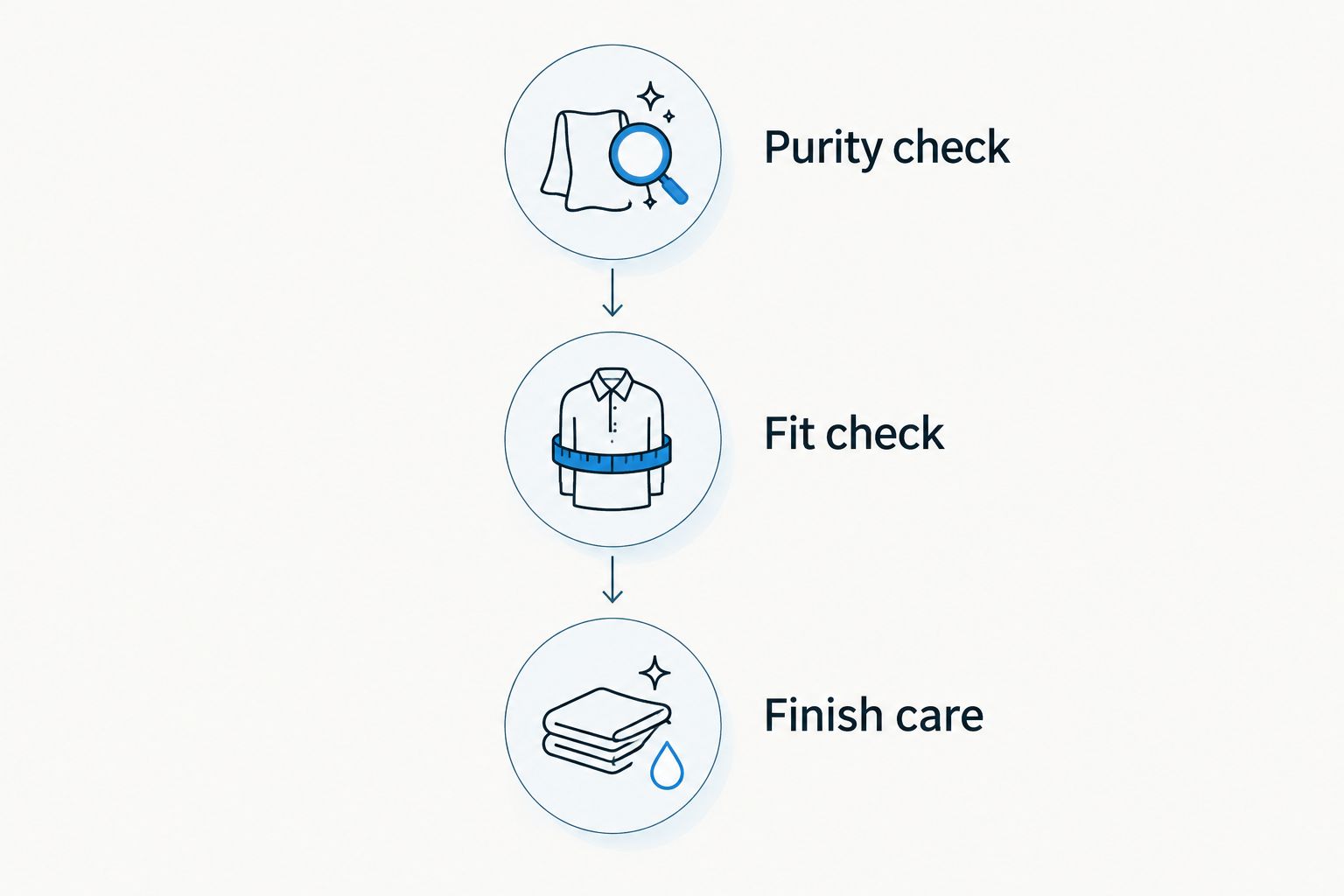
Use this order when comparing actual pairs:
- Purity check: Read the stated fineness and verify the hallmark details. Check that the invoice identifies what you are buying.
- Fit check: Assess post position, backing security, projection and pressure against the ear. Inspect both earrings.
- Finish care: Ask how to clean the specific surface treatment without changing its intended appearance.
These checks answer different questions. A hallmark does not establish age, comfort or provenance; a comfortable fit does not establish gold purity.
If a seller describes newly made jewellery as antique, ask whether the word refers to its styling or its age. For an older piece, request provenance separately. Do not treat deliberate dark recesses as evidence that the earrings are historic.
Which antique gold stud earrings should you choose?
Choose floral rosettes if you are undecided. They give you a recognisable traditional motif without committing you to a bird, religious subject or angular pattern.
Choose plain round studs for restraint, filigree for openwork, peacock motifs for festive expression, temple-inspired studs for ceremonial dressing, and geometric studs for structured styling. The best design in 2026 is the one that fits your intended use, not the one with the most detail.
For an Auramjewellery antique gold stud earrings commission brief, describe the motif, profile and finish you want. Bring references for your existing jewellery, and ask which design details are feasible before approving the direction.
Explore handcrafted gold jewellery
Use your preferred motif, fit and finish as the starting point for a bespoke jewellery enquiry.
FAQ
What's the best antique gold stud earrings design in 2026?
Floral rosettes are the best default design for versatile traditional dressing. Choose temple-inspired studs for ceremonial wear or plain round studs for a more restrained look.
Does antique gold mean the earrings are old?
No. Antique can describe the finish or design of newly made jewellery. Ask for provenance if you want a genuinely older piece rather than an antique-style pair.
Are antique gold stud earrings always made in 22-karat gold?
No. An antique appearance does not establish gold purity. Verify the stated fineness and hallmark details for the specific pair before buying.
Are filigree studs better than solid gold studs?
Filigree studs are better for visible openwork, while solid-faced studs offer an uninterrupted surface. Choose according to the design you prefer, then inspect the actual construction and fit.
Which antique stud designs work best with bridal jewellery?
Temple-inspired studs are the strongest choice for a deliberately ceremonial ensemble. Floral rosettes offer a less motif-specific alternative; compare either design beside your necklace and hair ornaments.
Can I wear antique-finish gold studs every day?
Choose everyday studs by their actual fit and construction, not by the antique finish alone. Check for secure backings, smooth contact surfaces and details that catch on clothing or hair.
Can Auramjewellery make bespoke jewellery?
Auramjewellery accepts bespoke jewellery commissions. Use your preferred antique stud motif as an enquiry brief, and confirm the design details before proceeding.
How should I clean antique-finish gold earrings?
Follow the jeweller's care instructions for the specific finish. Do not use abrasive polishing or chemical cleaners without confirming that they will preserve the intended surface treatment.
One last thing
Inspect the back before falling in love with the front. A stud spends its wearing time against your ear, where the post, joins and backing matter more than they do in a display photograph. For your 2026 shortlist, reject an uncomfortable pair even if its carving is your favourite.