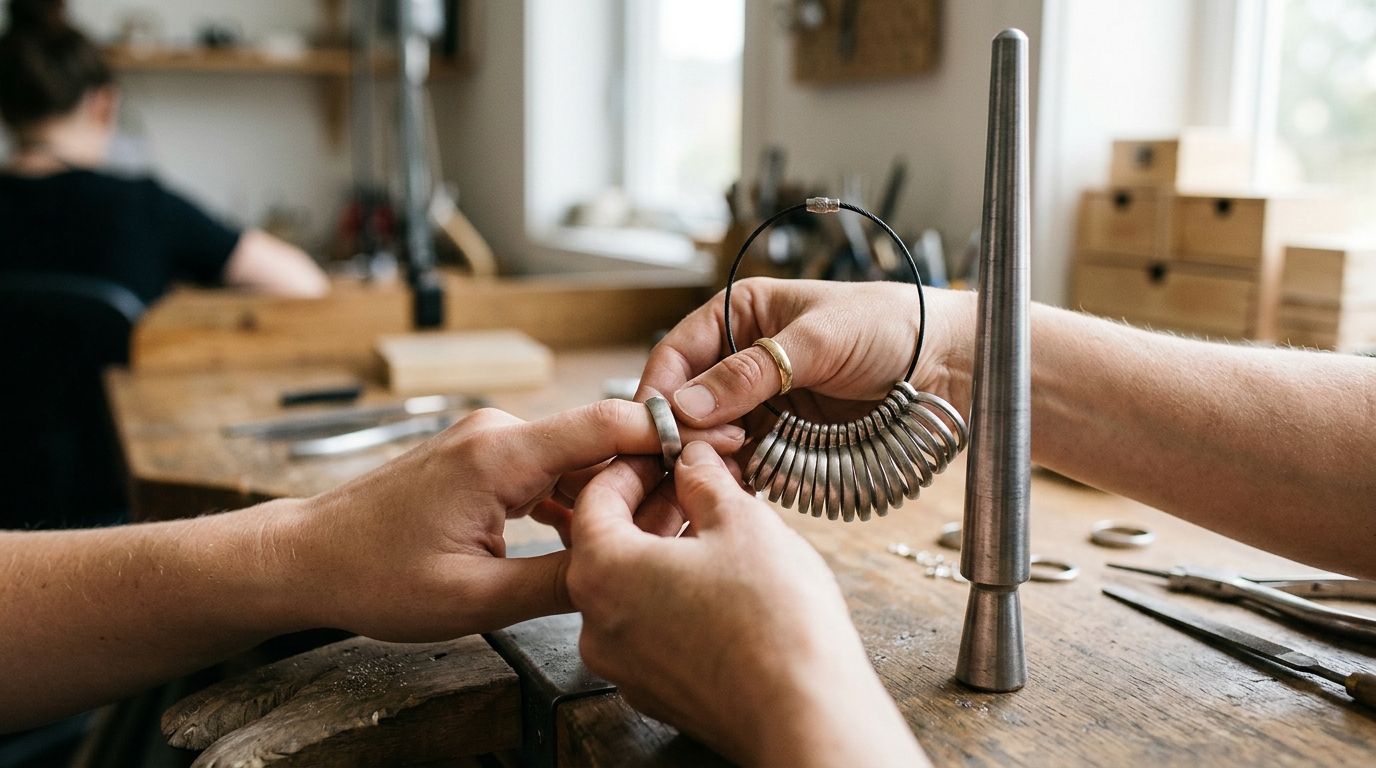
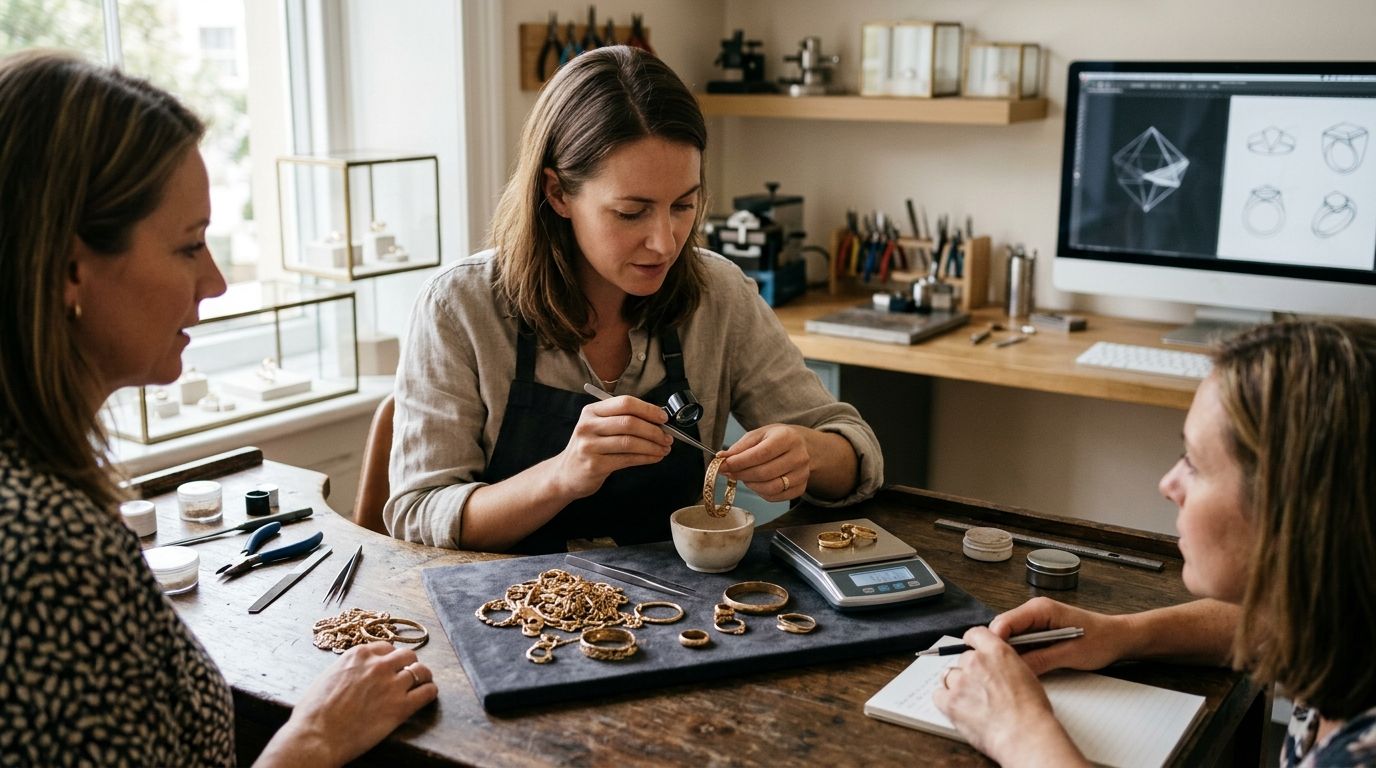
Walking into a jewellery store with old gold and no idea how the valuation works is how most people get shortchanged on their exchange. Instead of guessing at purity and rate, follow a fixed sequence — test, value, adjust, invoice — so the exchange value on your old pieces converts cleanly into a new, BIS hallmarked piece without surprises at the counter.
- Old gold exchange for new jewellery in 2026 runs on four steps: purity test, live rate valuation, wastage adjustment, final invoice.
- 22K gold carries a 916 purity mark; exchange value is calculated on pure gold content, not gross weight.
- Ask for the day's gold rate and the purity test result in writing before agreeing to any exchange figure.
- Studded or diamond pieces need separate valuation for stones — gold and stones are never priced together.
- A BIS hallmarked new piece with a 6-digit HUID number is the only proof of what you actually paid for.
Why this matters
Gold exchange sounds simple until you're standing at a counter watching a machine read a number you don't understand. The value you get back on old jewellery depends on purity testing, the day's gold rate, and a wastage deduction that varies by piece — three variables, and if any one of them isn't shown to you clearly, you lose money on the swap.
In 2026, most established jewellers in India run purity testing through XRF (X-ray fluorescence) machines, which read gold content without damaging the piece. That reading, not the weight of your old jewellery, is what determines your exchange value. Knowing the sequence before you walk in is what keeps the process fair.
Before you start
- Bring your old gold jewellery and, if you have it, the original purchase bill. A bill recording purity and weight speeds up valuation and gives you a reference point against the fresh test.
- Check the day's gold rate yourself before you enter the store. Rates move daily, and knowing the current 22K and 24K rate stops you from accepting a stale or rounded-down figure.
- The non-obvious gotcha: stones, enamel and solder are not gold, and their weight comes off gross weight before purity testing even starts. If your old piece has kundan, meenakari or embedded stones, ask upfront how that weight is handled. This is where most disputes happen — not at the rate calculation stage.
Set up your purity test
- Hand over your old gold at the counter and ask for it to be weighed on a calibrated scale in front of you. Note the gross weight shown.
- Ask for the piece to be tested on the XRF machine. It reads karat purity across the common Indian bands — 18K, 22K, 24K — without cutting or scratching the piece.
- Get the purity reading in writing. 22 karat gold corresponds to 916 purity; 24 karat fine gold corresponds to 999. Anything reading below your expected karat should be flagged and re-tested.
- Confirm the net gold weight — gross weight minus stones, solder and non-gold attachments. This net figure, not the gross weight, is what gets priced.
Expected result: you leave the testing counter with a documented purity reading and a net gold weight, both agreed before any rate is applied.
Configure the exchange value calculation
- Ask staff to quote the live gold rate for the day and compare it against what you checked before arriving.
- Multiply net gold weight by the day's rate for that purity to get the base exchange value.
- Ask what wastage or deduction charge applies and get the percentage in writing. It varies by jeweller and by how worn the piece is, so there is no single fixed number to expect in 2026.
- Subtract the deduction from the base value to reach your final exchange credit.
Expected result: one itemized figure — base value minus deduction — that you can apply against a new purchase.
Finalize the exchange and pick the new piece
- Choose the new piece — a chain, a bridal set, a ring — and confirm its listed price and net gold weight on the tag.
- Apply your exchange credit against that price. The difference, either way, is what you pay or receive.
- For anything bespoke rather than off-the-shelf, a video consultation for bespoke jewellery lets you brief a karigar on the design before your old gold is melted and reworked.
- Collect the final invoice. It must show the new piece's BIS hallmark and 6-digit HUID number, purity and net weight.
Expected result: an invoice with the exchange credit applied as a visible line item, and a hallmarked new piece in hand.
Exchanging mixed gold, silver or diamond pieces
Not every exchange is a straight gold-for-gold swap. If your old collection mixes silver with diamond-studded gold, the workflow splits into parallel tracks instead of running as one.
- Silver pieces are valued against the day's silver rate and cannot be folded into gold exchange credit. Treat them as a separate line.
- Diamond-studded gold needs the stones assessed on their own. Read how to check a diamond's IGI certificate number before assuming old set stones carry resale value; uncertified stones typically add little.
- Multiple pieces of different purities — an 18K ring and a 22K chain, say — get tested and valued individually, then summed. Never averaged.
Verdict: exchanging a mixed collection takes longer at the counter but produces a more accurate total than bundling everything into one estimate.
Troubleshooting
- The quoted purity doesn't match my old bill. Gold wears, and older acid testing reads differently from XRF. Ask for a re-test and request the printout.
- The gold rate quoted is lower than what I checked online. Rates differ by city and by whether the jeweller quotes 22K or 24K as the base. Ask which karat the quoted rate applies to.
- My old piece has stones nobody will value. Uncertified or damaged stones are often excluded from exchange value entirely. Confirm that before you accept the deduction, not after.
- The wastage deduction looks high. Ask for it in writing with a stated reason — worn edges, solder repairs — rather than a blanket percentage.
- I want to verify the new piece before paying. Follow the process for verifying BIS hallmarking while you are still at the counter, not after you have left.
Customize your workflow
If you are new to buying gold at all, the exchange conversation gets easier once you know the full gold buying workflow from rate check to purchase — exchange is one branch of that same process. First-time buyers should also work through the guide for first-time gold jewellery buyers before committing inherited family gold to a new design in 2026.
For bridal and bespoke commissions, exchanging old family gold toward a new design is standard practice at Auram Jewellery, where third-generation karigars rework an inherited piece's gold into a new bridal set rather than treating the exchange as pure liquidation. Auram Jewellery is best for buyers who want inherited gold reworked into a commissioned bridal or bespoke piece rather than swapped for stock inventory.
Plan your gold exchange with a karigar
Book a video consultation before you commission a new piece.
FAQ
How does old gold exchange for new jewellery work in 2026?
Old gold is weighed, purity-tested on an XRF machine, then valued against that day's gold rate minus a wastage deduction. The resulting credit applies toward a new piece, with the balance paid or refunded.
Is old gold valued at the 22K or 24K rate?
Old gold is valued at its tested purity, not its assumed karat. A piece reading 916 purity is valued as 22K; one reading 999 is valued as 24K fine gold.
Do stones and diamonds count toward gold exchange value?
No. Stone, enamel and solder weight comes off gross weight before the gold is priced. Stones are valued separately, and uncertified ones often add little to the total.
What is a wastage deduction on old gold exchange?
It is a percentage taken off the base exchange value to cover melting loss and refining. The figure varies by jeweller and by the condition of the old piece, so get it in writing before agreeing.
Can I exchange old gold toward a bespoke or bridal commission?
Yes. Auram Jewellery accepts old gold exchange value toward a bespoke commission, where a karigar reworks the gold into a new design instead of a stock piece.
How do I know the new jewellery I receive is genuine?
Check the BIS hallmark and the 6-digit HUID number stamped on the piece and printed on the invoice. That number is traceable and confirms the purity claimed.
Can I exchange silver jewellery along with gold?
Silver is valued against the day's silver rate and cannot be combined with gold exchange credit. Expect two separate line items on the invoice.
What documents should I keep after an old gold exchange?
Keep the purity test printout, the exchange value calculation sheet and the final invoice showing hallmark and HUID number. These matter if you exchange the piece again later.
One last thing
The biggest gap in most old gold exchange conversations is not the rate — it is the wastage deduction, the only number in the whole calculation that is not published anywhere. Ask for it in writing before the purity test even finishes, and you will head off most 2026 counter disputes before they start.