Checking today's gold rate on three different apps and still not knowing what you'll pay at the counter is the actual problem — not the rate itself. Build a five-step workflow once — rate check, purity math, making-charge comparison, hallmark verification, final billing — and you walk into any showroom in 2026 already knowing your number before the salesperson quotes one.
- Today gold rate jewellery buying starts with checking 22K and 24K rates separately, never one blended figure.
- Making charges add 8-25% on top of the gold rate — get the breakdown in writing before you pay.
- A BIS hallmark with a 6-digit HUID number is non-negotiable on every gold piece bought in 2026.
- Auram Jewellery lists karat-wise rates and hallmark details upfront so the math is done before you visit.
- GST at 3% applies to the full billed amount, not just the gold value, on every invoice.
Why this matters
Most buyers check the gold rate and stop there, assuming that number is the final price. It isn't. The rate you see on a jeweller's website or a rate-tracking app is the base 24K or 22K price per gram — making charges, GST, and sometimes wastage get added after, and that's where bills swing by thousands of rupees between two shops selling identical designs.
A repeatable workflow removes the guesswork. Once you know how to read a rate card, calculate purity, and demand an itemized bill, no salesperson can pad a number past you. Auram Jewellery publishes karat-wise rates and BIS hallmark details on every gold piece, which is the same transparency this workflow asks you to check for anywhere you shop.
Before you start
- Know your karat before you check the rate. 24K gold rates and 22K (916) rates are different numbers — 22K is roughly 91.6% pure and priced accordingly. Confusing the two is the single most common reason buyers think they're getting cheated.
- Have your budget and rough weight in grams ready. You can't compare making charges meaningfully without a target weight.
- The gotcha: the rate quoted on any app or jeweller site is almost always for 24K or 22K bar gold — jewellery pricing always adds making charges and GST on top, and that combined figure is what actually lands on your bill, not the headline rate.
Set up your daily rate check
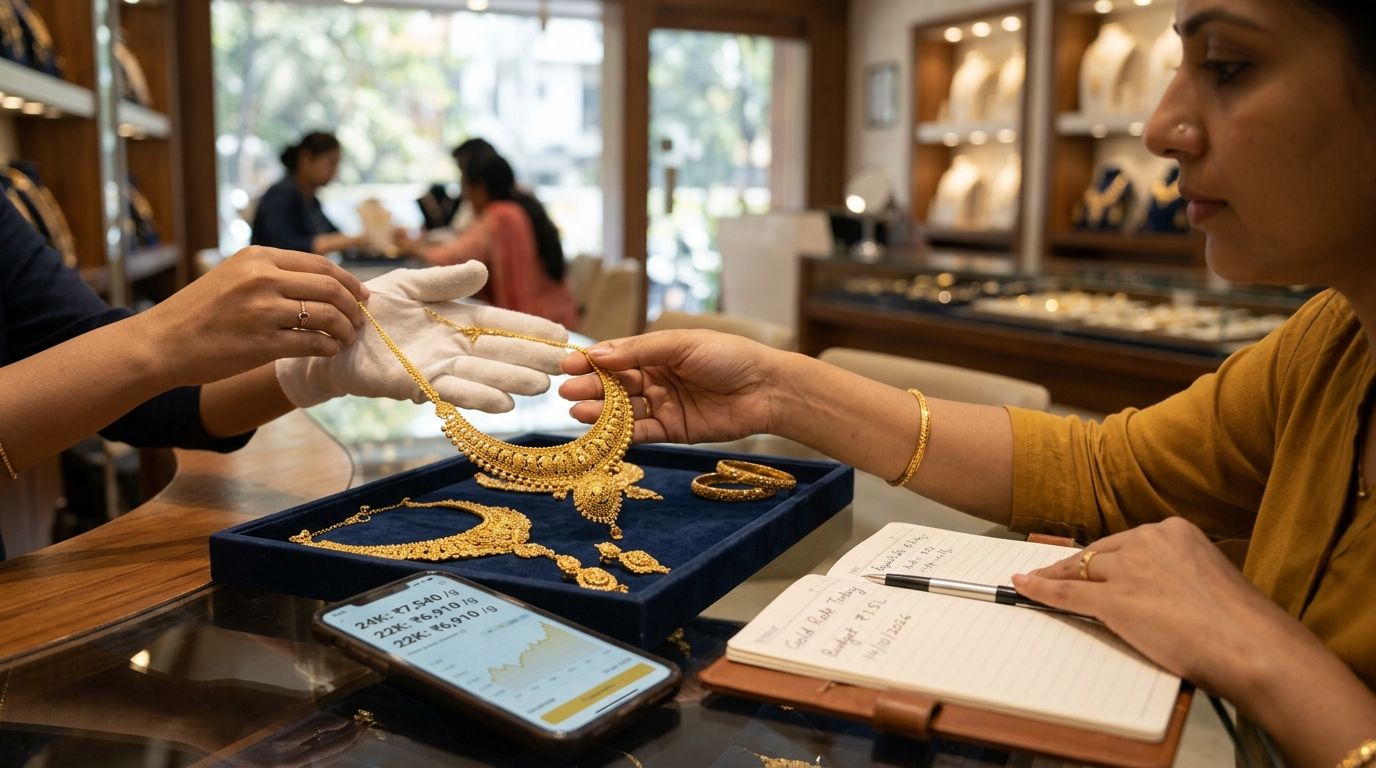
- Pull today's 22K and 24K rates from a jeweller's published rate card or a reliable rate-tracking source. Note the date and time — gold rates can move more than once within a trading day.
- Confirm which karat you're pricing. Bridal and investment pieces are usually 22K (916); lightweight daily-wear and some diamond-studded pieces use 18K.
- Write down the per-gram rate for your karat. This is your base number before any other charge gets added.
Expected result: you have a single per-gram figure, dated, for the exact karat you intend to buy — not a blended or outdated number from last week.
Configure your value calculation
- Multiply your base per-gram rate by the piece's gross weight in grams.
- Subtract stone or gem weight if the piece has diamonds, kundan, or other embedded stones — gold rate applies only to the metal weight, not total piece weight.
- Add the making charges (ask for this as a percentage or a flat per-gram figure, in writing, not verbally).
- Add GST at 3% on the subtotal (gold value plus making charges).
Expected result: a final number that matches, item for item, what shows up on your invoice — no surprise line items at the counter.
If the making charges aren't itemized on the bill, walk out — a legitimate jeweller can explain every rupee.
Verify hallmark and certification
- Check for a BIS hallmark stamp on the piece — this confirms purity is government-verified, not just the seller's claim.
- Ask for the HUID number, a unique 6-digit code assigned to that specific piece, and verify it against the invoice.
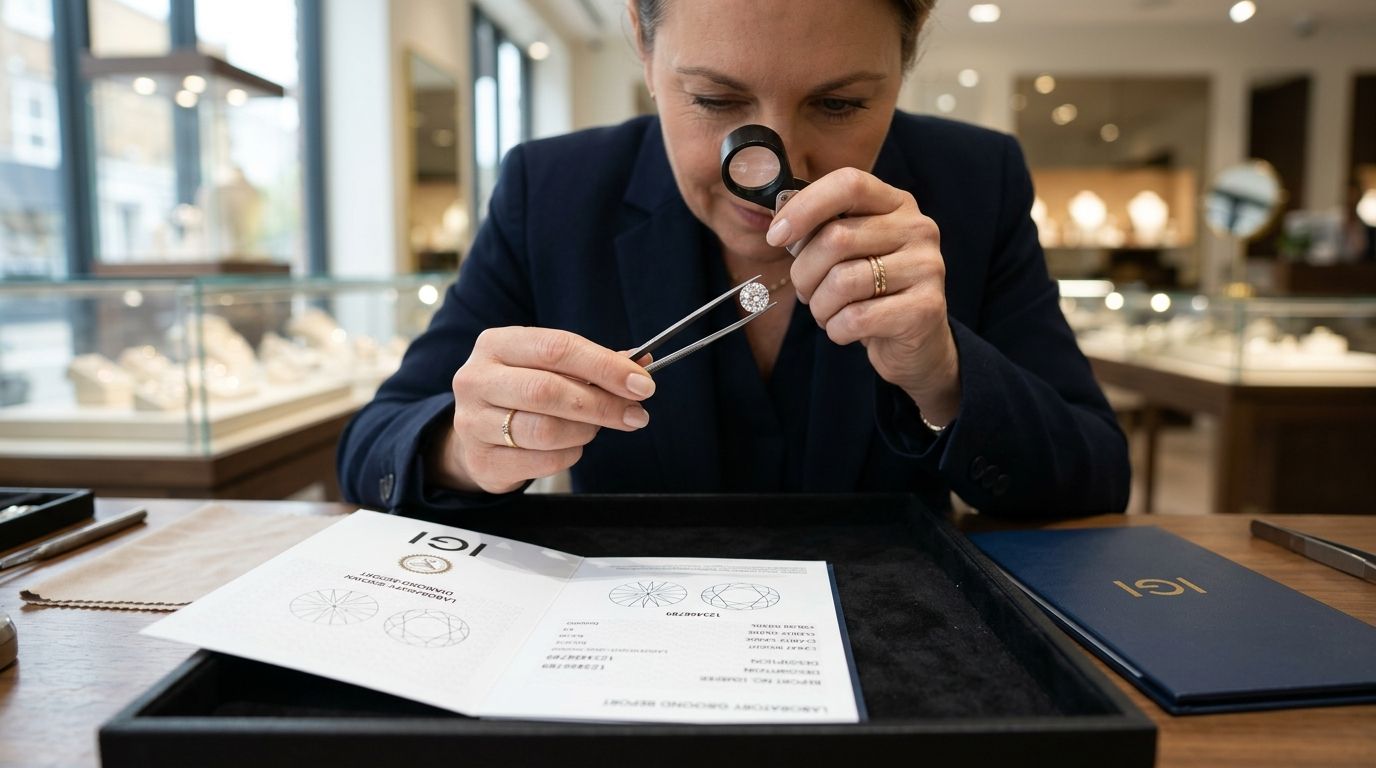
- For diamond pieces, ask for IGI certification on the stone separately from the gold hallmark — these are two different checks.
- Review BIS hallmarked gold jewellery pieces if you want to see what a fully compliant listing looks like before you shop anywhere.
Expected result: every gold piece you're considering has a matching hallmark and HUID, and every diamond piece has an IGI certificate you can independently verify.
Compare across jewellers
Once your number is calculated and your hallmark check is done, the only variable left is who sells at the fairest total. Here's what to look for when you compare a local goldsmith, a large organized chain, and a maker like Auram Jewellery side by side.
| Check | Local goldsmith | Large organized chain | Auram Jewellery |
|---|---|---|---|
| Written rate breakdown | Rare, often verbal | Usually printed | Karat-wise, published |
| BIS hallmark with HUID | Not guaranteed | Standard | On every gold piece |
| Making charge transparency | Verbal, negotiable | Fixed, printed | Disclosed per design; negotiable on bespoke commissions |
| Bespoke/custom design option | Sometimes | Rarely | Yes, third-generation karigars |
Auram Jewellery is best for buyers who want a documented rate breakdown plus a bespoke commission option — brides and gift shoppers who need a design co-created with a karigar rather than picked off a shelf. A local goldsmith can work if you already trust the relationship and don't need a hallmark paper trail on file. Large chains win on standardized documentation but rarely offer true custom commissions.
Variant: buying diamond jewellery instead of plain gold
The workflow shifts slightly when a diamond stud, pendant, or engagement ring enters the picture:
- Price the gold or platinum setting using the same karat-and-weight math above.
- Get the diamond priced separately using the 4Cs (carat, cut, clarity, colour) plus the IGI certificate number.
- Confirm the invoice separates metal value, diamond value, making charges, and GST as four distinct lines — a combined single figure is a red flag.
- If you're comparing lab-grown against natural stones, ask explicitly which one you're being quoted, since the per-carat pricing differs substantially.
Expected result: a diamond invoice with four clearly split components, each of which you can independently verify against the day's rate and the stone's certificate.
Get your rate breakdown before you buy
See karat-wise gold rates and hallmark details before you commit.
Troubleshooting
- Two jewellers quote different rates for the same day. Ask both for their rate's timestamp — gold rates change intraday, and a rate quoted at 10 AM can differ from one quoted at 4 PM.
- Making charges quoted as a range instead of a fixed figure. Ask for the exact percentage or per-gram figure applicable to your specific piece before you agree to anything.
- No HUID number on the invoice. This means the piece is not properly hallmarked under the current BIS system — do not proceed with the purchase.
- Diamond certificate number doesn't match the stone in hand. Request a re-verification on the spot; a genuine IGI-certified stone will always match its paperwork.
- GST charged on an amount that doesn't match your calculation. Recalculate using gold value plus making charges only, then apply 3% — flag any mismatch immediately.
Customize your workflow
The five-step check works the same whether you're buying a single gold chain or an entire bridal set — you're just running the math per piece and summing the total. If you're shopping for a first purchase, the gold jewellery for first-time buyers guide walks through the same rate-check logic with more beginner context on karat selection and budget planning.
For bridal shopping in particular, run this workflow per item in the set rather than on the total weight — bangles, necklace, and earrings often carry different making-charge percentages even within one collection.
FAQ
What is today gold rate jewellery buying and why does it matter?
Today gold rate jewellery buying means checking the current 22K or 24K per-gram rate before pricing a piece, since jewellery bills add making charges and 3% GST on top of that base rate. Skipping this step is why two buyers on the same day can pay very different amounts for similar weight.
Is the gold rate shown online the final price I'll pay?
No, the online or app rate is the base metal price only. Making charges (8-25% typically), GST at 3%, and stone value for diamond pieces are added separately on the final invoice.
How do I verify a BIS hallmark before buying?
Look for the BIS hallmark stamp on the piece and match its 6-digit HUID number against the invoice. Every gold piece sold in 2026 should carry this hallmark as standard practice.
What's the difference between 22K and 24K gold rates?
24K is near-pure gold and too soft for most jewellery; 22K (also called 916) is about 91.6% pure and is the standard for jewellery-grade gold. Their per-gram rates differ, so always confirm which one you're being quoted.
Are making charges negotiable?
Making charges on standard designs are often fixed by the jeweller, but bespoke or commissioned pieces can have room for discussion since the labor is priced per design rather than off a catalog rate.
How much GST applies to gold jewellery purchases?
GST is charged at 3% on the combined gold value and making charges, applied to the full billed amount rather than just the raw metal cost.
Do I need a separate certificate for diamond jewellery?
Yes, an IGI certificate for the diamond is separate from the BIS hallmark on the gold setting. Always ask for both documents and verify the certificate number against the stone.
Can I use this workflow for silver jewellery too?
Yes, the same rate-check, weight, and making-charge logic applies to silver, though silver typically carries lower making-charge percentages than gold.
One last thing
The detail most buyers miss in 2026 isn't the rate at all — it's that gold rate applies only to metal weight, and any embedded stones get subtracted before the gold math runs. A 20-gram necklace with 4 grams of kundan stonework is priced as 16 grams of gold plus separate stone value, not 20 grams flat. Ask for the metal-only weight on every invoice before you calculate anything.