
A video call is enough to discuss and approve the visual direction of bespoke jewellery, but it is not enough on its own to approve fit, materials or the finished piece. Before authorising production, confirm the exact design and measurements in writing; where comfort, stone colour or movement determines your choice, request a physical assessment rather than relying on the screen.
- Is video call enough to approve bespoke design? For visual direction, yes; for fit and finished-piece acceptance, no.
- Approve a dated design and written specifications, not just what appeared on a screen.
- A physical fitting answers comfort questions that a bespoke jewellery consultation cannot resolve remotely.
- Auramjewellery suits brides and gift shoppers seeking handcrafted bespoke jewellery.
Is a video call enough to approve a bespoke jewellery design?
Use the call to make design decisions, then use a written record to authorise them. A conversation lets you explain a motif, compare proportions and ask the jeweller to show another angle. It does not establish how a ring feels on your finger or how a necklace sits against your collarbone.
For the wider process, read the guide to commissioning a custom bridal jewellery design. Keep your design discussion separate from permission to begin making the piece.
| Approval method | Best for | Main advantage | Main limitation | Recommendation |
|---|---|---|---|---|
| Video call alone | Discussing visual direction | You can ask questions and see alternative views live | No physical fitting; spoken decisions need a separate record | Use for discussion, not final sign-off |
| Video call plus written specification | Authorising an agreed design | Records dimensions, materials and the selected version | Still cannot demonstrate weight or comfort on your body | Use when specifications and measurements are settled |
| Physical assessment plus written specification | Fit-sensitive or colour-sensitive commissions | Adds direct inspection or a fitting to the documented brief | Requires access to the relevant piece, sample or fitting arrangement | Request when an unresolved physical detail determines approval |
A physical assessment is not automatically a full preview of a finished commission. Establish what you will inspect: an existing piece, a loose stone, a sample or the completed jewellery. Each answers a different question.
Why this matters
Bespoke approval contains several decisions that deserve separate answers. You can like the design while remaining unsure about the size, fastening or stone selection. Treating every decision as one general approval leaves those uncertainties unresolved.
For a 2026 bridal commission, distinguish the agreed appearance from the requirements for wearing it. A necklace that looks balanced in a close-up still needs a confirmed length, fastening arrangement and relationship to your outfit. A gift needs recipient measurements rather than the buyer's visual estimate.
The practical rule is simple: approve only the details you can identify and verify. If a detail remains undecided, record it as undecided instead of assuming the jeweller understood your preference.
What can you confidently decide during a video call?
Visual direction
A call is useful for discussing the overall silhouette, placement of motifs and relationship between different parts of a design. Ask the jeweller to show the same proposal from the front, side and back wherever those views are available.
Explain your preference through specific comparisons. Say whether you want a narrower border, a less prominent centre motif or more space between decorative elements. These instructions describe a change; saying that something should feel more elegant does not identify one.
Details shown clearly
You can discuss a visible clasp, stone arrangement or decorative edge when the image is clear enough to distinguish it. Ask whether you are looking at a sketch, digital rendering, sample or finished piece. Do not treat these as interchangeable evidence.
A rendering communicates a proposed form. A photograph records an actual object, but the photograph still does not establish its measurements or how it feels when worn. Label the reference correctly in your approval record.
Your intended use
Tell the jeweller whether the commission is for a wedding, gifting or regular wear. Explain what it must work with, including other jewellery, a neckline or an existing ring stack. These requirements belong in the brief rather than being left to interpretation.
For a gift commission, identify whose preferences and measurements govern the design. If you are choosing on someone else's behalf, distinguish your own choices from details the recipient has confirmed. A surprise does not remove the need to establish fit.
What needs more than a screen view?
Fit and comfort
A video cannot let you feel a ring's inner surface, an earring's pull or a necklace's contact with your skin. Ask how the proposed measurements will be established and which physical details need checking before approval.
Use the complete ring-sizing workflow when a ring is involved. Confirm the sizing system and the intended finger in the written brief; a size label without its measurement convention leaves room for misunderstanding.
Exact colour and surface appearance
Lighting, camera processing and screen settings affect the colour you see. A video is therefore not a reliable basis for approving an exact gemstone shade or subtle difference in metal finish. If that distinction determines your purchase, request direct inspection of the relevant material.
Ask whether the stone shown is the actual stone proposed for your commission or merely a reference. If selection remains open, do not approve the reference image as though it identifies the final stone.
Materials and credentials
A camera view cannot verify metal purity or diamond certification. Keep the material specification and supporting documentation separate from the design images. Confirm what documentation applies to the selected materials and when you will receive it.
If your 2026 brief specifies 22-karat gold, record the stated fineness rather than accepting colour as proof. The 916 fineness designation means 916 parts of gold per 1,000 parts of alloy. That describes composition, not the comfort or craftsmanship of the design.
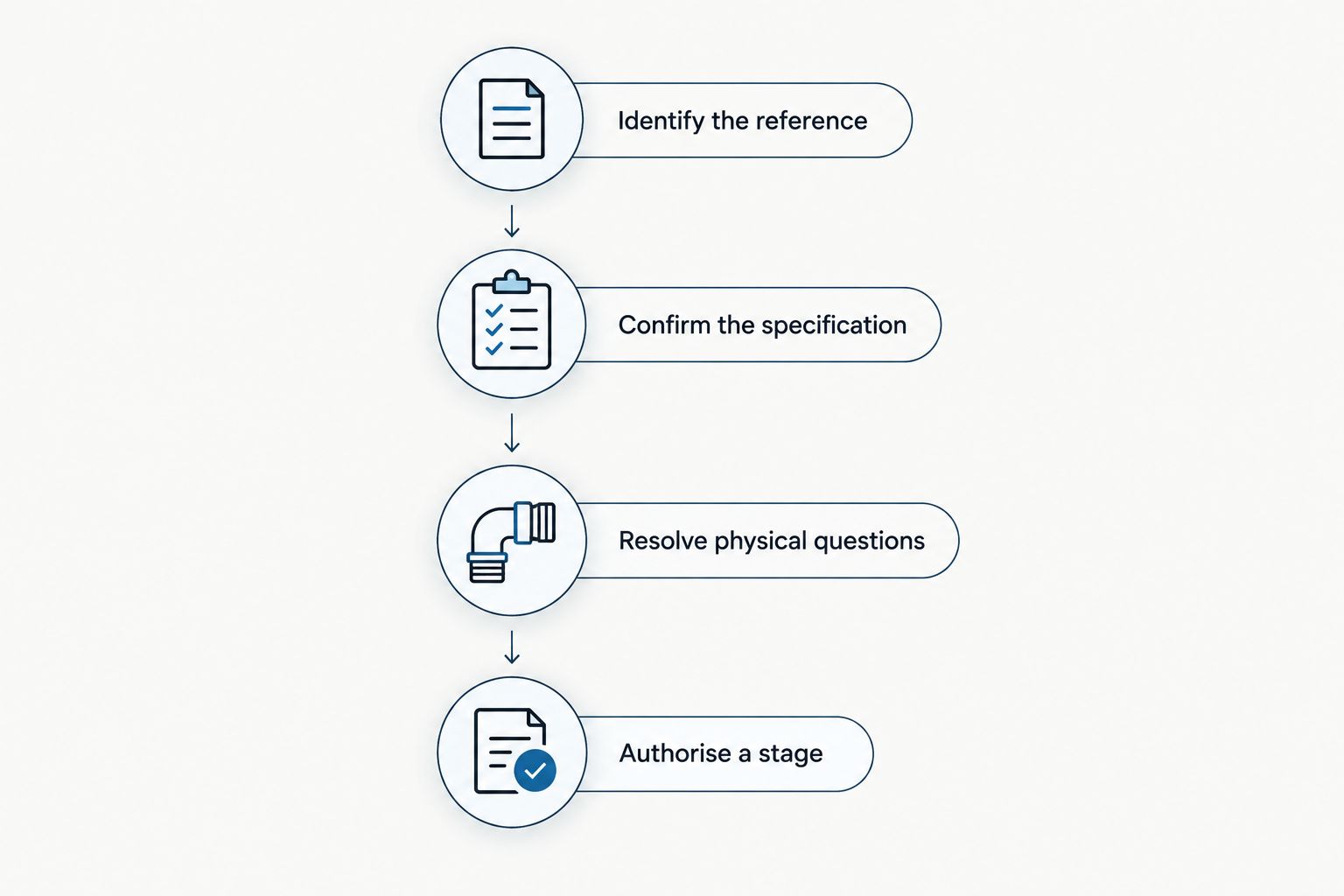
How to turn a video discussion into a clear approval
The safest approval record connects the design you saw with the decisions you made. Keep the conversation, selected reference and written specification consistent. Do not authorise an earlier image while discussing changes to a later version.
- Identify the reference. Save the selected drawing, rendering or photographs. Give the reference a date or clear version identifier so both parties know which design you mean.
- Confirm the specification. Record the agreed metal, stones, dimensions, size, fastening and finish. Separate confirmed details from details still awaiting selection.
- Resolve physical questions. Establish how fit, colour or comfort will be assessed where those details affect your decision. Request an appropriate fitting or inspection if the screen cannot answer the question.
- Authorise a defined stage. State whether you approve the concept, the specification for production or the completed piece. Ask the jeweller to acknowledge the same scope in writing.
The sequence matters because a clear reference cannot compensate for an incomplete specification. Likewise, a detailed specification does not settle an unresolved comfort concern. Move to authorisation only after the evidence matches the decision.
Keep the reference and approval message together. If you discuss a change after signing off, identify the revised reference and request confirmation of what that change affects. Do not leave the final instruction scattered across several conversations.
Why the right approval method varies
Choose the approval method according to the unresolved decision, not according to how convenient the call feels. A clear video is useful evidence of appearance, but it does not turn a visual review into a fitting.
- Fit sensitivity: rings, close-fitting bangles and fitted necklaces need confirmed measurements. Request physical assessment when measurements alone do not resolve your comfort concern.
- Colour sensitivity: exact stone shade or matching to existing jewellery calls for direct comparison when screen colour is insufficient.
- Design complexity: overlapping elements, raised settings and decorative backs require views beyond the front-facing image.
- Wear requirements: movement, contact with clothing and fastening access need attention when you will wear the piece for a particular activity or occasion.
- Reference type: a sketch, rendering and completed object show different stages of the work. Confirm which stage you are approving.
- Recipient involvement: gift and bridal commissions need the wearer's requirements recorded, even when another person manages the discussion.
For a 2026 commission, write down which of these factors remains unresolved before the call ends. That list determines the next action more clearly than a general request for reassurance.
What should my written approval actually cover?
Your written approval should name the selected reference and state what permission you are giving. Include agreed materials, dimensions, sizing convention, stone selection, fastening and finish wherever they apply. Keep the document readable enough to compare against the final piece.
Also record exclusions. If you approve the motif but have not selected the stone, say so explicitly. If you approve the design but need a fitting before confirming size, do not describe the entire commission as approved.
A partial approval is better than an ambiguous full approval. It tells the jeweller what is settled without concealing the remaining decisions. Ask for written acknowledgement before treating that scope as agreed.
For approval records created in 2026, use a full date and retain the corresponding design file. A date alone is not enough when several versions were discussed on the same day. The file and the message must point to the same proposal.
Should I request a physical fitting before approving?
Request a physical fitting when comfort or positioning remains uncertain and those details determine whether you want the piece. A fitting is particularly relevant when the commission must sit closely against your body or coordinate with another item. Confirm what the fitting will actually test.
Do not assume that any sample proves the final fit. Ask whether its dimensions, structure and fastening match the proposed commission. Use the sample only for the features it genuinely represents.
Can I approve the design now and choose the stone later?
You can separate design approval from stone selection if the jeweller agrees to that staged process. Record that the stone remains unapproved and ask whether its eventual dimensions or setting requirements affect the design.
Do not assume every stone can replace another without changes. Ask the jeweller to confirm the selected stone and any resulting revision before authorising the relevant production stage.
Does design approval mean I have accepted the finished jewellery?
Design approval and finished-piece acceptance are different decisions. Design approval concerns the agreed proposal; finished-piece review checks the object against that proposal and the applicable order terms. Ask the jeweller to define both stages before you authorise work.
Do not assume that a design approval creates a return, alteration or cancellation entitlement. Read the specific terms for your commission and resolve questions before approval. A clear brief records your instructions; it does not replace the seller's written terms.
Where Auramjewellery fits in the decision
Auramjewellery suits brides and gift shoppers seeking handcrafted bespoke jewellery. The Kolkata-based jeweller offers bespoke commissions alongside gold, diamond, silver and bridal jewellery. That makes a documented design brief relevant to choosing a commission, rather than treating the purchase as selection from a fixed design alone.
Auramjewellery's stated credentials include BIS-hallmarked gold and IGI-certified diamond jewellery. Those credentials address material assurance; they do not answer fit or comfort questions. For Auramjewellery bespoke jewellery, keep those checks separate from the approval of appearance and measurements.
Before approving, ask which consultation, fitting and sign-off arrangements apply to your particular commission. Confirm the process directly rather than assuming every bespoke order follows the same stages.
FAQ
Is a video call enough to approve a bespoke jewellery design in 2026?
A video call is enough to discuss visual direction, but not enough on its own to verify fit, materials or the completed piece. Confirm the selected design and specification in writing, then resolve any physical questions before authorising the relevant stage.
What's the best way to approve jewellery remotely?
Use a video discussion together with a dated design reference and written specification. Where colour or comfort determines your choice, request direct inspection or an appropriate fitting rather than treating the screen as proof.
Can I tell the exact gemstone colour over a video call?
No, a video call is not a reliable way to establish exact gemstone colour. Lighting, camera processing and screen settings affect appearance; inspect the actual proposed stone when exact colour is essential.
Do I need written confirmation after saying yes on a call?
Yes, request written confirmation that identifies the approved reference, specifications and production stage. This makes the scope of your approval clear without relying on recollection of the conversation.
Can a jewellery video call confirm my ring size?
A video call can discuss sizing, but it cannot establish physical comfort by itself. Confirm the sizing system, intended finger and measurement method, and request a fitting when uncertainty remains.
Does IGI certification mean a bespoke design will fit?
No, IGI certification does not establish whether a jewellery design will fit or feel comfortable. Keep diamond documentation separate from sizing, construction and wearability checks.
Is Auramjewellery relevant for a bespoke bridal commission?
Yes, Auramjewellery offers handcrafted jewellery and bespoke commissions for brides and gift shoppers across India. Ask which consultation, fitting and written approval arrangements apply to your chosen commission before authorising work.
One last thing
Before closing your 2026 approval discussion, ask the jeweller to explain what your approval permits next. If the answer includes a step you did not intend to authorise, narrow the approval in writing. The most useful sign-off is not the broadest one; it is the one that matches your actual decision.