A complete Indian bridal jewellery set uses around 150 grams of gold on average in 2026, with full sets ranging from roughly 80 grams for a light five-piece order to 300 grams or more for a heavy nine-piece South Indian or Bengali bridal set. That headline figure covers hallmarked gold only — stone-setting, kundan work, and making charges are billed on top of it and never add a single gram to that number.
- A full Indian bridal jewellery set needs 80 to 300 grams of gold in 2026, averaging around 150 grams total.
- Necklaces and bangles carry the most weight; rings and maang tikka add the least.
- 22K (916) gold is the standard purity for bridal sets; 18K cuts weight but changes the finish.
- Stone-setting, kundan work, and making charges add cost without adding to the hallmarked gold weight.
- A bespoke commission lets a bride fix an exact gram target before karigars start work.
Why this matters
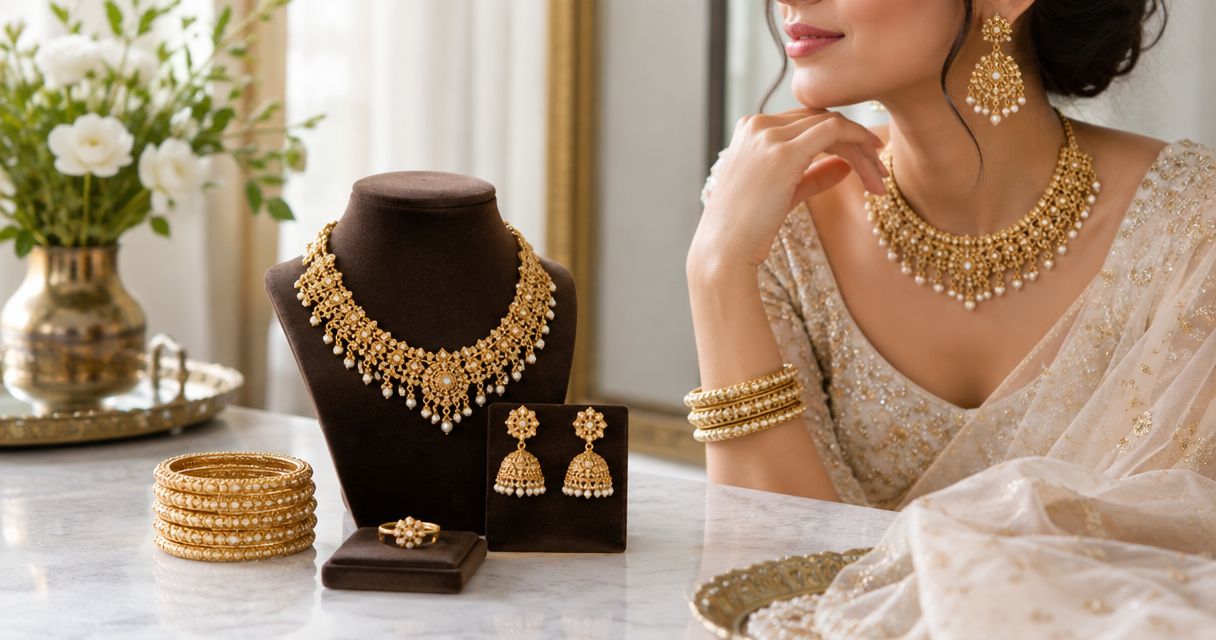
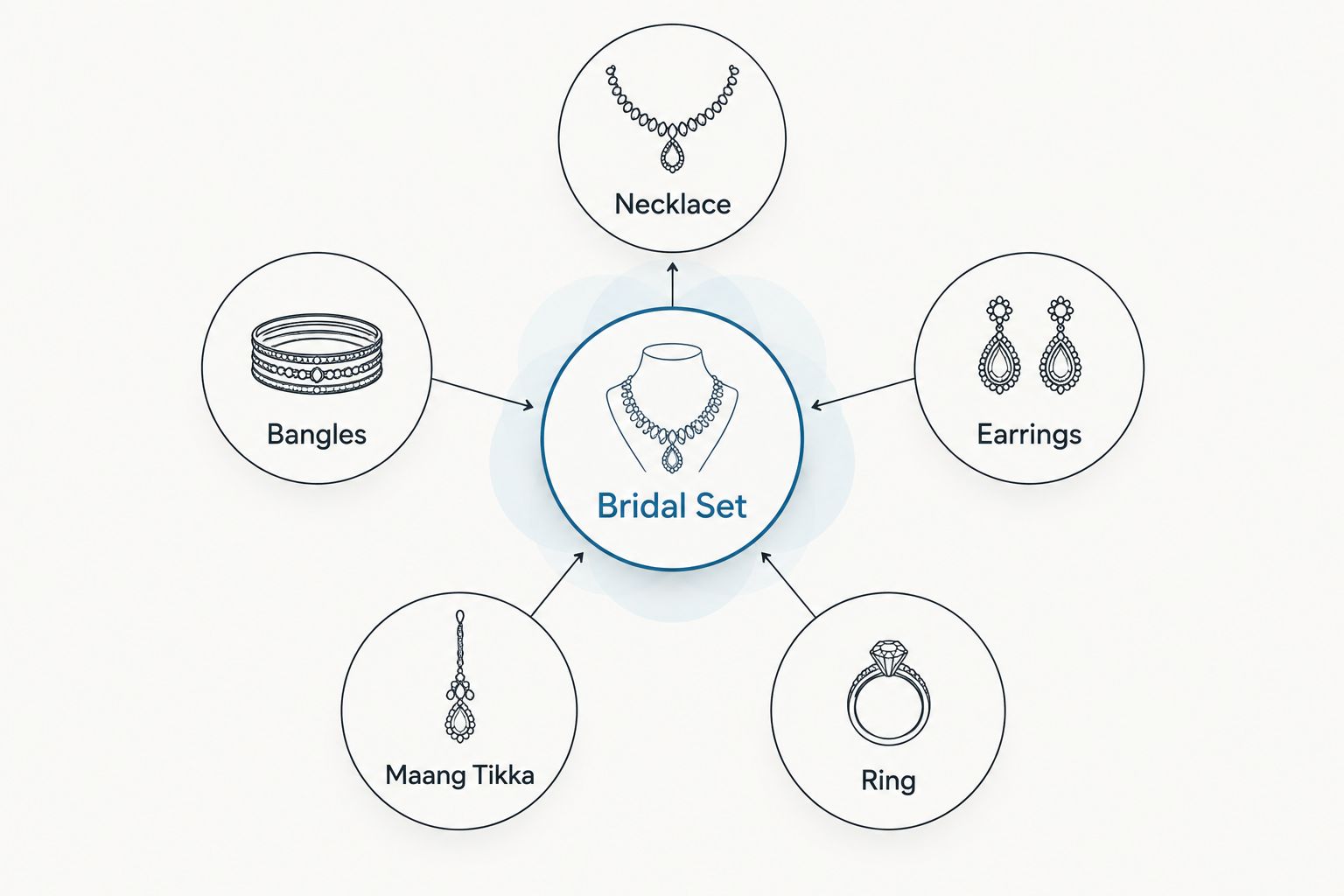
Most brides ask how much gold for a bridal set the wrong way round — starting from a budget figure and working backward to a gram weight, when it works better in reverse. Fix the piece count and design style first, because weight moves with those two choices far more than it moves with the day's gold rate or the season you're buying in. A look through bridal gold jewellery sets for weddings makes the spread obvious — five-piece minimalist sets sit near 80 to 100 grams, while nine-piece traditional sets with a haar, choker, jhumka, bangles, maang tikka and ring push past 250 grams for the same bride.
That spread matters more in 2026 than it did a few years ago, because gold rate movement means the same 150 gram set can price very differently within weeks even though the metal weight hasn't changed at all. Locking the design and gram target early, before comparing gold rates day to day, is what actually controls the final bill. Auram Jewellery works through this exact planning order with bridal jewellery clients: fix design and piece count first, then price against the day's gold rate — never the other way round.
How much gold is needed for a bridal jewellery set?
The breakdown below reflects typical gram weights per piece for a 2026 Indian bridal order sized in 22K (916) gold, the purity standard for most BIS hallmarked bridal jewellery in India. Actual weight for any single piece still shifts with chain thickness, bangle diameter, and how much of the surface is plain gold versus stone or kundan work — two necklaces of identical length and karat can differ by 15 to 20 grams purely on how solid the metalwork is.
| Piece | Typical gold weight | Notes |
|---|---|---|
| Necklace (haar) | 40–100 g | Heaviest single piece; South Indian and Bengali styles run heavier |
| Bangles (pair) | 60–150 g | Solid kada weighs more than hollow tube bangles |
| Earrings (jhumka pair) | 15–40 g | Chandelier and jhumka styles add weight over studs |
| Maang tikka | 8–15 g | Often skipped in lighter five-piece sets |
| Ring | 4–8 g | Smallest contributor to total set weight |
Add the low end of every row and a five-piece set with no maang tikka lands near 127 grams; add the high end of every row and a nine-piece set pushes past 300 grams. Most bridal orders in Kolkata and across eastern India fall somewhere in the middle of that range, closer to the 150 gram average than either extreme.
Bridal necklace: 40 to 100 grams
A single bridal necklace, or haar, uses 40 to 100 grams of gold and is almost always the heaviest individual piece in a set. Short chokers and single-strand necklaces sit at the low end of that range; long layered haars, rani haars, and Bengali gold chur-style necklaces sit at the high end. A necklace heavy in kundan or diamond work can look considerably larger than its actual gold weight, because the stones fill visual space that a plain-gold piece would need extra metal to cover. That's also why two necklaces priced very differently can carry near-identical gram weights.
Bridal bangles (pair): 60 to 150 grams
A pair of bridal bangles or kada typically runs 60 to 150 grams combined, second only to the necklace in total weight and often the single biggest lever for changing a set's overall gram figure. Solid kada bangles weigh close to double a hollow tube bangle of the same diameter and pattern. Wrist size plays a direct role too — a larger bangle diameter simply needs more gold to close the circle at the same gauge, independent of design. Brides adding a second stacking bangle for the ceremony should expect the pair figure above to roughly double.
Earrings and maang tikka: 25 to 55 grams combined
Bridal jhumka earrings run 15 to 40 grams for the pair on their own, and a maang tikka adds another 8 to 15 grams when the set includes one. Chandelier-style and multi-layer jhumka designs sit toward the top of that range; simple studs or button earrings sit well below it. A bride building a lighter five-piece set who skips the maang tikka saves that 8 to 15 grams outright, with no change to the rest of the set.
Ring: 4 to 8 grams
A bridal ring is the lightest piece in a full set at 4 to 8 grams of gold, though a large stone-set cocktail-style ring can push a little past that range in mounting metal alone. Ring weight barely moves the total set figure either way, which is why brides trying to trim overall weight almost always start with the necklace or bangles instead.
How to reduce total gold weight without losing the look
Weight and visual size are not the same thing, and a few design choices bring the gram figure down without shrinking a piece:
- Hollow or tube construction instead of solid metal cuts weight noticeably on bangles and chains while keeping the same outer size.
- Fewer pieces in the set — dropping to a five-piece set from a nine-piece one removes 50 to 100-plus grams depending on what's cut.
- Stone or kundan-heavy surfaces in place of plain gold reduce the metal needed to cover the same visual area.
- 18K gold on select pieces, such as earrings or a maang tikka, trims weight where the color difference matters least.
None of these change the hallmark purity requirement on the pieces that stay 22K — they just shift where the gold actually goes. Auram Jewellery's karigars can walk through which of these tradeoffs suits a specific design during a bespoke consultation, before any metal is cast.
Why gold weight varies in a bridal order
Six factors decide where any given bridal set lands inside the 80 to 300 gram range, and most of them have nothing to do with budget.
- Purity chosen — 22K (916) gold is the standard for Indian bridal jewellery; the same design cast in 18K weighs less because the alloy carries a higher share of base metal.
- Number of pieces — a five-piece set (necklace, earrings, bangles, ring, maang tikka) weighs far less than a nine-piece set that adds a haar, choker layer, or nath.
- Regional style — South Indian temple sets and Bengali gold chur bangles run heavier by tradition, while Punjabi and Marwari sets often add kalire and extra bangle stacks that push the total higher still.
- Construction method — hollow tube bangles and chains cut weight and cost while keeping close to the same visible size as solid pieces.
- Stone and kundan coverage — the more a design leans on stones, kundan, or enamel instead of plain gold surface, the less gold that piece needs for the same visual footprint.
- Personal sizing — wrist and neck measurements set a floor on bangle diameter and necklace length that no design choice can shrink below.
Weight is only half of what decides the final number on a bridal order. The bridal gold jewellery set cost for any given gram weight moves with the day's gold rate, the purity chosen, and making charges on top of the metal — so a 150 gram set can price differently from one week to the next in 2026 even though the gold weight itself never changes. Wastage and making charges are typically calculated on gross weight, which is why asking for a net weight figure at the time of order matters as much as the gram target itself.
How much gold is needed for just a bridal necklace?
A bridal necklace alone needs 40 to 100 grams of gold, making it the single heaviest piece in most sets by a wide margin. Long layered haars and Bengali-style necklaces sit near the top of that range; short chokers and single-strand pieces sit near the bottom.
How much gold does a pair of bridal bangles use?
A pair of bridal bangles uses 60 to 150 grams of gold combined, second only to the necklace in total weight across a full set. Solid kada bangles weigh close to double a hollow bangle of the same diameter, so construction method matters as much as size here.
Is 18K gold lighter than 22K for the same bridal design?
Yes — 18K gold weighs less than 22K for an identical design because it carries a higher proportion of alloy metal per gram. Most Indian bridal buyers still choose 22K (916) gold for the color and resale profile that 18K doesn't fully replicate, even at the cost of extra weight.
Brides who want an exact gram figure locked in before committing to a design skip the guesswork entirely. Auram Jewellery's bespoke bridal commission process for gold jewellery starts with a target weight and a karigar sketch before any metal is cut, so the final BIS hallmarked weight matches what was agreed at the outset rather than a rounded estimate handed over at delivery. That process runs through third-generation karigars working piece by piece rather than a factory line, which is exactly why gram weight can be pinned to a specific number instead of a range.
Plan your bridal gold weight with a karigar
Book a video consultation before finalizing your bridal jewellery design.
FAQ
How much gold is needed for a bridal jewellery set in 2026?
A full bridal jewellery set needs 80 to 300 grams of gold in 2026, averaging around 150 grams for a standard five-to-seven piece set. Weight climbs with piece count and drops when a design leans on kundan or stone work instead of plain gold.
What is the average weight of a bridal necklace?
A bridal necklace averages 40 to 100 grams of gold, making it the heaviest single piece in most sets. Long haars and layered necklaces sit near the top of that range.
How much gold do bridal bangles use?
A pair of bridal bangles uses 60 to 150 grams of gold combined. Solid kada bangles weigh close to double a hollow bangle of the same diameter.
Is 22K or 18K gold better for a bridal set?
22K (916) gold is the standard purity for Indian bridal jewellery and is what most BIS hallmarked bridal sets use. 18K weighs less for the same design but shifts the color and resale profile away from the traditional bridal look.
Does stone or kundan work add to the gold weight?
No, stone, kundan, and diamond settings are weighed and billed separately from the gold itself. A heavily stone-set piece can look larger than its actual gold weight because the stones fill visual space without adding gold.
How many pieces are in a standard bridal jewellery set?
A standard bridal jewellery set has 5 to 9 pieces: necklace, earrings, bangles, ring, and maang tikka at minimum, with a haar, choker, or nath added in heavier traditional sets. Piece count is the single biggest driver of total gold weight.
Can I set an exact gold weight before ordering a bridal set?
Yes, a bespoke commission lets you fix a target gram weight and design before any gold is cut, rather than accepting a rounded estimate. Auram Jewellery's karigars work from that target weight through to the final BIS hallmarked piece.
One last thing
Ask for gross and net gold weight in writing before signing off any bespoke bridal order, not after the pieces arrive. Gross weight includes the metal used in stone settings and mountings; net weight is what actually counts toward your BIS hallmark and your final bill. The two figures can diverge more than expected once kundan or diamond settings enter a design, and it's the net number, not the gross one, that sets what you're paying gold rate on in 2026. Auram Jewellery separates the two on every bespoke bridal jewellery quote before work begins, precisely so that gap never shows up as a surprise at delivery.