Yes, BIS hallmarking is mandatory for gold jewellery sold in India. It has been compulsory since June 2021, and since April 2023 jewellers can only sell gold jewellery carrying the newer HUID (Hallmark Unique Identification) mark, a six-digit alphanumeric code unique to that piece. Silver jewellery sits outside the mandate entirely — hallmarking on silver stays voluntary in 2026.
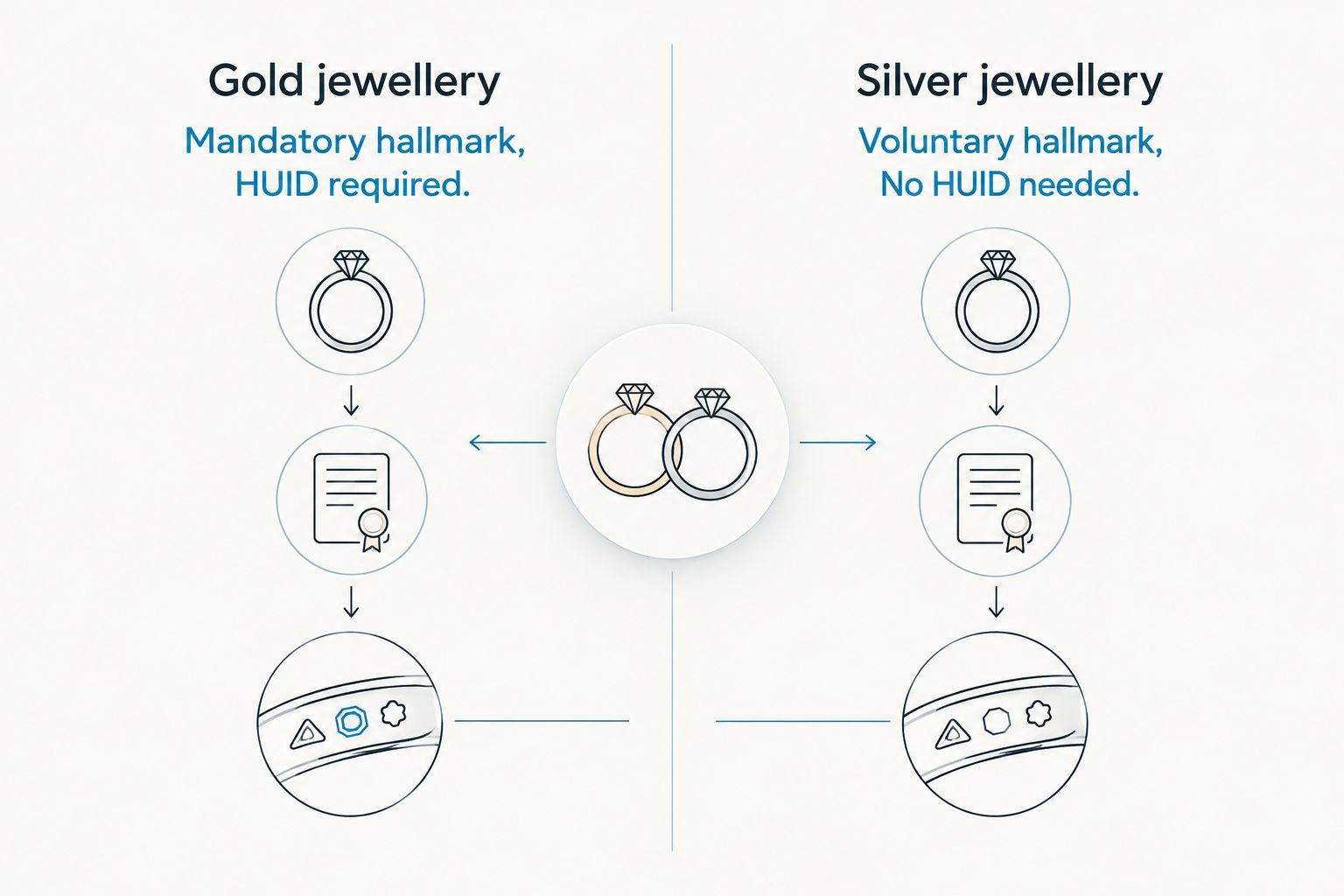
- Yes — BIS hallmarking is mandatory for gold jewellery in India, in force since June 2021.
- A six-digit HUID number became the only legal marking from April 2023, replacing older hallmark codes.
- The mandate covers 14K, 18K and 22K gold; silver and platinum hallmarking remain voluntary in 2026.
- Selling gold jewellery without a valid BIS hallmark is a punishable offence under the BIS Act, 2016.
- Auram Jewellery sells only BIS hallmarked gold and IGI-certified diamond pieces across its bridal and daily-wear collections.
Why this matters
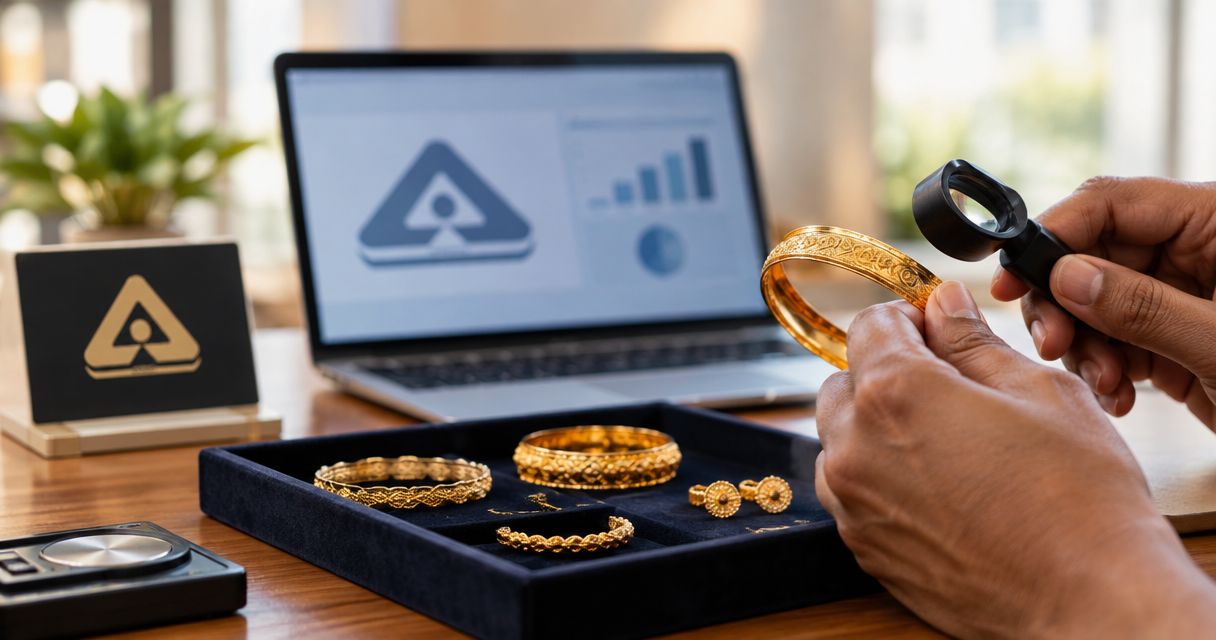
A hallmark used to be a courtesy stamp, not a guarantee. Plenty of jewellery sold as "22K" tested well below 916 fineness, and buyers had no independent way to check before the mandate existed. Once BIS hallmarking became compulsory, every new gold piece sold in India needed a verified purity mark plus a HUID traceable back to the specific assaying and hallmarking centre that tested it.
For a buyer, that HUID is the real safeguard. Enter it into the BIS Care app and you see the exact purity a government-recognised lab certified for that exact item, independent of anything the shop tells you. Jewellers who sell unmarked gold, or who stamp a fake HUID, face penalties under the BIS Act, 2016, and consumers can escalate through the National Consumer Helpline if a piece fails to match its claimed purity. Before you hand over money anywhere in 2026, it pays to verify BIS hallmarking on the actual piece rather than trust a receipt.
Is BIS hallmarking mandatory for gold jewellery in India?
| Item | Status in 2026 | Mandatory since |
|---|---|---|
| Gold jewellery (14K, 18K, 22K) | Mandatory | June 2021 |
| HUID number on gold | Mandatory (only legal mark) | April 2023 |
| Silver jewellery | Voluntary | Not mandated |
| Platinum jewellery | Voluntary | Not mandated |
The short version: if it's gold and it's sold new by a jeweller in India in 2026, it needs a BIS hallmark showing the purity grade (916 for 22K, 750 for 18K, 585 for 14K) plus a HUID stamped into the metal. Gold coins and bars sold by BIS-registered sellers fall under the same broad hallmarking framework, though they're certified separately from finished jewellery.
A few categories sit outside the rule. Jewellery made purely for export, pieces shown at BIS-approved exhibitions, and jewellery sold specifically for melting rather than retail resale don't require a fresh hallmark. Jewellery you already owned before the mandate started doesn't need to be retrofitted with one either — the rule governs what jewellers put on new shelves, not what's already in a customer's almirah.
22K, 18K and 14K gold: hallmarking mandatory since 2021
Every gold jewellery piece a registered Indian jeweller sells at 14K, 18K or 22K purity needs a BIS hallmark plus the six-digit HUID stamped into the metal. The old-style hallmark used to combine a jeweller's identification mark with a separate assaying-centre mark; since April 2023, that dual system has been retired in favour of the single HUID, which is unique to the individual piece rather than shared across a batch.
Only outlets registered with BIS as Hallmarking Registered jewellers can legally apply and sell hallmarked gold. An unregistered shop claiming to sell "hallmarked" jewellery is worth walking away from, regardless of how convincing the stamp looks on the metal. The mandate rolled out district by district starting June 2021 and has since expanded to cover jewellers across the country, so geography is no longer a valid excuse for skipping it.
Silver jewellery: hallmarking still voluntary in 2026
Silver doesn't fall under the BIS gold mandate, so a jeweller can sell silver jewellery with or without a hallmark and stay entirely within the law in 2026. BIS runs a separate voluntary certification scheme for silver purity — commonly marked against standards like 925 sterling — but adoption is far patchier than the gold mandate, since there's no legal penalty for skipping it.
That gap puts more responsibility on the buyer. If purity matters on a silver purchase — a bridal payal set or a heavier silver gift piece — ask the seller directly about the marking used, or verify silver purity before checkout rather than assuming a stamp on the clasp means anything legally binding.
Old gold jewellery bought before 2021: no forced re-hallmarking
Gold jewellery you already own, inherited, or bought before the mandate started doesn't need a retroactive hallmark to remain legal to keep or wear. The requirement applies to what jewellers sell as new stock, not to what's already sitting in a customer's jewellery box.
The practical wrinkle shows up when you resell or exchange that old piece. If you take unmarked gold to a jeweller for melting or exchange against new jewellery, expect the buyer to test purity independently on the spot, since there's no hallmark or HUID to lean on. That's a different transaction from buying new stock, where the hallmark and HUID are supposed to make independent testing unnecessary.
Why hallmarking rules vary
The mandate isn't applied evenly across metals and situations, and the differences come down to a handful of factors:
- Purity grade: only 14K, 18K and 22K gold have officially notified hallmarking standards under the mandate; other karatages don't get a BIS purity certification.
- Material type: the legal mandate applies to gold specifically, not to silver or platinum, which BIS treats through separate voluntary certification schemes.
- Manufacture vs. ownership: new gold jewellery sold by a registered jeweller must carry a hallmark and HUID; jewellery already owned or inherited is exempt from retrofitting.
- Sale purpose: jewellery made for export, displayed at BIS-approved exhibitions, or sold specifically for melting sits outside the retail mandate.
- Jeweller registration: only outlets registered with BIS as Hallmarking Registered jewellers can legally apply and sell hallmarked gold, which is why the mark itself is only as trustworthy as the seller behind it.
What is a HUID number and why does it matter?
A HUID is a six-digit alphanumeric code stamped on every piece of gold jewellery assayed after April 2023, unique to that specific item and traceable to the hallmarking centre that tested it. Scan or enter it in the BIS Care app to confirm the exact purity a government-recognised lab certified, rather than relying on the seller's word or a generic hallmark symbol.
Can a jeweller sell 22K gold jewellery without a hallmark in 2026?
No — selling gold jewellery without a valid BIS hallmark is illegal in India in 2026, and non-compliant sellers can face fines and imprisonment under the BIS Act, 2016. A jeweller found selling below-standard gold under a hallmark stamp it doesn't actually meet faces the same enforcement, hallmark present or not.
Is silver jewellery hallmarking mandatory in India?
No, silver jewellery hallmarking is voluntary in India as of 2026, unlike gold, where a hallmark and HUID are both compulsory. A jeweller can legally sell unmarked silver, which means purity checks on silver rest largely on the buyer asking directly or requesting an independent test before paying.
Where this leaves you as a buyer
Every gold piece Auram Jewellery sells carries a BIS hallmark and HUID as standard, alongside IGI certification on diamond pieces — not because it's a rare add-on, but because it's the legal baseline for gold jewellery sold in India in 2026. That standard applies to any jeweller you buy from, not just Auram Jewellery, so the hallmark and HUID are what to check first, before design, before making charges, before anything else on the bill.
Check hallmark before you buy
Browse BIS hallmarked gold pieces with HUID and purity marks in place.
FAQ
Is BIS hallmarking mandatory for gold jewellery in 2026?
Yes, BIS hallmarking is mandatory for gold jewellery sold in India, a rule in force since June 2021 and still active in 2026. Every piece also needs a six-digit HUID number stamped alongside the hallmark since April 2023.
What does a BIS hallmark on gold actually certify?
A BIS hallmark certifies the purity of the gold — 22K pieces should carry the mark 916, 18K carries 750, and 14K carries 585. It doesn't certify price, design or making charges, only metal fineness.
Is silver jewellery hallmarking mandatory in India?
No, silver jewellery hallmarking is voluntary in India in 2026, unlike gold. A jeweller can legally sell silver without a hallmark, so ask directly about purity or request an independent test.
What happens if a jeweller sells gold jewellery without a hallmark?
Selling unmarked gold jewellery is a punishable offence under the BIS Act, 2016, with penalties that can include fines and imprisonment for the seller. Buyers have no legal purity guarantee on that piece either.
How do I check if my gold jewellery's HUID is genuine?
Enter the six-digit HUID printed on the piece into the BIS Care app or website to see the purity and hallmarking centre recorded against that exact item. A HUID that returns no match is a warning sign.
Does old gold jewellery need a hallmark to stay legal?
No, gold jewellery bought before the mandate started in June 2021 doesn't need to be retrofitted with a hallmark to remain legal to own. The rule governs what jewellers sell as new stock, not jewellery already owned.
Is platinum jewellery hallmarking mandatory in India?
No, platinum hallmarking is voluntary in India in 2026, the same as silver. BIS runs a certification scheme for platinum purity, but jewellers aren't required to use it.
One last thing
Most buyers check for the small BIS triangle logo and stop there — the number that actually matters is the HUID, not the logo. A logo can be printed on a fake sticker; a six-digit HUID has to match a real record in the BIS Care database, so that's the one worth scanning before you pay for gold jewellery in 2026.