Bridal gold jewellery set cost in 2026 is not a fixed number — it moves with the daily gold rate, the purity you choose, the weight of the set, and how much of the price sits in making charges versus raw gold. This guide breaks down exactly what builds that final invoice so you know what you're paying for before you walk into a showroom or open a WhatsApp chat with a jeweller.
- Bridal gold jewellery set cost in 2026 is built from four levers: gold weight, purity, the day's gold rate, and making charges.
- 22KT gold (916 hallmark, 91.6% purity) is the standard for Indian bridal sets — lower purity drops cost but also durability of fine detailing.
- Making charges, not gold weight, are usually where two similar-looking bridal sets differ most in final price.
- 3% GST applies on top of the gold plus making charges component for every hallmarked purchase in India.
- Auram Jewellery prices every bridal gold jewellery set against the live gold rate, not a fixed catalog number.
Why this matters
Most brides shopping for a bridal gold jewellery set in 2026 get quoted wildly different numbers for what looks like the same design. That's rarely dishonesty — it's usually a mismatch in purity, gold weight, or how making charges are calculated.
Understanding the four cost levers before you shop means you can compare quotes apples-to-apples instead of just picking the lowest sticker number, which often hides a purity downgrade or a higher making-charge percentage. Auram Jewellery's bridal gold jewellery sets for weddings are built on BIS hallmarked 22KT gold with the purity stamped on every piece, so the purity variable is fixed and only weight, design, and the day's gold rate move the final number.
How much does a bridal gold jewellery set cost in 2026?
The honest answer: it's a formula, not a price tag. A bridal gold jewellery set's cost adds up across four components, and each one moves independently.
| Cost component | What determines it |
|---|---|
| Gold value | Net gold weight in grams × the day's gold rate for the purity chosen |
| Purity | 22KT (916 hallmark, 91.6% gold) is standard for bridal sets; 18KT costs less per gram but is softer |
| Making charges | Charged per gram or as a percentage of gold value; complex filigree, temple, or kundan work costs more to craft than plain designs |
| Stones and diamonds | Added separately on top of gold and making charges when the set includes stone-setting or diamond work |
| GST | 3% applied on the gold plus making charges total, standard across India |
Because gold rates change daily, the same 40-gram bridal set design can price differently on a Monday versus a Friday. Auram Jewellery's gold rate check to purchase workflow walks through locking in a rate before you commit, which matters more for bridal sets than any other jewellery purchase because the gold weight involved is typically much higher.
Why bridal gold jewellery set cost varies
A handful of factors explain most of the price spread you'll see between showrooms and even between two sets at the same store:
- Gold weight — a full bridal set (necklace, earrings, maang tikka, bangles) can run anywhere from light 20-gram combinations to heavy 100-gram-plus sets, and weight is the single biggest lever on cost.
- Purity — 22KT (916 hallmark) versus 18KT changes the gold value component directly since 18KT contains less actual gold per gram.
- Making charges — hand-finished, third-generation karigar work on temple jewellery, filigree, or kundan pieces carries higher making charges than machine-cast plain gold.
- Design complexity — layered necklaces, jhumka drops, and multi-piece bridal sets require more karigar hours than a single chain or plain bangle.
- Stone and diamond additions — IGI-certified diamonds or semi-precious stones are priced separately from the gold and add to the total independent of gold rate movement.
- Bespoke commissioning — a fully custom bridal set designed around your measurements and preferences carries different making-charge structuring than a ready catalog piece.
Bridal set styles and how they affect cost
Not every bridal gold jewellery set is built the same way, and the style you pick changes where your money goes.
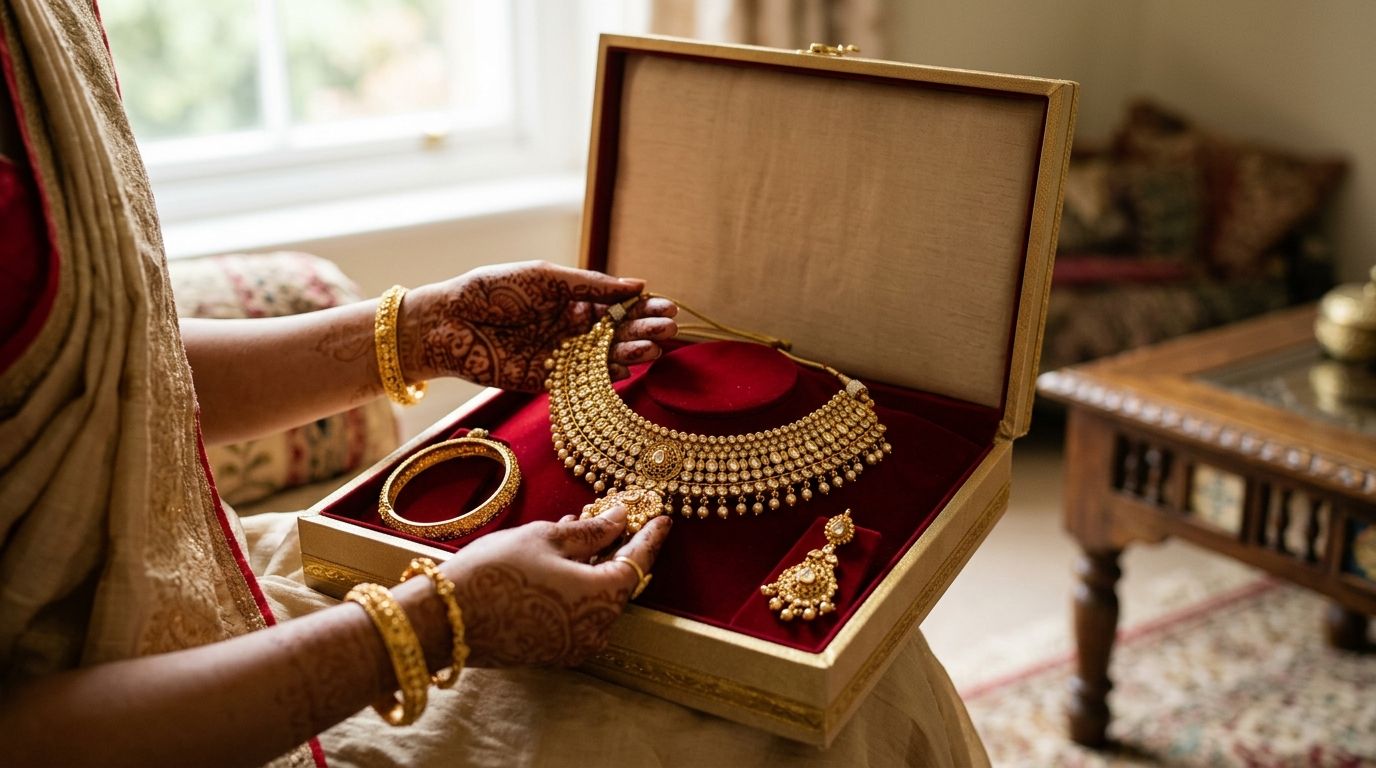
Temple jewellery sets lean on intricate deity and motif work, which pushes making charges higher relative to gold weight — Auram Jewellery's temple jewellery sets are a common reference point for this style. Filigree choker sets use fine wirework that takes longer to craft than solid-cast pieces, again shifting cost toward labor rather than raw gold. Chandbali and jhumka-style necklace sets typically carry more gold weight in drops and layering, so their cost leans harder on the gold-value component. Kundan and stone-set bridal pieces add a separate stone-cost line that has nothing to do with the gold rate at all.
Knowing which category your preferred design falls into tells you whether a quote is high because of gold weight, craftsmanship, or stonework — three very different things to negotiate on.
“Making charges, not gold weight, are usually where two identical-looking bridal sets end up costing differently.”
If you're commissioning rather than buying off the shelf, Auram Jewellery's custom bridal jewellery design process lets you set the gold weight and purity upfront with a Master Karigar, which removes most of the guesswork around final cost before craftsmanship even begins.
Track gold rates before you commit
Get alerted when gold rates move so you can time your bridal set purchase.
Related questions
Does making charges get added on top of gold price?
Yes, making charges are added on top of the gold value, either as a percentage of the gold price or as a flat per-gram rate depending on the jeweller and the design's complexity. Hand-finished bridal work from third-generation karigars typically carries higher making charges than factory-cast pieces because of the labor hours involved.
Is 22KT gold the right purity for a bridal set?
22KT gold (916 hallmark, 91.6% purity) is the standard choice for Indian bridal jewellery in 2026 because it balances gold value with enough durability to hold fine detailing and stone settings. Lower-purity gold like 18KT reduces cost but is softer and less traditional for bridal wear in most Indian regions.
How does the daily gold rate affect a bridal set's final cost?
The gold rate is quoted daily and applies directly to the gold-weight component of your set, meaning the same design can price differently across days without any change to craftsmanship or design. Locking your purchase date to a favorable rate day is one of the few cost levers a buyer actually controls.
FAQ
How much does a bridal gold jewellery set cost in 2026?
Bridal gold jewellery set cost in 2026 is calculated from gold weight times the day's gold rate, plus making charges, plus GST at 3%, plus any stone or diamond cost. There's no fixed price — it's a formula that moves with gold rate and design complexity.
What is included in the price of a gold bridal set?
The price includes the gold value based on net weight and purity, making charges for craftsmanship, GST at 3%, and separately priced stones or diamonds if the design includes them. Hallmarking charges may also apply depending on the jeweller.
Is 22KT or 18KT better for bridal jewellery?
22KT gold (916 hallmark, 91.6% purity) is the standard for Indian bridal sets because it holds fine detailing and stone settings better than softer 18KT gold. 18KT costs less per gram but is a less traditional choice for heavy bridal designs.
Why do two similar bridal sets have different prices?
Two similar-looking bridal sets usually differ in gold purity, actual gold weight, or making-charge percentage rather than visible design alone. Hand-finished karigar work on filigree or temple-style pieces carries higher making charges than machine-cast alternatives.
Does GST apply to gold jewellery purchases?
Yes, GST of 3% applies to the combined gold value and making charges on every hallmarked gold jewellery purchase in India, including bridal sets. This is added at checkout regardless of which jeweller you buy from.
Can I commission a custom bridal gold jewellery set?
Yes, custom bridal sets can be commissioned by setting gold weight, purity, and design details upfront with a jeweller's karigar team before craftsmanship begins. This approach removes most cost surprises since weight and purity are fixed at the start.
Should I buy a bridal set when gold rates are high or low?
Buying when gold rates are lower reduces the gold-value component of your bridal set's cost directly, since that's the only part of the price tied to daily market movement. Making charges and GST stay the same regardless of the rate on purchase day.
How is a hallmarked gold jewellery set verified?
A hallmarked gold jewellery set carries a BIS mark, purity grade (like 916 for 22KT), and a unique identification number that can be checked against the jeweller's certification. Verifying this before purchase confirms the purity you're paying for matches what's stamped on the piece.
One last thing
The gold-weight number on your invoice is the one figure most brides never ask to see broken out separately from the making charges — and it's the single fastest way to spot whether you're paying for craftsmanship or just paying more for the same gold. Ask any jeweller, including Auram Jewellery, to itemize gold value, making charges, and stone cost as three separate lines before you agree to a bridal gold jewellery set purchase in 2026.