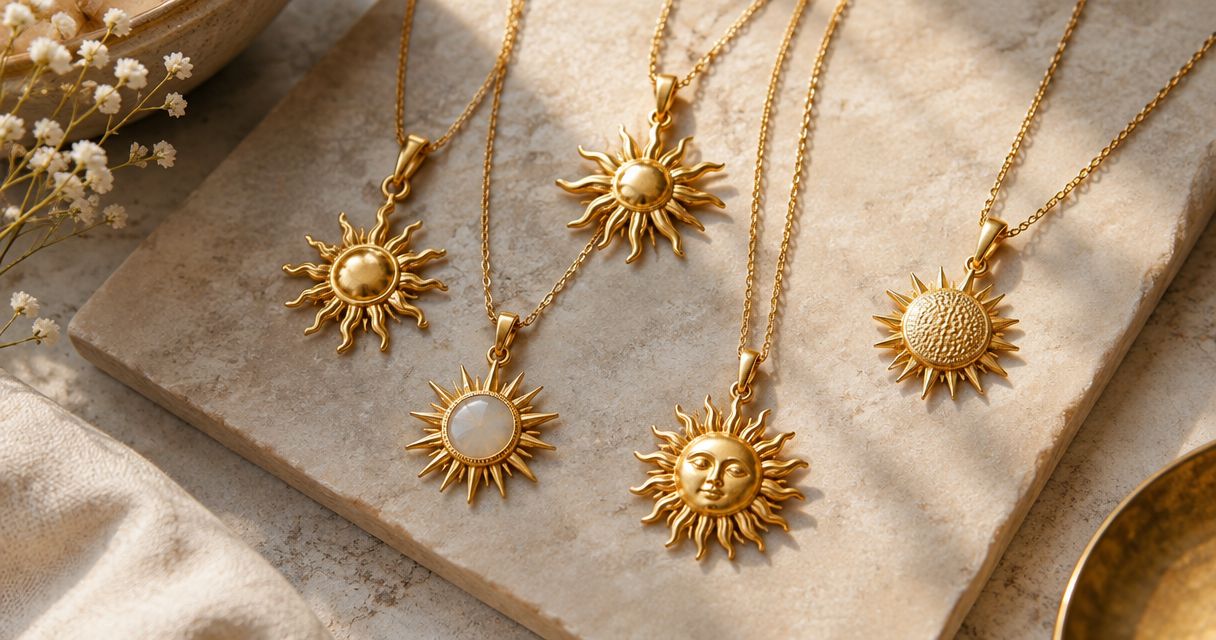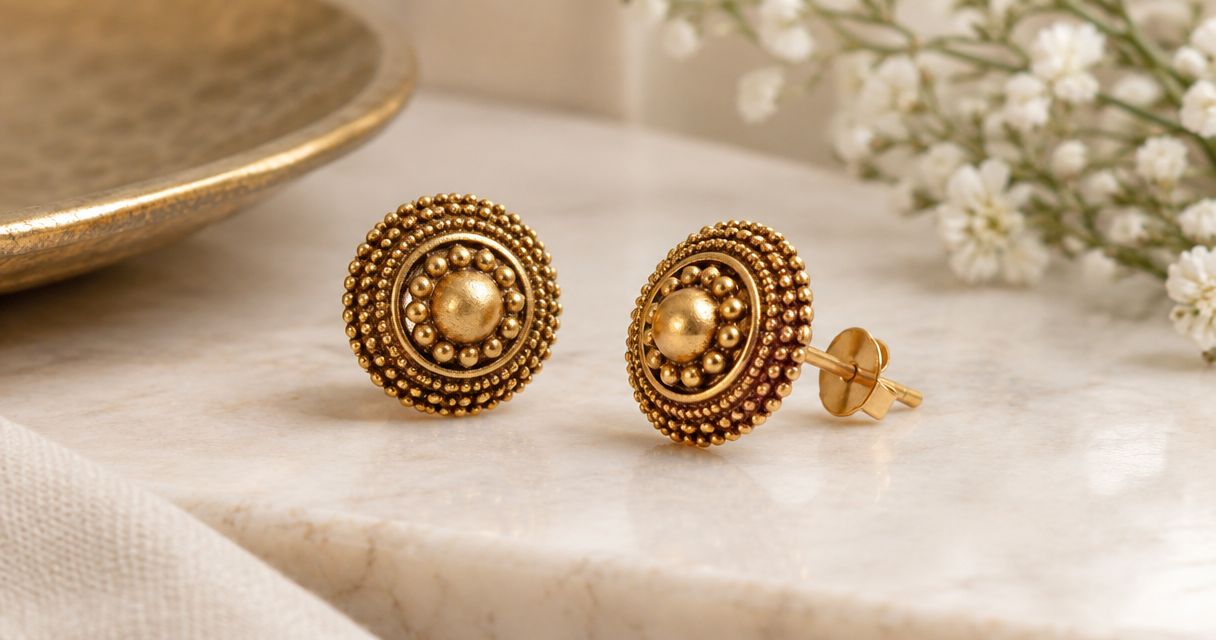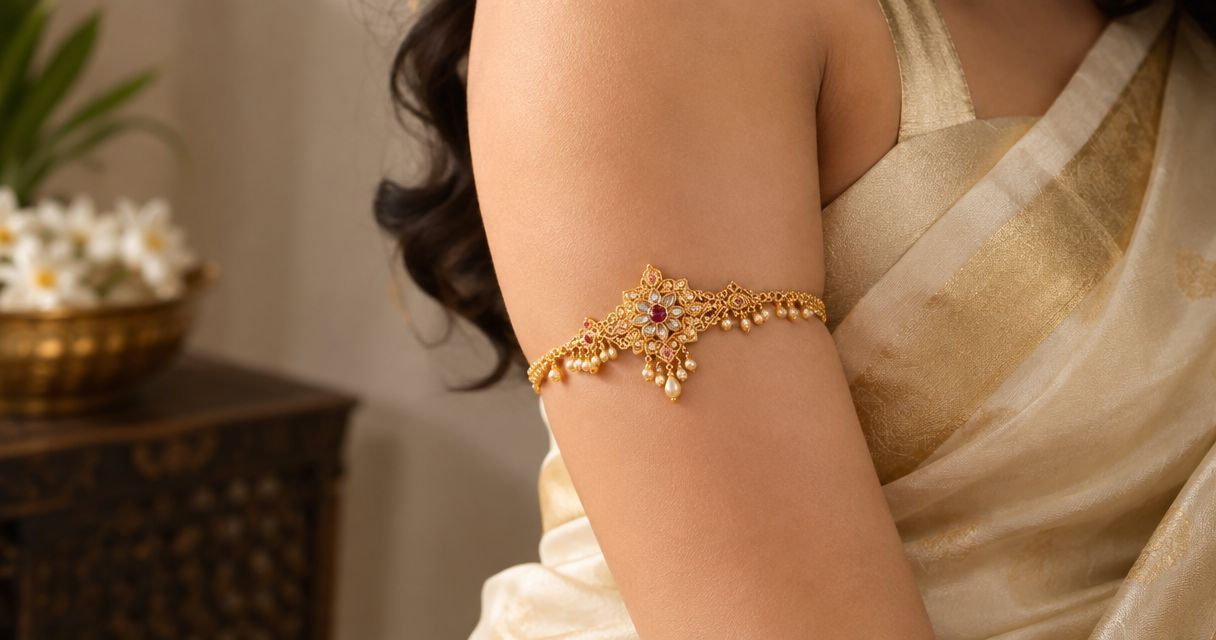
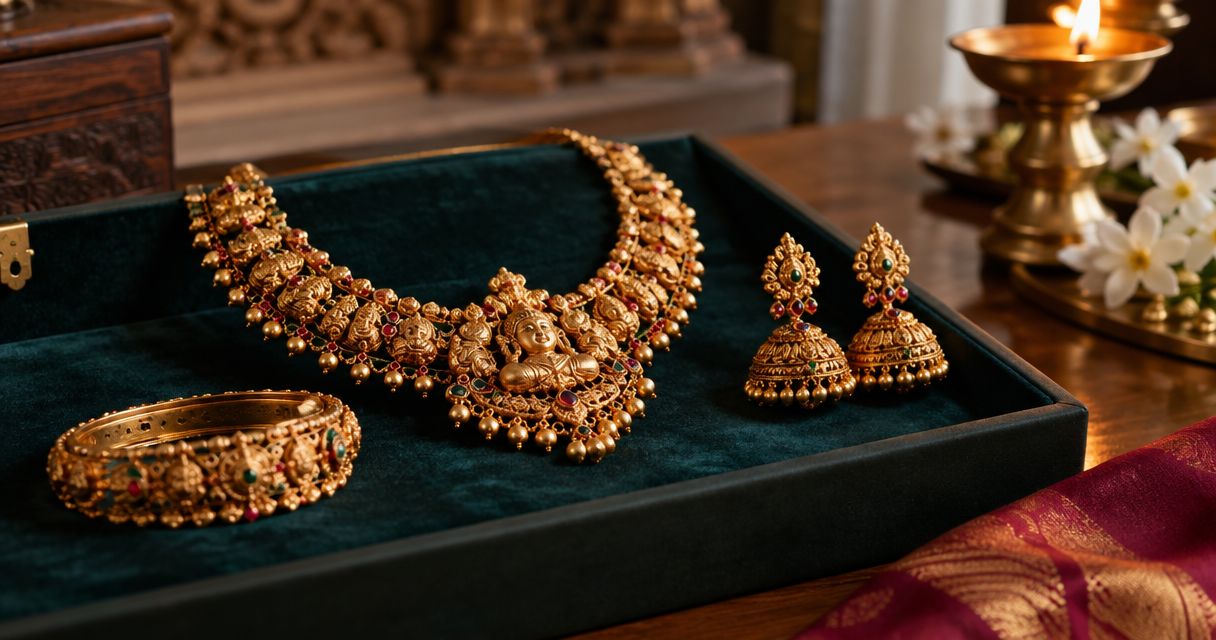
Temple jewellery in 2026 has no single price tag — it's built from the day's gold rate, the piece's weight, its purity, and the hand-finishing that goes into the antique motifs, so two nearly identical-looking sets can cost noticeably different amounts. The number that catches most first-time buyers off guard isn't the gold at all — it's the making charge, which covers the karigar's hours on repoussé work, nakashi detailing, and stone-setting, and it's rarely shown as a separate line until checkout.
- Temple jewellery price is set by gold weight, purity, making charges, and stone or pearl work — not a fixed catalog number.
- 22KT gold is 91.6% pure and carries the BIS 916 hallmark stamp, the purity standard most temple jewellery sets use.
- Making charges cover the hand-finishing on antique motifs and are the cost buyers most often overlook until final billing.
- Auram Jewellery prices temple jewellery sets against the live gold rate on the order date, not a locked catalog figure.
Why this matters
Gold-rate swings mean the same design quoted in January can price differently by March, so "how much does temple jewellery cost" doesn't have one answer for the whole year — it has an answer for the day you place the order. Buyers shopping for a wedding or festival often lock in a design early and only check the rate right before payment, which is the opposite of what protects the budget.
Temple jewellery also carries a heavier making-charge component than plain gold chains because of the raised motifs, deity or floral carvings, and often kemp or pearl embedding — all of it hand-done rather than machine-stamped. That labor cost sits on top of the gold value and doesn't move with the market the way the metal does.
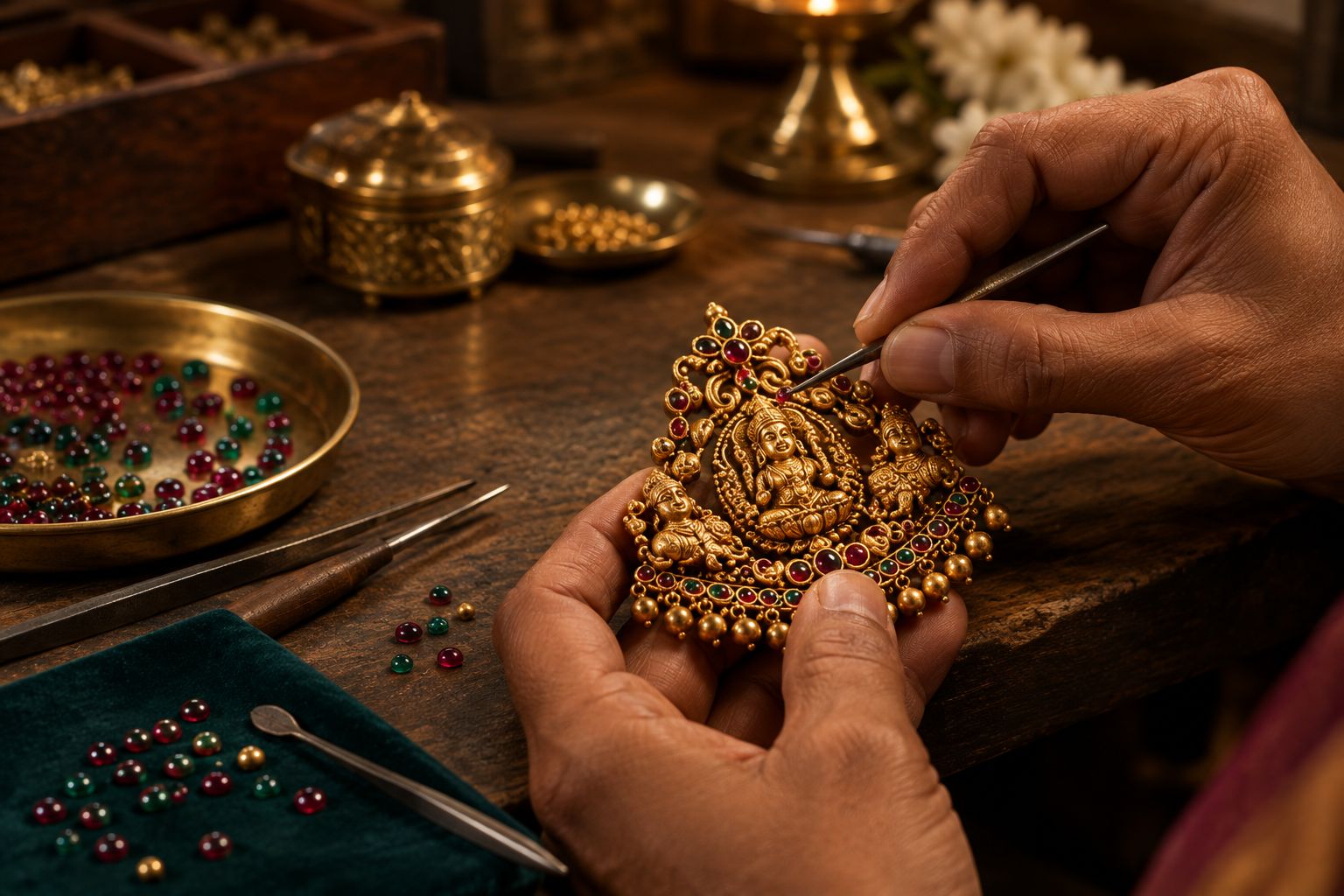
Browsing temple jewellery sets before you fix a budget shows the range of weight and stonework on offer, which helps more than any single average figure would.
How much does temple jewellery cost in 2026?
The honest answer: it's a calculation, not a catalog price. Every quote is built the same way, whether it's a small pendant or a full bridal set:
| Cost component | What it depends on |
|---|---|
| Gold value | Net weight of the piece x the gold rate on the day of purchase |
| Purity | 22KT (916 hallmark) is standard for temple designs; 18KT lowers gold cost but changes color and durability |
| Making charges | Complexity of the motif, hand-finishing, and whether it's a stock design or a bespoke commission |
| Stone or pearl work | Kemp, polki, or cultured pearls added as inlay, priced separately from the gold |
| Certification | BIS hallmarking on the gold; IGI certification if diamonds are part of the design |
No two temple sets add up the same way, because the weight and stone density vary piece to piece. A pendant with light gold-work and minimal stones will cost less than a heavier choker with dense kemp inlay, even at the identical gold rate.
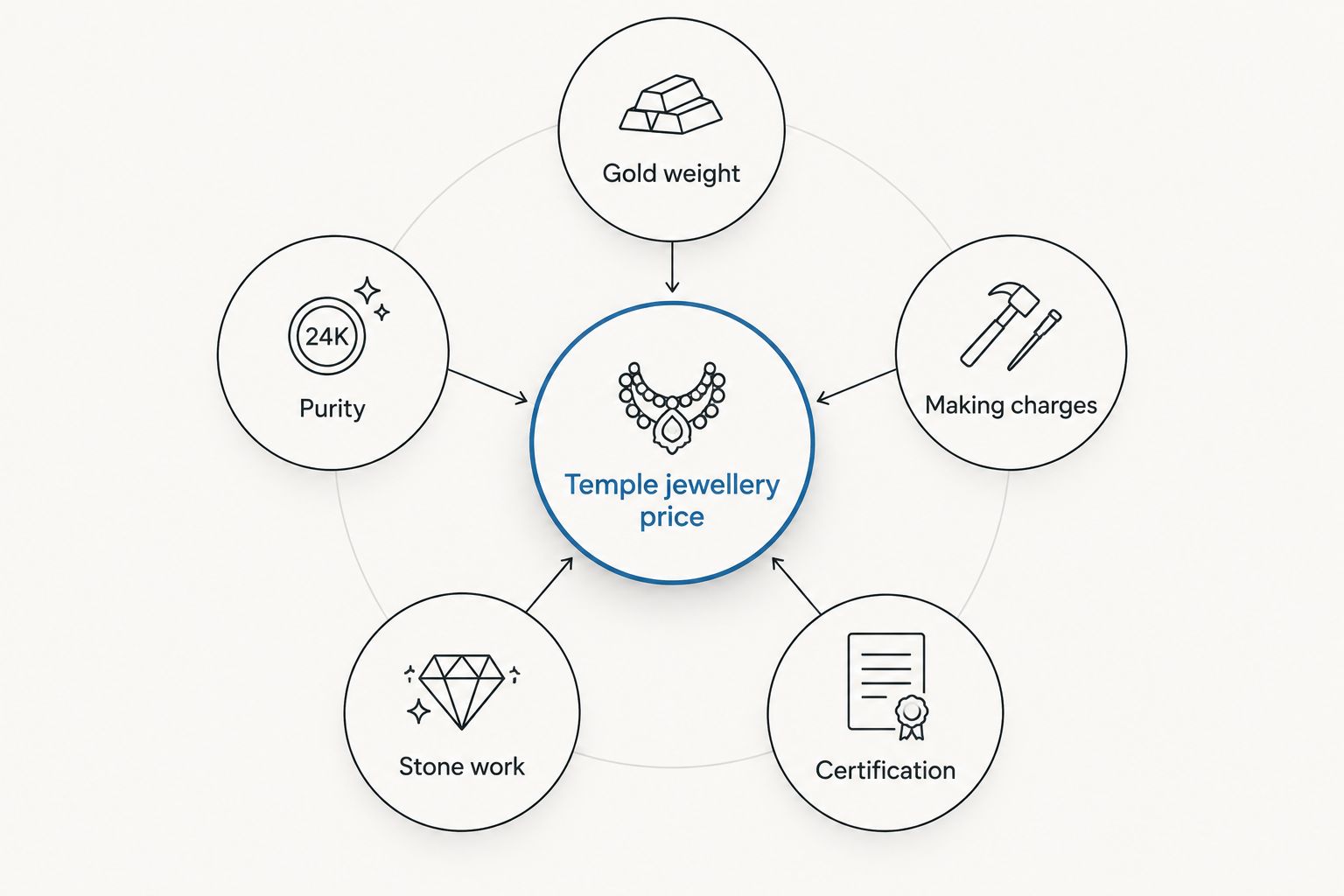
Why temple jewellery price varies
- Gold weight — heavier chokers and haars naturally cost more than lightweight pendants, even in the same design language.
- Purity — 22KT gold (916 fine) is the standard for temple pieces because it holds fine detailing better than 18KT, but it also carries more gold value per gram.
- Making charges — hand-finished antique and nakashi work costs more labor time than a plain polished surface.
- Stone and pearl inlay — kemp stones, polki, or cultured pearls add to the bill separately from gold, based on quantity and quality.
- Custom vs. stock design — a bespoke bridal commission generally carries higher making charges than a ready stock set because of design iteration time.
- Certification — BIS hallmarking is standard on gold; if diamonds are added to a temple-style set, IGI certification is a separate line.
“The gold rate decides the floor of the price; the karigar's hours on the motif decide how far above that floor it sits.”
Does purity change the price of temple jewellery?
Yes — 22KT gold (916 fine, 91.6% pure) costs more per gram than 18KT (750 fine, 75% pure) because it contains more actual gold. Most traditional temple designs stick to 22KT because the higher gold content holds fine carving and stone-setting better over years of wear, but some contemporary pieces use 18KT to lower weight and cost while keeping the look.
Is BIS hallmarking required on temple jewellery?
Yes, BIS hallmarking is mandatory for gold jewellery sold in India, and temple jewellery is no exception — check the BIS hallmarking rules for gold jewellery before you finalize a purchase. The hallmark confirms the karat purity stamped on the piece, whether 916 (22KT) or another standard, and it's worth verifying the hallmark rather than taking the seller's word for it.
Does the gold rate change my final bill after I place an order?
The price is usually fixed to the gold rate on the day you confirm the order, not the day you first browse the design — so a rate swing between browsing and buying can shift your total. Setting up gold rate alerts before your purchase date is the simplest way to time an order around a favorable rate instead of guessing.
Can I get a temple jewellery set custom-made instead of buying stock?
Yes, and it changes the making-charge math because a custom piece involves design consultation and iteration time that a stock set skips. A custom bridal jewellery commission with a Kolkata-based karigar lets you choose the exact motif density, gold weight, and stone type, but expect the making charge to run higher than a comparable stock design for that reason.
Get a temple jewellery quote
Talk through gold weight, purity, and design details before you commit.
Auram Jewellery's temple jewellery is made by third-generation karigars in Kolkata, priced against the live gold rate rather than a fixed catalog number, with BIS hallmarking on every gold piece and IGI certification where diamonds are involved. That's the difference between a factory-line price sheet and a quote built around the actual gold and labor in your piece.
FAQ
How much does temple jewellery cost in 2026?
Temple jewellery cost in 2026 is calculated from gold weight, purity, making charges, and any stone or pearl inlay, priced against the gold rate on the day of purchase rather than a fixed number. Two similar-looking designs can price differently based on weight and stonework density.
Is temple jewellery more expensive than plain gold jewellery?
Temple jewellery generally carries higher making charges than plain gold jewellery because of the hand-finished motifs, carving, and stone-setting work involved. The gold value itself is priced the same way regardless of design.
Is 22KT or 18KT better for temple jewellery?
22KT gold (916 fine, 91.6% pure) is the standard for temple jewellery because it holds fine detailing and stone-setting better over time. 18KT (750 fine, 75% pure) lowers gold cost and weight but is less traditional for this style.
Does temple jewellery need BIS hallmarking?
Yes, BIS hallmarking is mandatory for gold jewellery sold in India in 2026, including temple designs. The hallmark confirms the karat purity stamped on the piece.
Can temple jewellery have diamonds in it?
Some contemporary temple-style designs combine gold motifs with diamond accents, in which case IGI certification applies to the diamonds separately from the gold hallmarking. Traditional temple pieces more commonly use kemp stones or pearls instead.
Why do making charges vary so much between temple jewellery pieces?
Making charges vary based on the complexity of the motif, how much hand-carving and stone-setting is involved, and whether the piece is a custom commission or a stock design. Denser antique work and bespoke commissions carry higher making charges.
Should I lock the gold rate before ordering temple jewellery?
Watching the gold rate before you confirm an order matters because most jewellers price the final bill against the rate on the day of purchase, not the day you first browsed the design. Gold rate alerts help you time the order around a favorable day.
One last thing
The detail buyers skip most often is asking whether the making charge is quoted as a flat per-gram rate or a percentage of the gold value — the two methods can land at very different totals on the same design, and it's a fair question to ask before you sign off on any temple jewellery order in 2026.