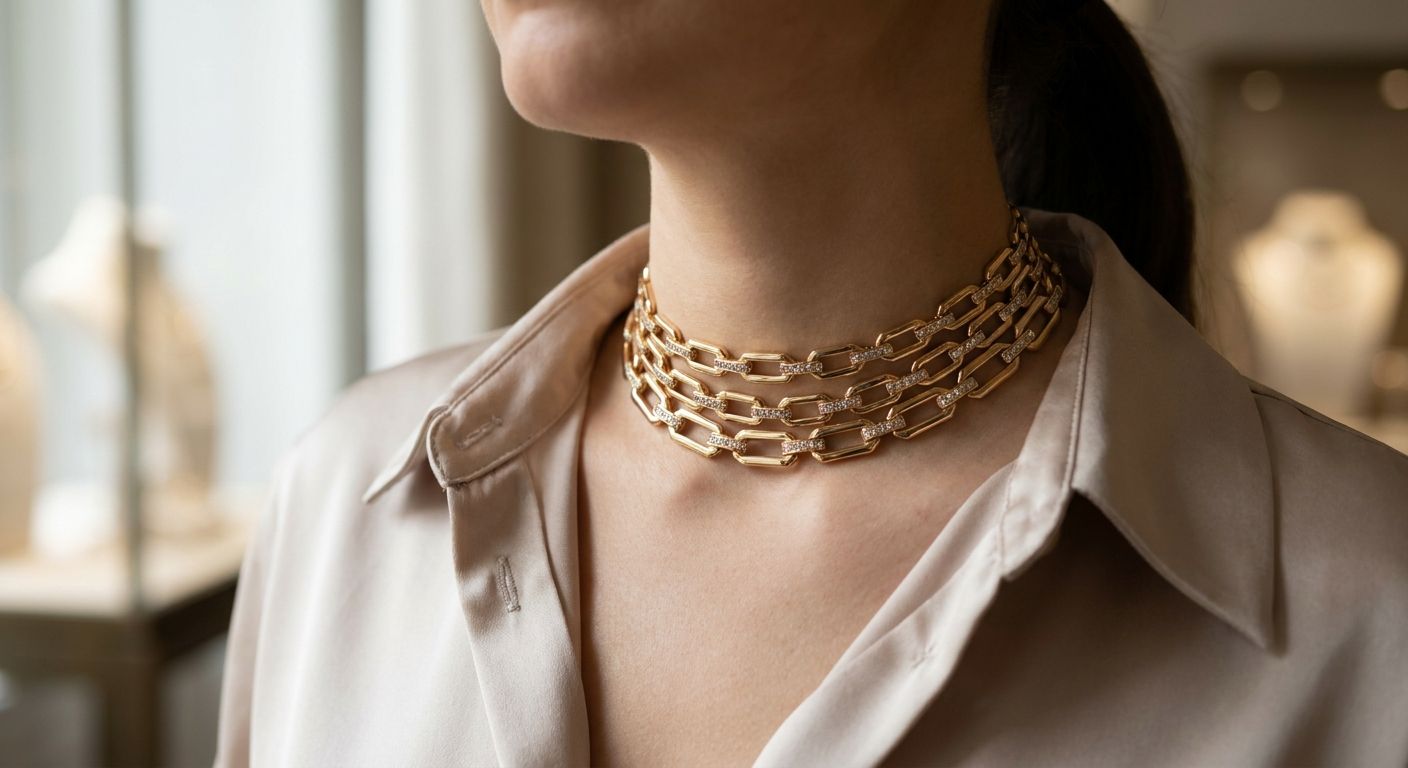
A gold choker necklace sits at the base of the neck, typically 14 to 16 inches long, and it is the single piece that decides whether a bridal or festive look reads as finished or half-done. This guide ranks the six choker designs that matter most in 2026 and tells you exactly which one fits your occasion, your budget conversation, and your comfort tolerance.
- Temple-style gold choker wins overall for South Indian bridal wear with dense repousse work.
- Kundan-meena gold choker is the standout for sangeet and mehndi functions in 2026.
- Minimalist gold choker suits daily wear and gifting where comfort matters more than statement weight.
- BIS 916 hallmarking (22KT, 91.6% purity) is the non-negotiable check across every design.
- Auram Jewellery's Master Karigars can recreate any of these six styles as a bespoke commission.
Why this matters
A choker sits directly on skin for hours during a wedding function, so fit and finish matter more here than on any other neckpiece. Get the design wrong and it either chokes the throat or slides loose by the second dance. Auram Jewellery, working out of Kolkata with third-generation karigars, builds each choker style to the wearer's neck measurement rather than a standard mold, and that single detail is why bespoke commissioning keeps beating off-the-rack pieces for bridal buyers in 2026. Explore the full range of handcrafted pieces on the Auram Jewellery atelier page before you commit to a design.
The verdict
Best overall: Temple-style gold choker. Best for sangeet and festive functions: Kundan-meena gold choker. Best for reception and diamond lovers: Polki diamond gold choker. Best for heirloom commissions: Antique nakshi gold choker. Best for everyday wear and gifting: Minimalist gold choker. Best for the full bridal ensemble: Layered bridal gold choker set.
What makes the best gold choker necklace design
- Karigari craftsmanship — hand-chased or hand-set work by artisans, not cast-and-polish factory output
- BIS hallmark purity — 916 stamp confirming 22KT gold, non-negotiable on any Indian gold purchase in 2026
- Stone certification — IGI paperwork on any diamond-set choker, since uncertified stones can't be resold or insured reliably
- Comfort at 14-16 inches — the choker has to sit flush against the neck without pinching the collarbone
- Occasion versatility — some designs work only for bridal ceremonies, others double for daily wear
- Weight distribution — a heavier choker needs a broader back clasp or it drags on the nape within an hour
Gold choker necklace designs at a glance
| Design | Best For | Standout Feature | Key Limitation |
|---|---|---|---|
| Temple-style gold choker | South Indian bridal ceremonies | Dense repousse deity motifs | Heavier build needs a wide clasp |
| Kundan-meena gold choker | Sangeet and mehndi functions | Enamel reverse-side work | Kundan stones are glued-set, not claw-set |
| Polki diamond gold choker | Reception and diamond lovers | Uncut IGI-certified diamonds | Higher cost puts it out of reach for daily wear |
| Antique nakshi gold choker | Heirloom bespoke commissions | Hand-engraved regional motifs | Longer production lead time |
| Minimalist gold choker | Everyday wear and gifting | Lightweight, low-maintenance | Lacks bridal statement presence |
| Layered bridal gold choker set | Full bridal ensemble looks | Matha patti and choker pairing | Requires coordinated styling across pieces |
1. Temple-style gold choker: best for South Indian bridal ceremonies
Temple-style work traces back to South Indian temple jewellery traditions and translates deity motifs, gopuram arches, and lotus forms into dense, hand-chased gold relief. It's the choker most brides in Tamil Nadu, Andhra, and Karnataka default to for the wedding day itself, and Auram Jewellery's Master Karigars build it on BIS 916 hallmarked 22KT gold with the repousse work done by hand rather than stamped.
Temple-style gold choker pros:
- Dense motif work reads as bridal even in dim mandap lighting
- Pairs naturally with a maang tikka and jhumkas without clashing
- Bespoke commissioning lets you specify the deity or motif set
Temple-style gold choker cons:
- Heavier gauge means it needs a properly fitted back clasp
- Not suited to daily wear or office settings
Best for: South Indian bridal ceremonies and temple-visit functions. Verdict: Buy if your wedding follows South Indian ritual dress codes; the motif density is doing the work no other design here matches.
2. Kundan-meena gold choker: best for sangeet and mehndi functions
Kundan-meena chokers set kundan stones on the front and enamel meenakari work on the reverse, so the piece performs a second look when it flips during dance movements at sangeet or mehndi. The stones are glued and foil-backed rather than claw-set, which is standard kundan technique and not a defect, but it does mean the piece needs gentler handling than a claw-set diamond choker.
Kundan-meena gold choker pros:
- Reverse meena work adds a second design layer for photographs
- Vibrant color palette suits daytime and evening festive functions alike
- Lighter than temple-style for multi-hour dance events
Kundan-meena gold choker cons:
- Glued kundan stones need careful storage, not daily wear
- Color palette can clash with certain lehenga shades if not coordinated in advance
Best for: Sangeet, mehndi, and daytime festive functions. Verdict: Buy for pre-wedding functions; hold off if you need something durable enough for daily rotation.
3. Polki diamond gold choker: best for reception and diamond lovers
Polki work sets uncut, naturally shaped diamonds into gold rather than faceted stones, giving the choker a softer sparkle than a modern diamond necklace. Any polki or diamond-set choker from Auram Jewellery carries IGI certification on the stones, which matters if you ever need to insure or resell the piece.
Polki diamond gold choker pros:
- IGI-certified stones give the piece resale and insurance backing
- Uncut diamond sparkle photographs well under reception lighting
- Conflict-free sourcing is standard practice on certified stones
Polki diamond gold choker cons:
- Diamond-set pieces sit at a higher price point than gold-only designs
- Requires more careful cleaning than plain gold work
Best for: Wedding receptions and buyers who want a certified diamond piece. Verdict: Buy if certification and resale value matter; wait if your budget conversation hasn't landed yet.
4. Antique nakshi gold choker: best for heirloom bespoke commissions
Nakshi work is hand-engraving at its most literal — regional motifs cut directly into gold sheet by hand, the kind of technique third-generation karigars carry from workshop to workshop. It's the slowest design on this list to produce because every engraving line is done individually, which is exactly why it suits a bespoke, heirloom-intent commission rather than an off-the-shelf purchase.
Antique nakshi gold choker pros:
- Fully bespoke motif selection through direct co-creation with the karigar
- Antique finish ages well and doesn't show wear the way polished gold does
- No two commissioned pieces are identical
Antique nakshi gold choker cons:
- Longest production lead time of any design here
- Not a same-week purchase option
Best for: Heirloom pieces and bespoke commissions planned months ahead. Verdict: Buy if you're commissioning for a wedding date set far enough out; skip if you need something in the next two weeks.
5. Minimalist gold choker: best for everyday wear and gifting
A minimalist gold choker strips the design down to a slim gold band or a light chain-link collar, built for the neck to forget it's wearing jewellery by the second hour. It's the design most gift shoppers land on because it works across age groups and doesn't require matching to a specific outfit.
Minimalist gold choker pros:
- Lightest build on this list, suited to daily wear
- Works as a gift without needing to know the recipient's wardrobe
- Easiest to layer with other neckpieces
Minimalist gold choker cons:
- Lacks bridal statement presence for wedding-day wear
- Simpler design gives less room for bespoke motif customization
Best for: Everyday wear and gift purchases. Verdict: Buy for gifting or daily rotation; skip if you need bridal-day impact.
6. Layered bridal gold choker set: best for the full bridal ensemble
A layered bridal choker set pairs the choker itself with a matha patti or a graduated second layer, built to be worn as one coordinated ensemble rather than a standalone piece. It's the most involved styling commitment on this list because every layer has to match in gold tone and motif language.
Layered bridal gold choker set pros:
- Coordinated multi-piece look reduces last-minute styling decisions
- Scales well for high-visibility events like the wedding reception stage
- Bespoke commissioning lets each layer be sized to the bride individually
Layered bridal gold choker set cons:
- Requires coordinated styling across every piece in the set
- Heaviest total gold weight of any option here
Best for: Full bridal ensemble looks on the main wedding day. Verdict: Buy if you want one coordinated bridal look locked in ahead of time.
How this ranking was built
Each design was scored against the six criteria above: karigari craftsmanship, BIS 916 hallmark purity, IGI stone certification where relevant, comfort at the standard 14-16 inch choker length, occasion versatility, and weight distribution. No two designs share the same "best for" slot, so the ranking works as a decision tree by occasion rather than a single leaderboard.
Commission your gold choker design
Co-create a bespoke piece with Auram Jewellery's Master Karigars.
Which gold choker necklace design should you choose?
If you're marrying into a South Indian ceremony, the temple-style gold choker is the default and nothing else on this list matches its ritual fit. For sangeet and mehndi, the Kundan-meena gold choker carries the color and reverse-side detail the function calls for. Reception day and diamond buyers land on the Polki diamond gold choker for the IGI-backed sparkle, while anyone planning months ahead for an heirloom piece should commission the antique nakshi gold choker now rather than later. Daily wear and gifting settle on the minimalist gold choker, and brides who want one coordinated head-to-collar look should lock in the layered bridal gold choker set early, given its styling demands.
FAQ
What's the best gold choker necklace design for a wedding day?
The temple-style gold choker is the standard bridal choice for South Indian ceremonies in 2026, thanks to its dense repousse motif work. For other regional traditions, the layered bridal gold choker set covers the full ensemble look.
Is a Kundan-meena choker better than a Polki diamond choker?
Neither is strictly better; they serve different functions. Kundan-meena suits pre-wedding festive functions like sangeet, while Polki diamond work is built for the reception and carries IGI stone certification.
How much gold purity should a choker have?
Look for a BIS 916 hallmark, which confirms 22KT gold at 91.6% purity. This is the standard purity level for handcrafted Indian gold jewellery in 2026.
What length should a gold choker necklace be?
A choker typically runs 14 to 16 inches, sitting flush at the base of the neck. Bespoke commissioning lets the length be set to the individual neck measurement rather than a standard size.
Are uncut diamonds in a Polki choker real diamonds?
Yes, polki diamonds are real, naturally shaped uncut diamonds set into gold rather than faceted stones. Certification from IGI confirms authenticity and grading on any polki piece.
Can a gold choker be worn daily?
A minimalist gold choker is built for daily wear because of its lighter gauge and simpler design. Heavier styles like temple-style or layered bridal sets are built for occasion wear, not daily rotation.
How long does a bespoke gold choker commission take?
Hand-engraved designs like antique nakshi work take the longest because every motif line is cut individually. Commissioning months ahead of a wedding date is the safer route for any bespoke choker.
One last thing
The "916" stamped into BIS-hallmarked gold isn't a batch code — it's the purity reading itself, shorthand for 91.6% gold content at 22 karats, and it's the one number worth checking before any choker purchase in 2026 regardless of design.