Making charges on gold jewellery in India average around 12% of the gold's value in 2026, ranging from 3% for simple machine-made pieces to 25% for intricate handcrafted bridal designs. The percentage quoted at the counter often leaves out wastage charges, a separate 2% to 10% add-on that lands on your bill before GST at 3% is calculated.
- Gold jewellery making charges range 3% to 25% of gold value in 2026, averaging near 12% across categories.
- Machine-made chains and bangles sit at 3%-10%; handcrafted bridal and temple pieces run 18%-25%.
- Wastage charges (2%-10%) are often billed separately from making charges — ask for a combined figure before you commit.
- GST of 3% applies to gold value plus making charges combined, not gold alone.
- Auram Jewellery prices bespoke commissions around karigar hours rather than a fixed showroom formula.
Why this matters
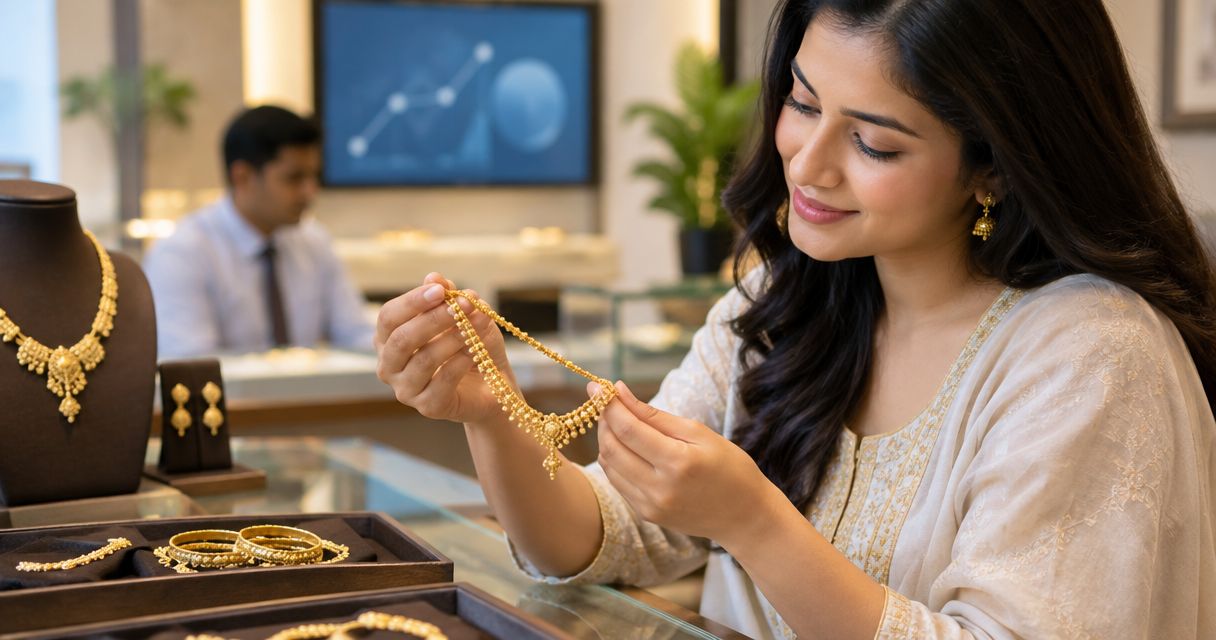
Most buyers compare gold rates across jewellers and stop there, but the making charge line is where two shops selling identical 22KT gold jewellery can differ by thousands of rupees on the same design. A first-time gold jewellery buyer who only checks the daily gold rate is missing half the bill.
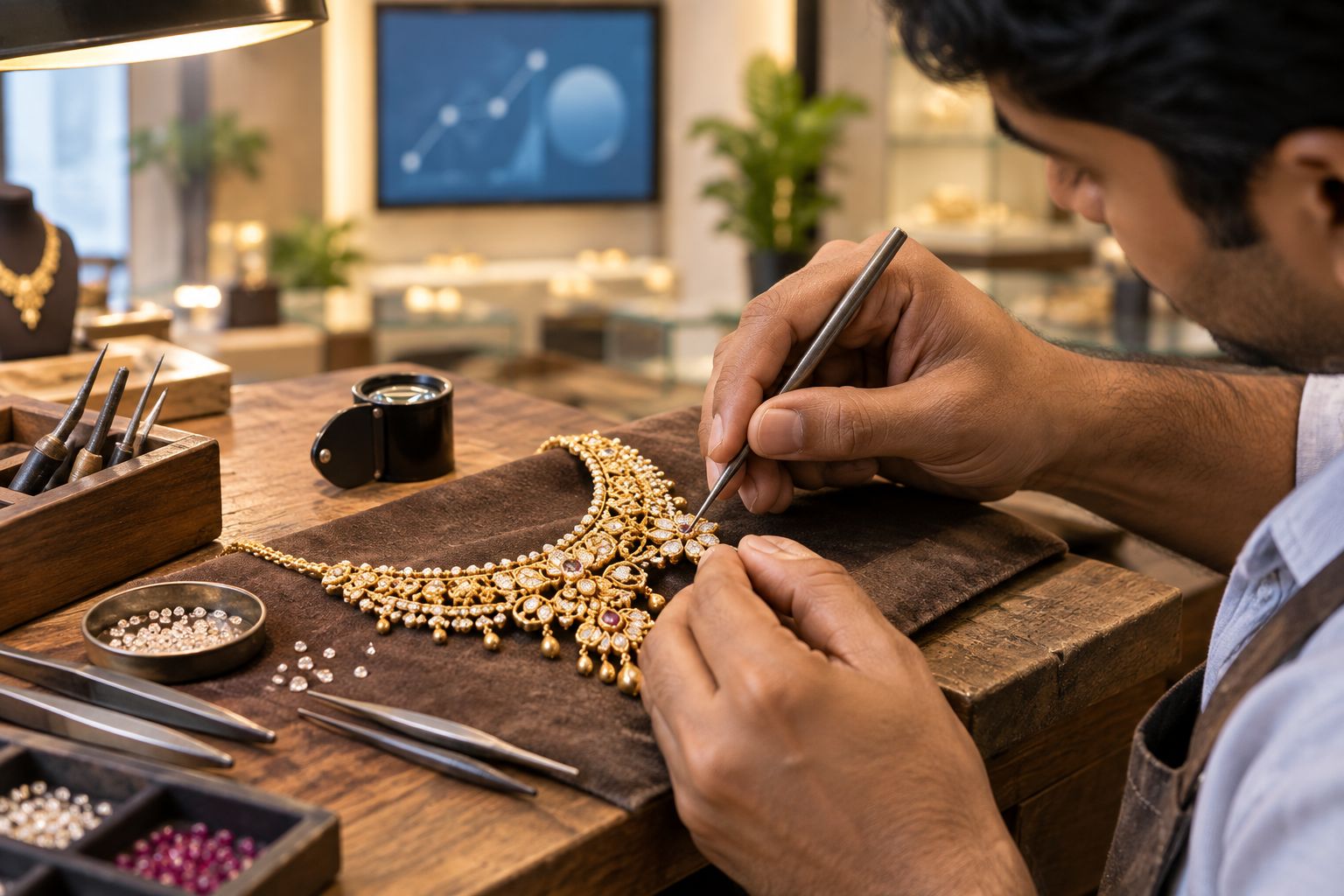
Making charges pay for the labour that turns raw gold into a wearable piece — casting, hand-finishing, stone-setting, polishing. The percentage isn't fixed by law, so it varies by jeweller, by design, and by how much of the work is done by machine versus by hand. That gap is exactly why the same-looking necklace can carry very different final prices.
How much are making charges on gold jewellery in India?
The rate depends almost entirely on how the piece was made. Here's the breakdown that holds across most Indian jewellers in 2026:
| Jewellery Type | Typical Making Charge | What Drives the Rate |
|---|---|---|
| Machine-made, lightweight (plain chains, bangles) | 3%-10% | High-volume casting, minimal hand-finishing |
| Hand-finished traditional designs | 10%-20% | Moderate hand detailing, engraving, minor filigree |
| Handcrafted bridal, temple, or kundan work | 18%-25% | Intensive karigar hours, intricate stone-setting |
Wastage charges sit outside this table for most jewellers — ask specifically whether the quoted percentage already includes wastage, because that single question changes your final bill by several percentage points.
Machine-made gold jewellery: 3% to 10% making charges
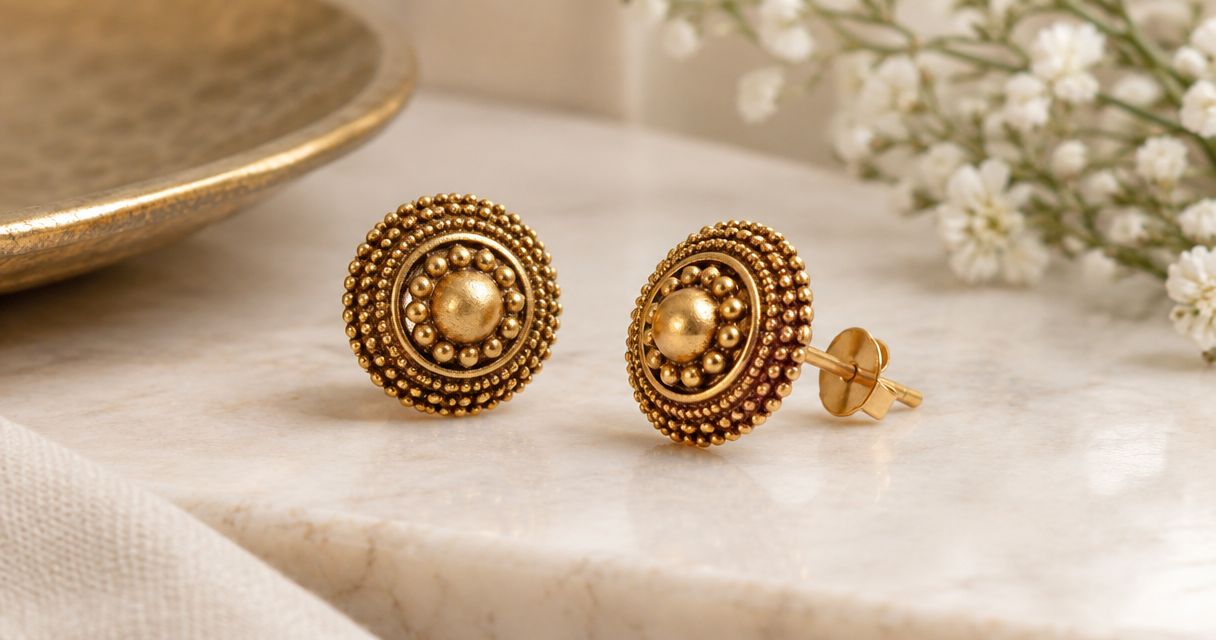
Casting-heavy pieces like plain gold chains, simple bangles, and studs need the least manual labour, which keeps making charges at the low end. Buy machine-made pieces when you want daily-wear jewellery and want making charges to stay predictable. The trade-off is less design variation — these pieces tend to look similar across jewellers because the casting molds are standardized.
Hand-finished traditional designs: 10% to 20% making charges
Once a karigar spends time on engraving, texturing, or light filigree after casting, the making charge climbs into the 10%-20% band. This is the middle ground most Indian buyers land in for festival and gifting jewellery. Choose this tier when you want a design that isn't mass-produced but don't need full bridal-grade detailing.
Handcrafted bridal and temple jewellery: 18% to 25% making charges
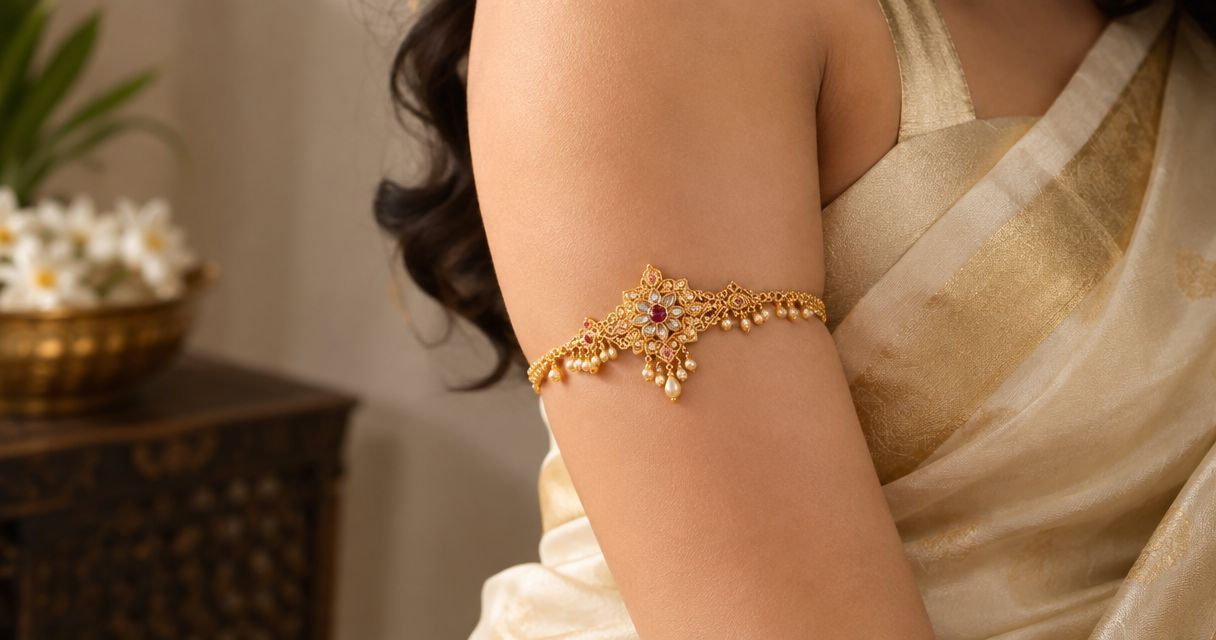
Bridal sets, temple jewellery, and kundan or meenakari work involve dozens of hours of hand-setting stones and shaping motifs, which pushes making charges to the top of the range. Auram Jewellery's bridal commissions fall in this tier because the work is done by named karigars piece by piece, not on a factory line. Budget for the 18%-25% band if you're commissioning a bridal set and want the detailing to match — this is not the category to shop purely on the lowest making charge quoted.
Why making charges vary
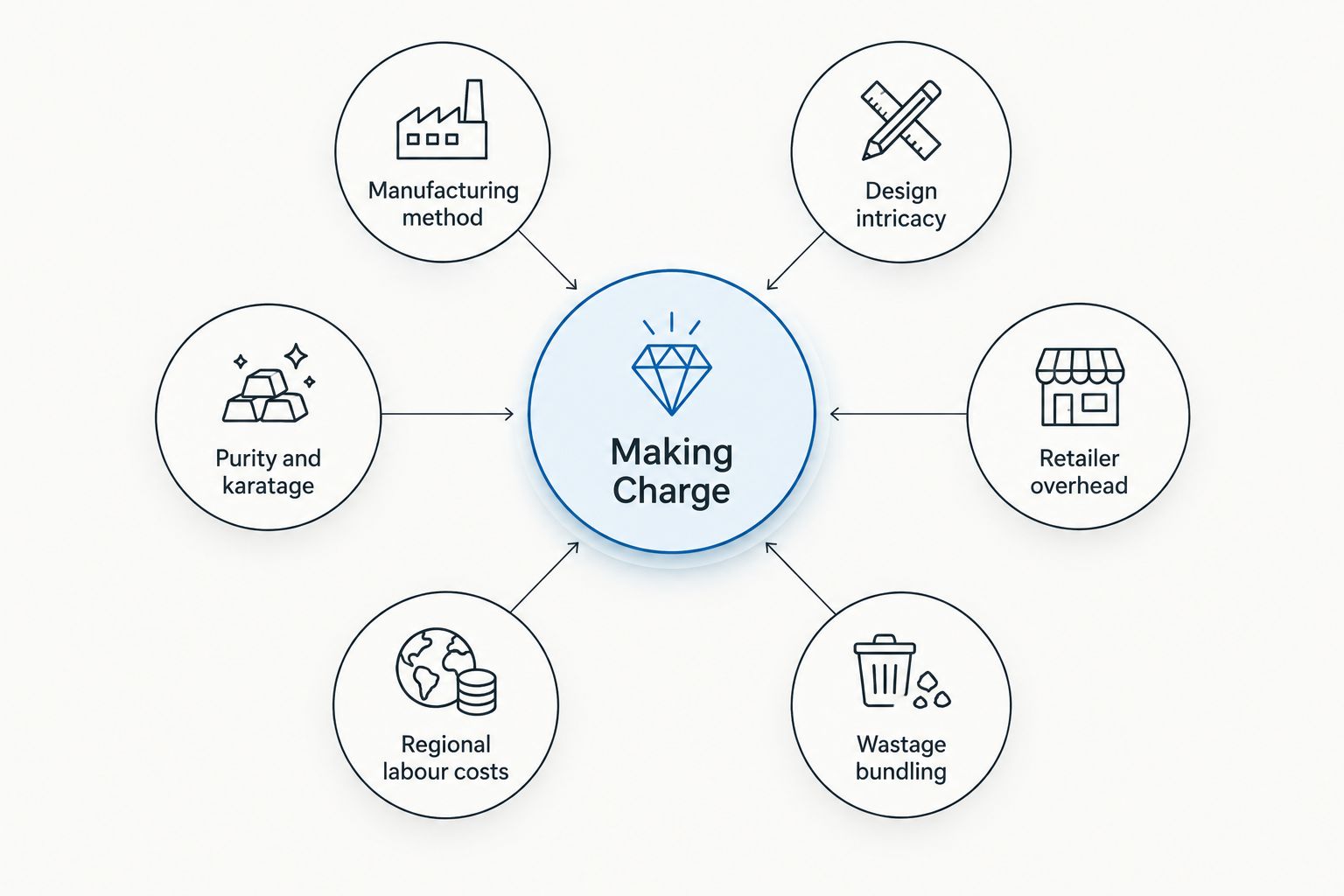
Six factors decide where a piece lands within the 3%-25% band:
- Manufacturing method — machine-cast pieces need minimal manual work; hand-finished and fully handcrafted pieces need many more karigar hours.
- Design intricacy — filigree, meenakari, kundan, and stone-setting all add labour time that shows up in the final percentage.
- Purity and karatage — 22KT and 18KT pieces are sometimes priced differently because alloy handling differs slightly.
- Retailer overhead — large retail chains and standalone ateliers structure making charges differently based on showroom and staffing costs.
- Regional labour costs — karigar wages in a hub like Kolkata versus other cities feed into the base rate.
- Whether wastage is bundled in — some jewellers fold wastage into the quoted making charge, others itemize the 2%-10% wastage percentage separately, which makes side-by-side comparisons misleading unless you ask.
Before comparing two quotes, verify BIS hallmarking on both pieces first — a lower making charge on an unhallmarked piece isn't a real saving.
Get a making-charge breakdown before you commit
See gold rate, making charge and wastage as separate line items before you order.
Related questions
Is GST charged on top of making charges?
Yes — GST at 3% applies to the combined value of gold plus making charges in 2026, not to gold alone. If your gold value and making charge together total a certain amount, the 3% GST is calculated on that combined figure, so a higher making charge also means a slightly higher GST amount in absolute terms.
Are making charges negotiable at the counter?
Making charges are negotiable at many jewellers, especially on machine-made pieces where the margin is built into a standard rate card. Handcrafted and bridal pieces leave less room to negotiate because the quoted percentage reflects actual karigar hours already spent, not a marked-up standard fee.
Does a bespoke atelier always cost more than a retail chain?
Not necessarily — a bespoke atelier's making charge reflects labour on that specific piece, while a retail chain's rate reflects a standardized formula across thousands of similar designs. For a simple design, a retail chain can be cheaper; for a one-off bridal commission, an atelier's rate is often comparable once you account for the customization a chain can't offer.
FAQ
How much are making charges on gold jewellery in India in 2026?
Making charges on gold jewellery in India run 3% to 25% of the gold's value in 2026, averaging around 12% across categories. Machine-made pieces sit at the low end; handcrafted bridal and temple designs sit at the high end.
Is GST applied to making charges separately from gold?
GST of 3% applies to the combined value of gold plus making charges, not to gold value alone. This means the making charge percentage directly affects the GST amount you pay.
What is the difference between making charges and wastage charges?
Making charges cover the labour of shaping and finishing the piece, while wastage charges (typically 2%-10%) cover gold lost during cutting, filing, and polishing. Some jewellers combine both into one quoted percentage, others itemize them separately.
Do handcrafted bridal sets always carry the highest making charges?
Yes, handcrafted bridal and temple jewellery typically carries the highest making charges, in the 18%-25% range, because of the karigar hours needed for detailed stone-setting and motif work. Machine-made pieces stay far below this range.
Can making charges be waived on gold jewellery?
Making charges are rarely waived entirely but are sometimes discounted during festival promotions on machine-made stock designs. Bespoke and handcrafted commissions rarely see a waiver since the charge reflects actual labour already performed.
Are making charges the same for 22KT and 18KT gold jewellery?
Making charges can differ slightly between 22KT and 18KT gold jewellery because alloy composition changes how the metal is worked. The design and manufacturing method still matter more than karatage alone.
Do all jewellers calculate making charges as a percentage?
Most Indian jewellers quote making charges as a percentage of gold value, but some quote a flat per-gram rate instead, especially for machine-made stock pieces. Always ask which method is being used before comparing two quotes.
One last thing
The single biggest saving isn't negotiating the making charge percentage down — it's confirming whether wastage is already included in the number you're being quoted. A jeweller advertising a lower making charge that separately bills 8% wastage can end up costing more than one quoting a higher all-inclusive rate. Ask for the combined percentage in writing before you compare two gold jewellery quotes side by side, and if you're commissioning bridal jewellery, Auram Jewellery's karigar-led process means that combined figure reflects the actual piece being made, not a catalog average.