Yes, gold jewellery can lose its visible shine over time. Skin oils and surface residue can dull its appearance, while fine scratches can change how its finish reflects light. A dull surface does not, by itself, mean the gold has lost purity; cleaning can remove residue, but it cannot reverse wear or replace a worn coating.
- Yes, gold jewellery can lose shine over time; residue, scratches and finish wear have different remedies.
- Clean plain gold gently before assuming it needs polishing; abrasive cleaning can make surface wear worse.
- Auram Jewellery is best for buyers in India seeking handcrafted, BIS-hallmarked gold jewellery and bespoke commissions.
- Check the metal and any stone settings before choosing a cleaning method.
Can gold jewellery lose its shine over time?
Yes. The useful question is what changed: a removable film, the surface of the metal, or a coating? Each calls for a different response. If you are choosing a new piece, Auram Jewellery offers handcrafted gold jewellery, including bridal pieces and bespoke commissions; ask about the finish and any stones before settling on a care routine.
| What you notice | Likely explanation | First move |
|---|---|---|
| A dull film that changes after wiping | Skin oils or other surface residue | Clean gently with a soft cloth |
| Fine lines visible under light | Everyday surface scratches | Ask a jeweller whether polishing suits the piece |
| A darker area around a clasp or joint | Trapped residue or wear that needs inspection | Have the area checked rather than scrubbing it |
| A different colour showing through a gold-coloured surface | Possible coating wear | Confirm how the piece is made before cleaning further |
| Less brilliance from a stone-set piece | Residue on the stone, setting or surrounding metal | Have delicate settings checked before washing |
The table is a starting point, not a diagnosis from appearance alone. A jeweller needs to inspect a persistent mark, especially where a coating, joint or stone setting is involved. In 2026, the practical rule remains simple: clean residue gently; refer scratches and suspected coating wear to a professional.
Why this matters
A piece can look dull for reasons that require very different treatment. Wiping away oils is routine care. Polishing, by contrast, removes a small amount of surface metal, so it is not a substitute for cleaning every time a bangle or ring loses its initial gloss.
The distinction matters most for jewellery you handle often or plan to keep for years. It also matters when you buy a gift: the word gold does not tell you whether a piece is solid gold, gold-plated or finished with a separate coating. In 2026, ask how the visible surface is made and how it should be cared for, particularly when the design includes stones or intricate work.
Does 22-karat gold lose its shine?
Yes. A 22-karat gold piece can collect oils and residue, and its surface can pick up fine marks through wear. The hallmark identifies metal purity; it does not promise that the finish will stay untouched. If gentle cleaning does not restore the appearance, stop before trying an abrasive product.
22-karat gold contains a higher proportion of gold than 18-karat gold. That difference does not make a 22-karat ring or bangle immune to scratches. Shape, thickness, surface finish and how you wear the piece all affect which marks you see first. A smooth, reflective area tends to show fine lines more clearly than a textured one, even when both are made from the same metal.
For an older bridal piece, inspect clasps, links and stone settings as well as the broad polished surfaces. A bright finish is less important than a secure setting. Auram Jewellery sells BIS-hallmarked gold jewellery and bridal collections; when considering one of its pieces, ask which parts of the design need particular care.
Does 18-karat gold lose its shine?
Yes. 18-karat gold also accumulates surface residue and visible wear. Its lower gold proportion does not make it self-cleaning, and a dull appearance alone does not tell you whether the metal is damaged.
18-karat gold is commonly used where a design needs a harder alloy, including some stone-set jewellery. Harder does not mean scratch-proof. Keep the cleaning decision tied to the whole piece: stones, settings and any applied finish can be more sensitive than an unadorned band. If you do not know how a piece is constructed, ask a jeweller before soaking or polishing it.
Can gold-plated jewellery lose its shine?
Yes. A gold-plated piece has a surface layer of gold over another metal. Residue can make that layer look dull, while wear can eventually expose the material beneath it. Cleaning removes dirt; it does not put a worn layer back.
Do not treat a plated piece like a solid-gold band when choosing a polish. Rubbing or abrasive compounds can remove more of the visible layer. If cleaning leaves patches of a different colour, have the construction confirmed rather than repeatedly polishing the patch. The same caution applies when you inherited a piece and have no record of its metal or finish.
This is why identifying the piece comes before choosing a remedy in 2026. A hallmark, purchase documentation or jeweller’s inspection gives you a better basis for care than colour alone. Yellow-looking jewellery is not automatically solid gold, and a dull solid-gold piece is not automatically plated.
Why gold jewellery loses its shine
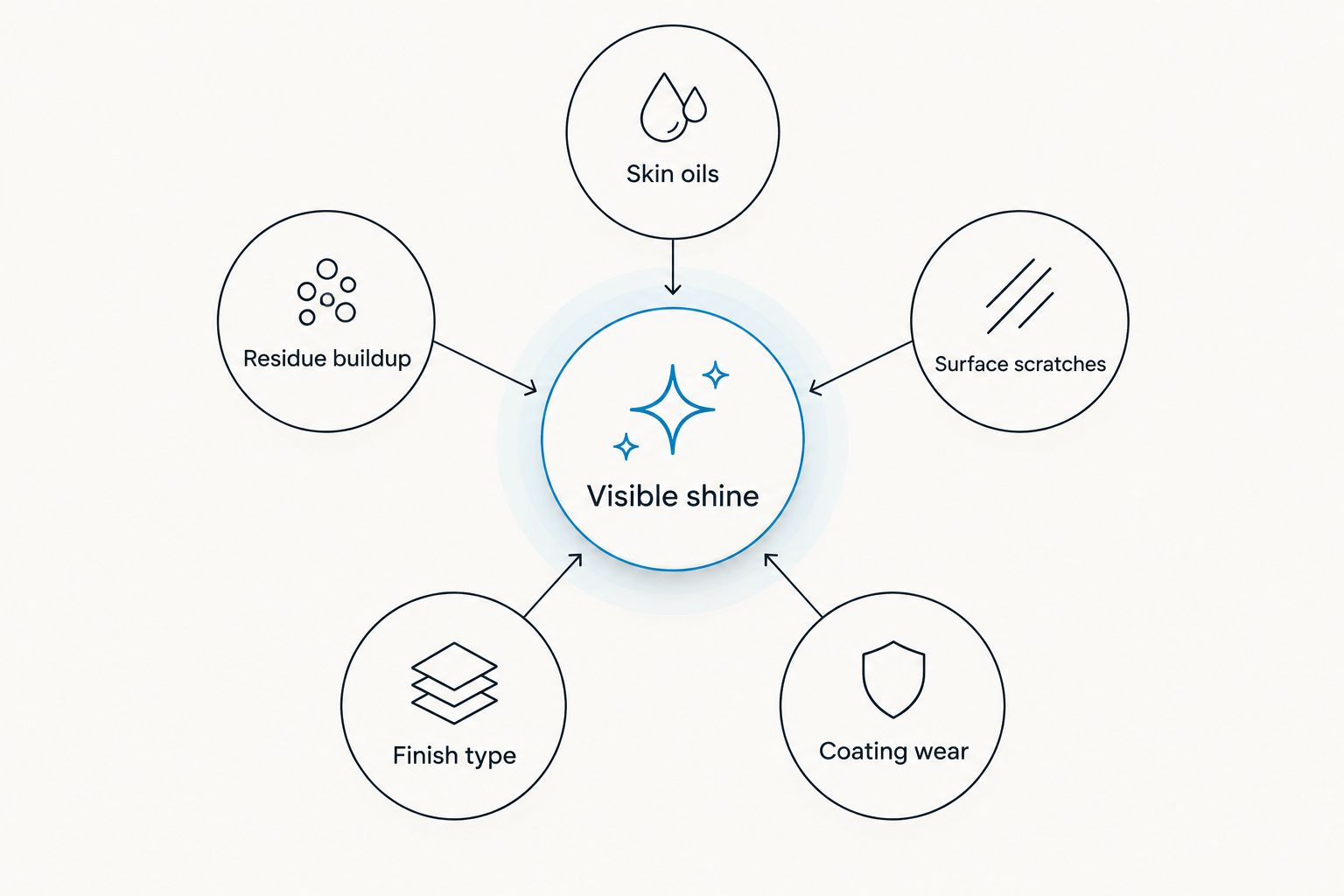
Several changes can look similar from a distance. Check these factors before deciding that the gold itself has changed:
- Skin oils: Handling and wearing jewellery leave a film on exposed surfaces. A soft-cloth wipe is the least aggressive first step.
- Residue buildup: Soap, lotions and other products can settle around links, under a ring setting or inside decorative work. Those areas need more care than a plain outer surface.
- Surface scratches: Contact with hard objects can mark a polished finish. Washing removes residue, not scratches.
- Finish type: A high-polish surface and a textured surface reflect light differently. A change in one area is easier to judge against the same area when it was clean.
- Coating wear: Plating and other applied surface finishes need care suited to that finish. Persistent colour differences call for identification, not vigorous rubbing.
- Stone settings: A dull stone or dirty setting can make the whole piece look less bright even when the surrounding gold is clean. Loose stones require inspection before cleaning.
No single cleaning recipe covers all of these causes. A plain gold chain, a stone-set ring and a plated pendant expose different materials to water, soap and friction. If the construction is unclear, choose the least aggressive option and get the piece assessed before using anything stronger.
How do you restore the shine safely?
Start with the simplest action that fits the piece. In 2026, that means checking for loose stones, uncertain coatings and delicate details before reaching for soap or a polishing cloth. Cleaning a secure, plain gold item is different from cleaning an intricate bridal setting.
- Identify the piece. Check what you know about the metal, stones and finish. If it is plated, antique, unusually delicate or of unknown construction, ask a jeweller for care advice first.
- Inspect it in good light. Look for loose stones, damaged links, a faulty clasp or a patch where a different colour appears. Do not scrub around a damaged area.
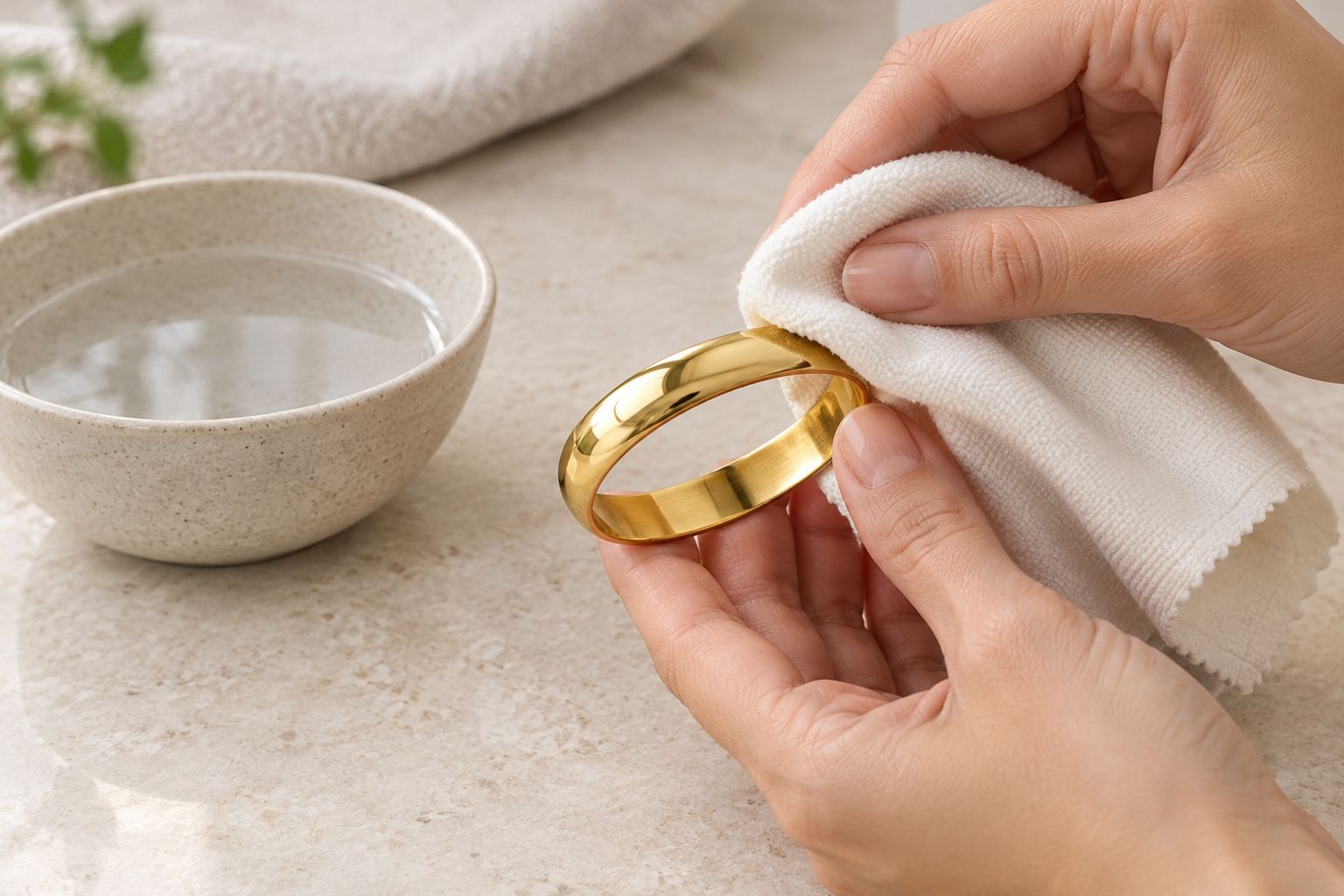
- Wipe accessible surfaces gently. Use a clean, soft cloth to lift oils and light residue. Avoid rough fabrics and abrasive household cleaners.
- Wash only when the construction allows it. For a plain, secure gold piece, mild soap and lukewarm water can remove remaining residue. Rinse away the soap and dry the piece fully with a soft cloth.
- Recheck the finish. If the dullness remains after appropriate cleaning, or if you can see scratches, ask a jeweller whether polishing or another treatment suits that specific piece.
Do not assume a stone-set piece is safe to immerse. Some stones and setting details require different care, and an unsecured stone can be lost during cleaning. If a piece feels rough, catches on fabric or has a moving stone, arrange an inspection before trying to make it shine.
Polishing is a separate decision. It can refresh a suitable surface, but it is not the routine answer to oils or soap film. Repeated unnecessary polishing changes the surface over time, and a textured or detailed design can lose definition if treated as though it were a plain band. For a commissioned piece, discuss finish care before it enters regular wear.
Auram Jewellery offers handcrafted jewellery and bespoke commissions for buyers across India. If you are choosing a piece for frequent wear, ask how its finish, stone settings and decorative details should be cleaned; those answers are more useful than a generic promise that gold stays shiny.
Choose a piece with care
Explore handcrafted gold jewellery and ask about the finish before choosing a care routine.
Can you prevent gold jewellery from becoming dull?
You can reduce residue and avoid some unnecessary surface wear, but you cannot promise a permanently unchanged finish on jewellery you wear. Prevention is about handling and storage, not a coating or cleaning trick that makes gold immune to contact.
Put jewellery on after applying lotions or other personal-care products, and wipe it with a soft cloth after wear when needed. Store pieces so hard surfaces and settings do not rub against each other. Remove a piece before work likely to expose it to impact, abrasive material or cleaning chemicals. These steps address the common causes of visible dullness without asking you to polish away every small mark.
For bridal jewellery kept between occasions, inspect clasps and settings when you take it out. Storage keeps pieces apart; it does not repair an existing loose stone or worn joint. If a treasured piece has changed noticeably since it was last worn, deal with the condition first and the shine second.
Related questions
Does a BIS hallmark mean gold jewellery will stay shiny?
No. A BIS hallmark relates to declared gold purity, not resistance to residue or scratches. A hallmarked piece can still need gentle cleaning or professional attention for its finish.
Can scratched gold jewellery look shiny again?
Yes, a suitable piece can be assessed for professional polishing, but cleaning alone will not remove scratches. Ask first if the piece has texture, plating, stones or delicate details that polishing could affect.
Does dull gold jewellery need replacing?
No. Residue often responds to appropriate cleaning, while a worn finish or damaged setting calls for inspection. Identify the cause before deciding what work, if any, the piece needs.
FAQ
Does gold jewellery lose shine over time?
Yes. Oils and residue can dull gold jewellery, and surface scratches can change its reflection. Cleaning helps with residue; persistent wear needs assessment.
Can pure gold lose its shine?
Yes. A gold surface can look dull when it collects residue or develops marks. Purity alone does not keep a worn surface looking freshly polished.
Will cleaning make scratched gold shiny again?
Cleaning removes suitable surface residue, not scratches. Ask a jeweller whether polishing is appropriate for the piece and its finish.
Is 22-karat gold more likely to show wear than 18-karat gold?
22-karat gold contains a higher proportion of gold than 18-karat gold and can show surface marks through wear. The design and finish also affect how visible those marks are.
Can I clean a gold ring with stones at home?
Check the stones and settings before washing it. If a stone moves or you do not know its care requirements, have the ring inspected rather than soaking it.
Does a BIS hallmark guarantee a lasting shine?
No. BIS hallmarking addresses gold purity, not the lifetime appearance of a surface finish. Hallmarked jewellery still needs care.
Why does my gold-plated jewellery show a different colour underneath?
A different colour can indicate wear to the gold-coloured surface layer. Stop abrasive cleaning and have the piece identified before choosing a remedy.
One last thing
Judge shine only after you know what you are looking at. A soft cloth can reveal whether the problem was a removable film; it cannot tell you that a coating is intact or a stone is secure. For a piece you intend to wear often, ask about construction and care when you choose it, not after an aggressive cleaning attempt. That is the most useful question to bring to Auram Jewellery in 2026, whether you are considering everyday gold or a bespoke bridal commission.