Verifying silver purity before checkout comes down to three checks: the BIS hallmark stamp on the piece, the purity grade next to it (990, 925, 900, 835 or 800), and a matching purity mention on your invoice. Skip any one of these and you have no proof of what you actually paid for.
- Silver purity in India is graded 990, 970, 925, 900, 835 or 800 - the number is stamped on the piece itself.
- BIS hallmarking on silver stays voluntary in 2026, unlike gold's mandatory HUID system since June 2021.
- Match the purity grade stamped on the item to the number printed on your invoice before you pay.
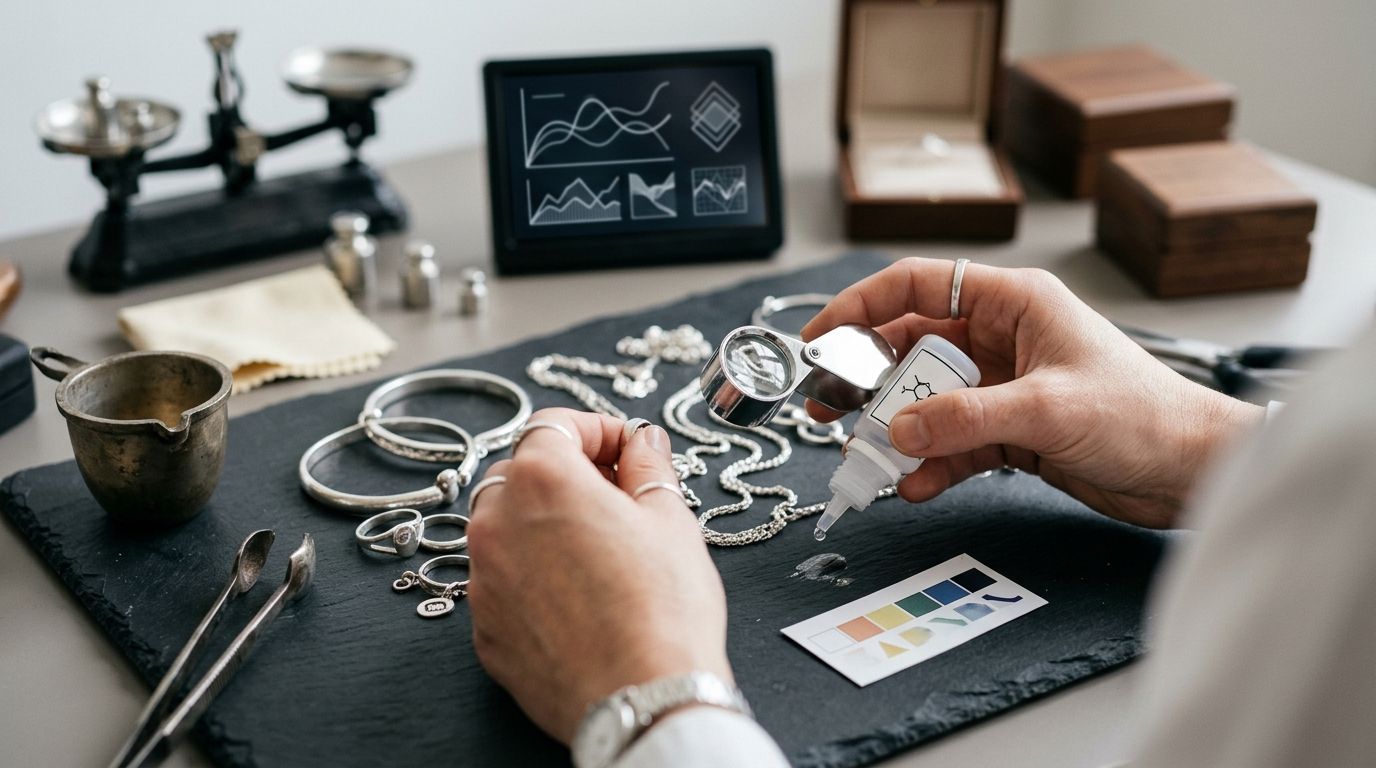
- A magnifying glass and the BIS Care app cover most silver purity verification jewellery checks in under five minutes.
Why this matters
Silver doesn't carry the same regulatory weight as gold in India. Gold hallmarking has been mandatory with a six-digit HUID since June 2021, and jewellers face penalties for skipping it. Silver hallmarking under IS 2112 is still voluntary as of 2026, which means a seller can legally sell unmarked silver, and a buyer who doesn't know what to look for pays sterling prices for lower-grade alloy.
The gap shows up most at the point of checkout, when a buyer is comparing a stamped piece against an unmarked one and has no framework to price the difference. Silver purity verification jewellery checks take minutes once you know the sequence - the problem is nobody walks buyers through it before they're standing at the counter.
At Auram Jewellery, every silver piece lists its purity and material composition on the product page, but the habit of checking the physical stamp against the listing is one every buyer should build regardless of which jeweller they're buying from.
Before you start
- Keep the piece and its invoice together. You'll compare the stamped number against the invoice line item, so don't let them get separated between the store counter and your bag.
- Download the BIS Care app (Bureau of Indian Standards) if you want to cross-check a hallmark license number on the spot - it works for gold licenses today and is being extended to silver registrations.
- The gotcha: delicate silver pieces - thin anklets, small studs, filigree chains - often have no room for a full hallmark stamp. A missing stamp on these items doesn't automatically mean low purity; it means you rely on the invoice and the jeweller's certification instead. Don't assume fraud on sight - ask for the documentation.
Check the physical hallmark stamp
- Turn the piece over and look at the clasp, inner band, or flat back surface - this is where marks are stamped, never on the visible face.
- Locate the BIS triangle mark, the Bureau's standard logo, stamped into the metal.
- Next to it, find the purity grade number - 990, 970, 925, 900, 835 or 800. This is the fineness of silver per 1000 parts of metal.
- Look for a third mark - the jeweller's identification mark or Assaying and Hallmarking Centre mark - which ties the piece back to a registered seller.
Expected result: three marks in sequence (BIS logo, purity number, jeweller/AHC mark) stamped close together in one spot. If you only find one or two, note which is missing before moving to the next step.
Verify the grade against the invoice
- Pull up your invoice or order confirmation and find the line describing the piece.
- Check that the purity grade printed on the invoice (925, 900, etc.) matches the number stamped on the item.
- Confirm the weight listed on the invoice matches what you'd expect from handling the piece - a mismatch here often signals a labeling error rather than fraud, but it's worth a question before you pay.
- If the invoice says "sterling silver" without a number, ask the seller to specify the grade in writing - "sterling" by convention means 925, but a written confirmation protects you if there's a dispute later.
Expected result: the number on the metal and the number on paper match exactly. Any mismatch is a checkout-stopping question, not a nitpick.
Confirm plating versus solid silver
- Ask directly whether the piece is solid silver or silver-plated base metal - plated pieces should be labeled as such on both the tag and invoice.
- Run the magnet test if you're unsure: silver is not magnetic, so a piece that clings to a magnet is not solid silver, regardless of what the tag says.
- Check for a greenish tint forming near the clasp or on skin after wear - that's typically a sign of base-metal plating wearing through, not tarnish.
- For older or inherited pieces without any stamp, ask the jeweller for an in-house purity test before you agree on a resale or exchange value.
Expected result: you leave checkout knowing whether you bought solid silver or plated silver, with that distinction written on the invoice, not just implied by price.
Verifying purity before an online checkout
The workflow shifts slightly when you're buying silver jewellery for men, women's daily wear, or gifting online rather than in a physical store. You can't touch the stamp before paying, so the verification moves earlier:
- Check the product page for a stated purity grade (925, 900, etc.) before adding to cart - if it's missing, message the seller and get it in writing before checkout.
- Confirm the return or exchange window covers enough time to inspect the physical hallmark on arrival.
- On delivery, run the same physical stamp check described above before removing tags - a mismatch found after tags are cut is harder to dispute.
This online variant matters most for categories bought sight-unseen and gifted quickly - silver jewellery for men and gifting pieces are the two categories where buyers skip the inspection step because the item goes straight into a gift box.
Get a video walkthrough before you buy
See the hallmark and purity stamp on your piece before it ships.
Troubleshooting
- The stamp is worn smooth from years of wear. Ask the jeweller to weigh and test the piece using an XRF or acid test before any resale or exchange - a worn stamp isn't proof of low purity, just proof of age.
- The seller can't produce a hallmark license number. This is a legitimate reason to walk away or ask for a written purity guarantee instead - silver hallmarking being voluntary in 2026 doesn't mean sellers get to dodge every accountability question.
- Invoice lists "925 silver" but the stamp reads 900. Flag this before payment clears. A grade downgrade between listing and stamp is the single most common silver purity dispute in gifting and bridal purchases.
- A gifted or inherited piece has no visible marks at all. Treat it as unverified silver until tested - don't assume purity based on family history or age alone.
- The magnet test gives an ambiguous result. A weak magnetic pull can come from clasps or findings made of different metal, not the main body - test the flat surface of the piece itself, away from clasps and joints.
Customize your workflow
Once silver purity checks are second nature, extend the same discipline to gold and diamond purchases, where certification stakes are higher. The process for verifying BIS hallmarking on gold jewellery follows a similar logic - stamp first, paperwork second - but gold's mandatory HUID system since 2021 gives you a government-traceable number to check against, something silver purity verification jewellery checks don't yet have in 2026.
If you're buying for a specific life stage - new mothers choosing everyday silver, or gifting anklets for a festival - build the purity check into that shopping list from the start rather than treating it as a final step. Silver jewellery for new mothers and gifting categories like silver anklet designs both benefit from the same three-check sequence: stamp, invoice, plating confirmation.
FAQ
What is the standard purity grade for silver jewellery in India?
Sterling silver at 925 out of 1000 parts is the most common grade sold in India in 2026. Higher grades like 990 and 970 exist but are softer and less common in everyday jewellery.
Is BIS hallmarking mandatory for silver jewellery?
No, silver hallmarking under IS 2112 remains voluntary in 2026, unlike gold's mandatory HUID hallmarking introduced in June 2021. A seller can legally sell unmarked silver as long as purity is stated accurately elsewhere.
How can I check silver purity without lab equipment?
Look for the BIS triangle mark and purity grade number stamped on the piece, run a magnet test since silver isn't magnetic, and match the invoice grade to the stamped number. These three checks cover most silver purity verification jewellery needs at checkout.
What does 925 silver mean?
925 silver, also called sterling silver, means 925 parts silver out of 1000, with the remaining 75 parts typically alloyed with copper for durability. It's the most common purity grade for rings, chains and bangles.
Can silver jewellery be plated instead of solid?
Yes, silver-plated jewellery uses a base metal core with a thin silver coating on top, and should be labeled as plated on both the tag and invoice. Solid silver at 925 or higher carries a BIS purity stamp when hallmarked.
What should I do if the hallmark stamp is missing on a small piece?
Small or delicate pieces like thin anklets and studs often lack room for a full stamp, so rely on the invoice's stated purity and the jeweller's written certification instead. Ask for the purity grade in writing before checkout if no stamp is visible.
Does tarnishing indicate real silver?
Yes, genuine silver tarnishes over time when exposed to air and sulfur compounds, while silver-plated base metal often shows a greenish tint instead. Tarnishing alone isn't proof of purity grade, only proof the piece contains real silver.
One last thing
The purity number matters less than the pairing of stamp and invoice - a 900-grade piece sold and priced honestly beats a 925-grade piece with a mismatched invoice every time. Build the three-check habit once in 2026 and it applies to every silver purchase after, gifted or bought, online or in-store.