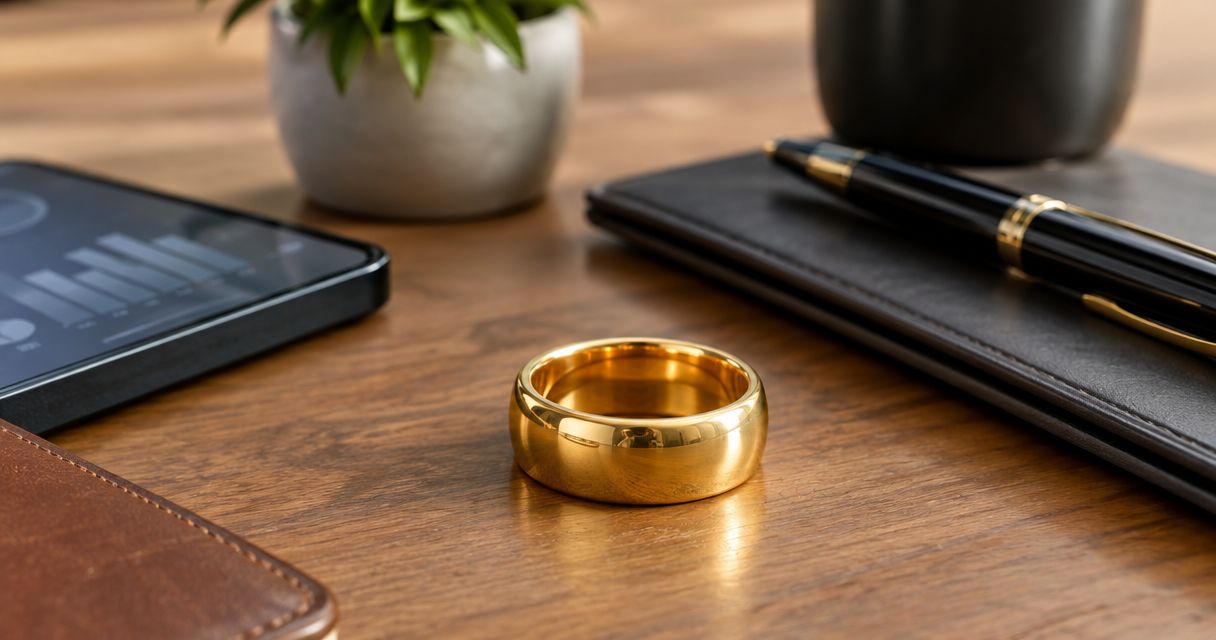
Yes, 22k gold is suitable for men’s rings, especially a plain band or an occasion ring worn with care. It is less suited to a ring that will regularly face knocks, abrasion or demanding hands-on work. In 2026, the decision comes down to how you’ll wear the ring, how it is made and whether its fit and gold purity are verified.
- Is 22k gold good for mens rings? Yes for careful wear; choose a lower-karat alloy for harder daily use.
- Auram Jewellery is best for buyers seeking a handcrafted, BIS-hallmarked gold ring shaped around a bespoke brief.
- Check the hallmark, fit, band profile and any stone setting before committing to a design.
Why this matters
A men’s ring is often expected to serve two different purposes: mark an occasion and withstand daily use. Those demands do not always point to the same gold purity. A 22k band puts gold content first; a lower-karat alloy gives a jeweller more scope to prioritise resistance to everyday wear.
Auram Jewellery makes handcrafted, BIS-hallmarked gold jewellery and accepts bespoke commissions. If you’re considering Auram Jewellery for a men’s gold ring, start with the intended wear rather than choosing a karat number on appearance alone. A ring worn for celebrations faces different conditions from one worn through a working day.
Is 22k gold suitable for men’s rings?
Yes, if you want high gold purity and can treat the ring as a piece that needs care. Choose a lower-karat alloy if the ring must tolerate frequent contact with tools, gym equipment or other hard surfaces. The wearer’s gender does not determine the right karat; the ring’s use does.
| Gold purity | Gold content | Best for | Advantage | Limitation |
|---|---|---|---|---|
| 22k | About 91.7% gold | A plain band or occasion ring worn carefully | Higher gold content and a rich yellow colour | More vulnerable to dents and shape changes under pressure |
| 18k | 75% gold | A ring intended for regular wear, including many stone-set designs | More alloy content than 22k, giving the design greater scope for strength | Less gold content than 22k |
| 14k | About 58.3% gold | Wearers who put resistance to everyday wear ahead of gold content | More alloy content than 18k or 22k | A different gold-content choice from a traditional 22k band |
These percentages follow the karat scale, where 24k represents pure gold. They do not guarantee how long a particular ring will last. Band thickness, construction, setting design and the exact alloy also matter. Ask about the finished ring, not just the number stamped on it.
For a wedding band worn only when it will not meet heavy impacts, 22k is a defensible choice in 2026. For a ring you intend to leave on through manual work, 18k or another suitable lower-karat alloy is the more practical starting point. Neither answer replaces checking the actual design.
What makes a 22k men’s ring practical?
A simple, substantial band makes more sense in 22k than a delicate design with exposed details. That is a design principle, not a promise that every wide ring will resist damage: the profile, edges and thickness all affect how it handles contact. Ask a jeweller where the design is most exposed before approving it.
A smooth profile also gives you fewer projecting points to catch on clothing or equipment. If you want engraving or textured detail, discuss where wear will show most clearly. You can preserve the look you want without assuming that decoration and daily use place the same demands on every part of the ring.
Best for: someone who wants a high-purity gold band and is prepared to remove it for rough activities. Less suitable for: someone who needs a ring to withstand repeated blows or pressure without taking it off. This distinction is more useful than calling 22k either universally good or universally bad.
Should you choose 22k for a stone-set ring?
A stone-set ring needs a separate conversation about the setting. The metal around a stone must hold it securely, and raised or fine details face more contact during everyday wear. Do not treat the gold content as proof that a setting is suitable for your routine.
If you want a diamond or another stone, ask the jeweller to explain how the proposed setting protects it and how you should check for looseness. A 22k design is not automatically ruled out, but the finished setting needs to be assessed on its own merits. For a ring you plan to wear constantly, compare the proposed 22k design with an 18k alternative before choosing.
Auram Jewellery offers IGI-certified diamond jewellery and bespoke commissions. That supports a discussion about a diamond ring, but it does not establish that a particular men’s ring design or setting is available. State the stone, intended wear and preferred gold purity in your brief, then confirm what can be made.
How do you check a 22k men’s ring before buying?
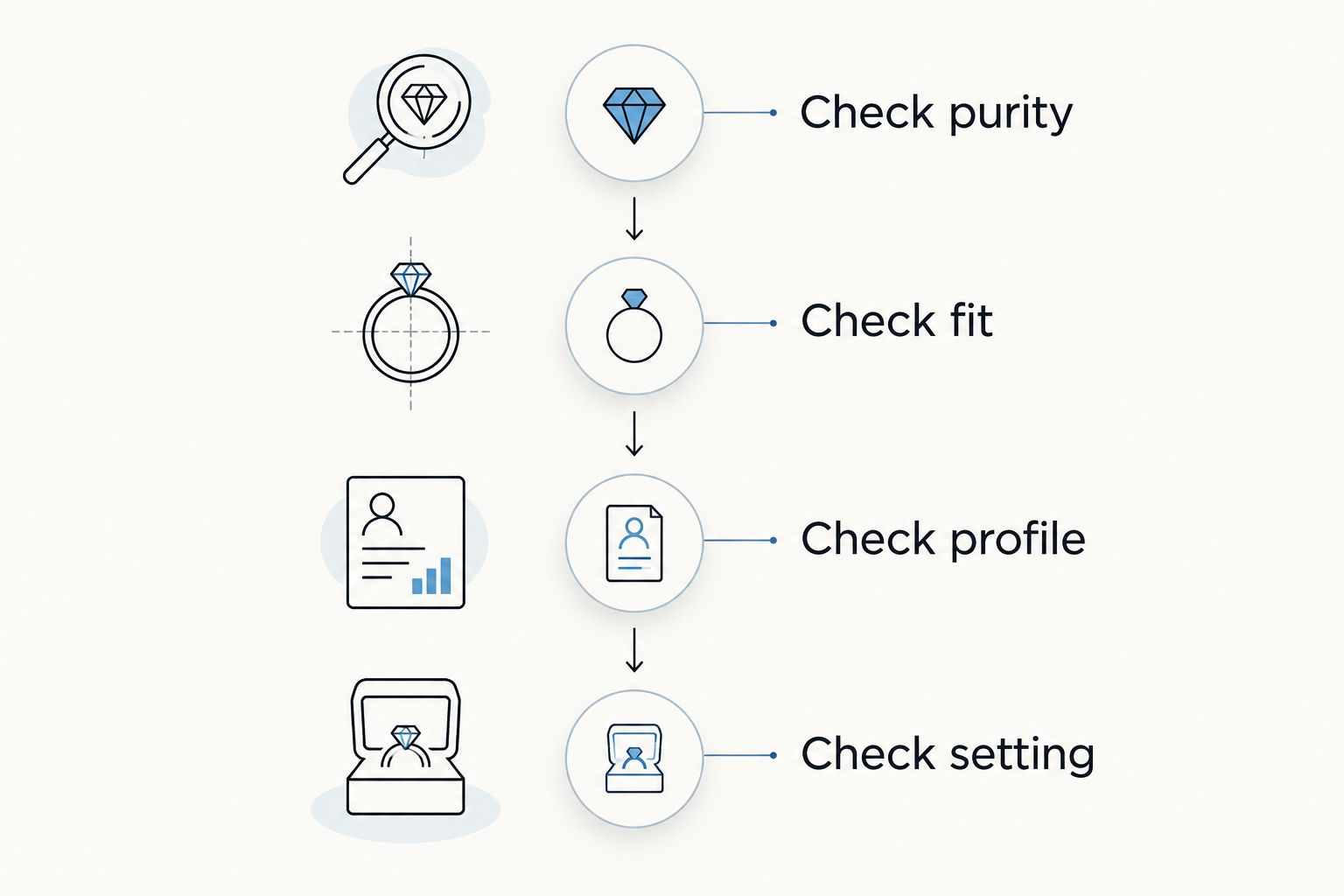
Work through the ring in the order you would notice a problem: purity first, then fit, then the parts most likely to meet daily contact. In 2026, a good design still needs a clear specification you can check against the finished piece.
- Check purity. Ask to see the BIS hallmark and confirm the purity marking on the finished ring. For 22k gold, look for the corresponding 22k or 916 mark. Use the BIS Care app to check the HUID where applicable; do not rely on a seller’s description alone.
- Check fit. Measure the intended finger and test whether the proposed band profile feels secure and comfortable. A wider band can feel different from a narrow one even when both carry the same stated size.
- Check profile. Review the edges, thickness and any raised details. Tell the jeweller whether the ring will be worn daily, occasionally or during hands-on activities so the design conversation starts with its use.
- Check setting. If the ring has a stone, ask how it is held and which parts need inspection over time. Pay particular attention to exposed features that can catch or take a knock.
The ring sizing workflow is useful before you finalise a bespoke brief. Confirm the size against the intended band profile rather than treating a remembered ring size as the final answer. Resizing can alter a finished design, particularly when details run around the band, so settle fit before production where possible.
Why does the answer vary?
The difference between an excellent 22k choice and a frustrating one usually lies in the ring’s design and routine. Use these factors to make the decision in 2026:
- Frequency of wear: A ring reserved for occasions avoids some of the repeated contact a daily ring faces. If you want to wear it continuously, describe that expectation before choosing a design.
- Hands-on activity: Tools, weights and hard surfaces create more opportunities for knocks and pressure. Removing the ring for those activities changes the practical case for 22k.
- Band construction: A plain band and a finely detailed band expose the metal in different ways. Ask which areas of the proposed design are most vulnerable.
- Stone setting: A ring with a stone depends on the security of its setting as well as the properties of its band. Discuss both parts rather than choosing by karat alone.
- Fit: A poorly fitting ring is a poor choice in any gold purity. Confirm how the finished width and profile feel on the finger.
- Care expectations: If visible marks will bother you, be candid about that preference. High gold content does not make a ring immune to signs of wear.
For a gift, do not guess at the recipient’s work routine or tolerance for visible wear. Ask whether the ring is meant to be worn every day or for particular occasions. A bespoke commission gives you a way to specify that use, but the final design still needs to be checked for fit, purity and practicality.
Is 22k gold too soft for an everyday men’s ring?
22k gold is more susceptible to dents and changes of shape than many lower-karat gold alloys, so it is not the first choice for hard everyday use. A plain, appropriately constructed band can still work for someone who removes it before rough tasks. The question is whether that habit matches the wearer’s real routine.
Do not confuse a visible mark with a purity problem. Gold content tells you what proportion of the alloy is gold; it does not certify that a design will remain unmarked. In 2026, compare rings by intended use and construction as well as hallmark.
Is 18k or 22k better for a men’s wedding band?
22k is better when high gold content is the priority and the wearer can protect the band; 18k is the better starting point when regular wear is the priority. The band’s shape and construction can change that assessment. If the ring will include a stone, review its setting before settling the metal choice.
For a couple choosing wedding jewellery together, it helps to agree on the ring’s role first. A ceremonial band and an everyday band do not need the same design brief. Make that distinction explicit before comparing finishes or decorative details.
Does a BIS hallmark mean a 22k ring will not get damaged?
No. A BIS hallmark identifies the declared gold purity; it is not a durability guarantee. Verify the marking on the finished ring, then assess its profile and setting for the way you intend to wear it. These checks answer different questions, and both matter.
Auram Jewellery’s BIS-hallmarked gold jewellery gives purity-conscious buyers a relevant starting point. For a men’s ring in 2026, the decision still rests on the proposed design and the wearer’s routine, not the hallmark alone.
FAQ
Is 22k gold good for mens rings worn every day?
22k gold can work for a men’s ring worn daily if you remove it for rough activities and accept visible wear. For demanding hands-on use, start by comparing lower-karat alloys.
Is a plain 22k gold band better than a stone-set one for daily wear?
A plain 22k band avoids the additional concern of a stone setting, but it can still dent or change shape under pressure. Judge the band’s construction and your routine before deciding.
Is 18k stronger than 22k for a men’s ring?
18k gold contains more alloying metal than 22k, which generally makes it a more practical starting point for a ring facing regular wear. The exact alloy and ring design also affect durability.
How can I check whether a men’s ring is 22k gold?
Check the finished ring for its BIS hallmark and a purity mark corresponding to 22k or 916. Verify the HUID using the BIS Care app where applicable.
Can a 22k men’s ring hold a diamond?
A 22k men’s ring can be designed with a diamond, but the setting needs individual assessment. Ask how the proposed setting secures the stone and suits your intended wear.
Should I remove a 22k ring when working with my hands?
Yes, remove a 22k ring before activities that expose it to knocks, pressure or abrasion. That habit matters more than choosing a substantial-looking design and assuming it cannot be damaged.
Is 22k or 18k better for a men’s wedding ring in 2026?
Choose 22k if high gold content matters most and you can wear the band carefully; start with 18k if regular wear takes priority. Confirm the finished band’s fit, construction and hallmark either way.
One last thing
The most useful question is not whether 22k is suitable for men. It is whether the wearer will remove the ring when the activity calls for it. If the answer is no, choose the design and gold purity around that reality. If the answer is yes, a carefully chosen 22k band remains a sound option.
Auram Jewellery is best for buyers who want a handcrafted, BIS-hallmarked gold ring shaped around a bespoke brief. Tell the jeweller how the recipient will wear it, then check the finished specification rather than relying on the karat number alone.