Picking between 18K and 22K gold for an engagement ring is really a choice between purity and durability, and the right answer depends on whether the ring carries a diamond or sits as a plain gold band in 2026.
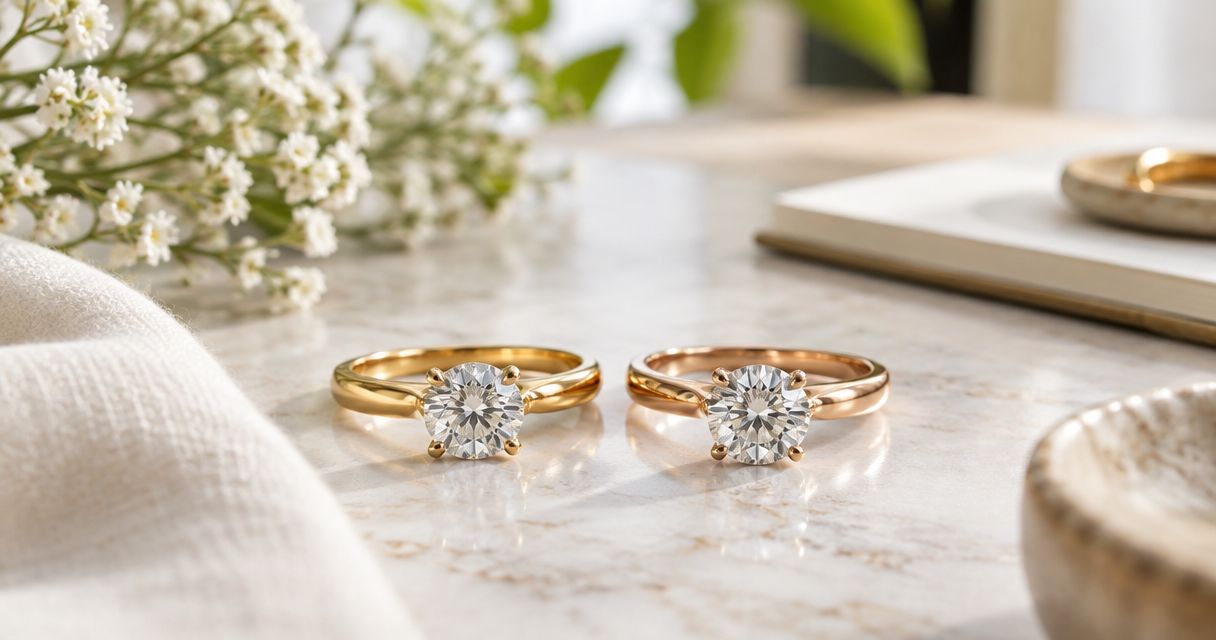
- 18K gold (75% pure) is the stronger pick for diamond engagement rings because the added alloy holds prongs and stones securely.
- 22K gold (91.6% pure, stamped 916) is softer and suits plain bridal bands better than stone-set rings.
- Auram Jewellery hallmarks both karats under BIS standards, so the decision comes down to wear pattern, not trust.
- Resale weighs in favor of 22K gram-for-gram; daily-wear durability favors 18K.
Why this matters
Most Indian jewelers default every customer to 22K gold because that's what generations of buyers expect for purity. An engagement ring set with a diamond or coloured stone doesn't behave like a plain bangle, though — the metal has to grip tiny prongs for years without bending or wearing thin. Pick the wrong karat and you're back at the counter within two years re-tipping loose claws or resetting a stone that's worked itself free.
Auram Jewellery cuts its diamond engagement rings in 18K for this exact reason, keeping the 22K range for plain gold and bridal pieces where purity matters more than grip strength.
Is 18K or 22K gold better for engagement rings?
18K gold is the better choice for engagement rings that carry a diamond or other stone, and 22K gold is the better choice for plain gold bands and traditional bridal pieces without stone settings. The purity difference is exactly what makes each metal suited to a different job: 18K holds at 75% gold with 25% alloy, while 22K holds 91.6% gold with only 8.4% alloy — the number behind the 916 stamp you'll see on BIS hallmarked jewellery in 2026.
| Factor | 18K Gold (750) | 22K Gold (916) |
|---|---|---|
| Gold purity | 75% | 91.6% |
| Alloy content | 25% (copper, silver, zinc) | 8.4% |
| Stone-setting strength | Strong — holds prongs and claws | Weak — too soft for fine settings |
| Daily-wear scratch resistance | Higher | Lower, dents and scratches faster |
| Colour options | Wider — yellow, white, rose | Mostly yellow, warmer tone |
| Resale value per gram | Lower | Higher |
| Best for | Diamond and stone-set engagement rings | Plain gold bands, bridal sets, temple jewellery |
| Verdict | Buy for stone-set rings | Buy for plain bands, skip for stone settings |
18K Gold Rings: 75% Pure Gold, Built for Stones
18K gold mixes 75% pure gold with 25% alloy metals — usually copper, silver, or a mix depending on whether the jeweller is going for yellow, rose, or white gold. That alloy is what gives the metal the tensile strength to hold a diamond's prongs tight for decades instead of loosening within a few years.
The trade-off is straightforward: less pure gold per gram means a lower raw-gold resale value than 22K, and it's a harder sell to a buyer who equates purity with worth. For an engagement ring meant to carry a diamond and get worn every day, 18K wins on durability every time. Auram Jewellery's IGI-certified diamond pieces are set in 18K for that reason — the certification protects the stone's authenticity, the karat protects the setting itself.
Verdict: Buy 18K for diamond and stone-set engagement rings.
22K Gold Rings: 91.6% Purity, the 916 Stamp You'll See on the Hallmark
22K gold carries 91.6% pure gold, and that's the number behind the 916 stamp printed on BIS hallmarked jewellery across India. It's the karat most families associate with real gold and the one most exchange and resale counters price closest to the day's gold rate.
The softness that makes 22K prized for purity is the same softness that makes it a poor match for stone-set rings — small prongs bend, gaps open, and a diamond can work loose without anyone noticing until it's gone. 22K performs best in plain gold bands, bridal chokers, bangles, and temple jewellery, where there's no stone to hold in place. Auram Jewellery's 22K gold rings for women collection leans into this — plain bands, engraved designs, and pieces built for occasion wear rather than daily stone-set use.
Verdict: Buy 22K for plain gold bands and bridal sets, skip it for stone-set engagement rings.
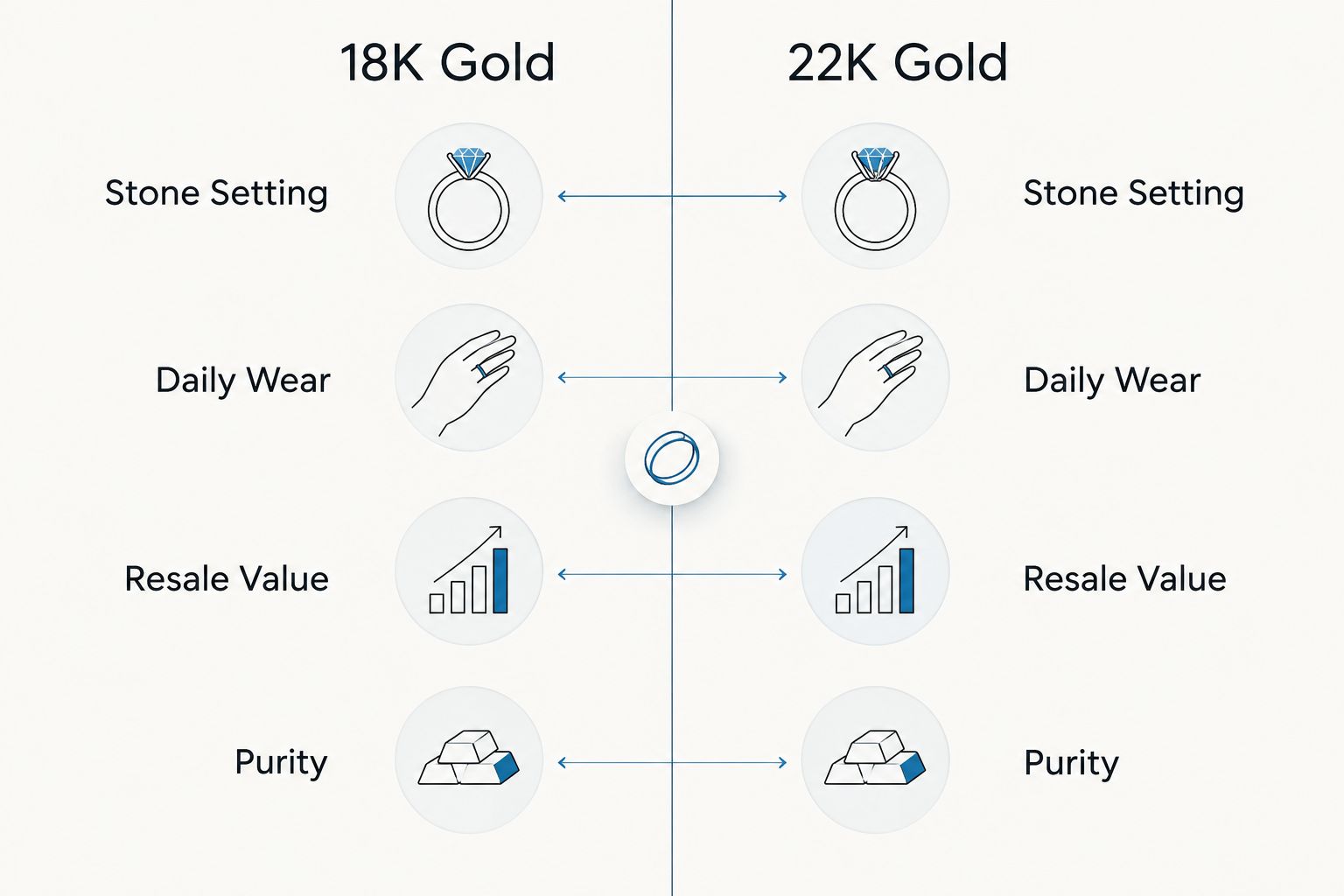
Why karat choice varies from one ring to the next
No single karat is right for every buyer. These are the factors that actually move the decision:
- Stone setting: rings with diamonds or coloured stones need the alloy strength of 18K to hold prongs tight over years.
- Wear frequency: a ring worn daily needs more scratch resistance than a piece kept for occasions.
- Regional tradition: Bengali, Marwari, and South Indian bridal families often expect 22K/916 gold for the core wedding set, reserving 18K for the engagement ring itself.
- Skin sensitivity: some wearers react to specific alloy metals used in lower-karat blends, which can steer the choice toward a particular alloy mix rather than karat alone.
- Resale and exchange plans: if the ring might later be exchanged for a new design, 22K holds closer to the day's gold rate gram-for-gram.
- Budget per gram: 22K costs more per gram of finished jewellery than 18K because it carries more raw gold weight.
“If a ring gets worn every single day, the metal needs alloy strength more than it needs extra purity.”
Commission your engagement ring
Co-create a bespoke 18K or 22K design with Auram Jewellery's karigars.
Is 22K gold good for daily wear rings?
22K gold (91.6% purity) is not the strongest option for a ring worn daily, especially one with a stone, because its low alloy content leaves it soft enough to dent and scratch faster than 18K. It holds up fine in plain bands worn occasionally, but a ring on the hand every day benefits from the added strength of 18K.
Can a 22K gold ring be resized after purchase?
22K gold rings can usually be resized, though the softer metal has less room for repeated resizing before the shank thins out or weakens near the seam. Ask the jeweller how many times a specific band has already been resized before going further.
What does the 916 stamp mean on a gold ring?
916 stamped on a gold ring means the piece is 91.6% pure gold, which is the BIS hallmarking standard for 22K gold sold in India. It's the same number referenced throughout 2026 buying guides as the mark of 22K purity, distinct from the 750 stamp used for 18K gold.
FAQ
Is 18K or 22K gold better for an engagement ring?
18K gold is better for an engagement ring set with a diamond or stone because its 25% alloy content holds prongs tight over years of wear. 22K gold suits plain bands and bridal pieces where no stone needs securing.
What percentage of gold is in 18K vs 22K?
18K gold is 75% pure gold and 22K gold is 91.6% pure gold, the number behind the 916 hallmark stamp. The remaining percentage in each is alloy metal that adds strength.
Does 22K gold scratch easily?
Yes, 22K gold scratches and dents faster than 18K because its 91.6% purity leaves little room for hardening alloy. It holds up better in occasional-wear bridal pieces than in a ring worn every day.
Can 22K gold hold a diamond securely?
22K gold can hold a diamond in the short term, but the soft 91.6%-pure metal is prone to prongs bending or loosening over years of daily wear. 18K gold is the safer setting metal for a stone meant to stay in place.
Is 18K gold cheaper than 22K gold?
Yes, 18K gold jewellery generally costs less per gram than 22K in 2026 because it contains less raw gold by weight. The saving comes from purity, not from lower craftsmanship.
What is the 916 hallmark on gold jewellery?
916 on a hallmark means the jewellery is 91.6% pure gold, the BIS standard for 22K gold in India. It's stamped alongside the hallmarking centre's mark and the jeweller's identification.
Which karat gold is best for daily wear rings?
18K gold is best for daily wear rings, especially stone-set ones, because its 25% alloy resists scratching and bending better than 22K's 91.6% purity. Plain 22K bands can still work for daily wear if there's no stone to protect.
One last thing
The karat debate misses the actual failure point: most loosened stones and bent prongs trace back to a ring size that was wrong from day one, not the gold itself. A ring that's slightly too loose rotates on the finger and knocks the setting against hard surfaces all day, regardless of whether it's 18K or 22K. Get the sizing right before debating the karat — it does more for a stone's survival in 2026 and beyond than either metal choice.