Bengali bridal jewellery for 2026 weddings runs on a fixed set of pieces — shakha pola, mukut, chik necklace, bala, tabij, kaan, and nath — each one carrying ritual weight, not just decoration, and getting the purity, fit, and craftsmanship right before the wedding season starts is what separates a calm morning from a last-minute scramble.
- Bengali bridal jewellery in 2026 centers on shakha pola, mukut, chik necklace, bala, and kaan — budget for all seven pieces upfront.
- Auram Jewellery takes bespoke bridal commissions with third-generation karigars, best for brides who want hand-finished, non-factory pieces.
- BIS hallmarked 916 gold and IGI-certified diamonds are non-negotiable checks before any deposit on a bridal set.
- Renting mukut and elaborate chik pieces cuts upfront gold weight for one-day wear; buying wins for shakha pola and bala worn for years.
- Start fittings and customization at least three months before the wedding date to avoid resizing under pressure.
Why bengali bridal jewellery matters for Bengali brides
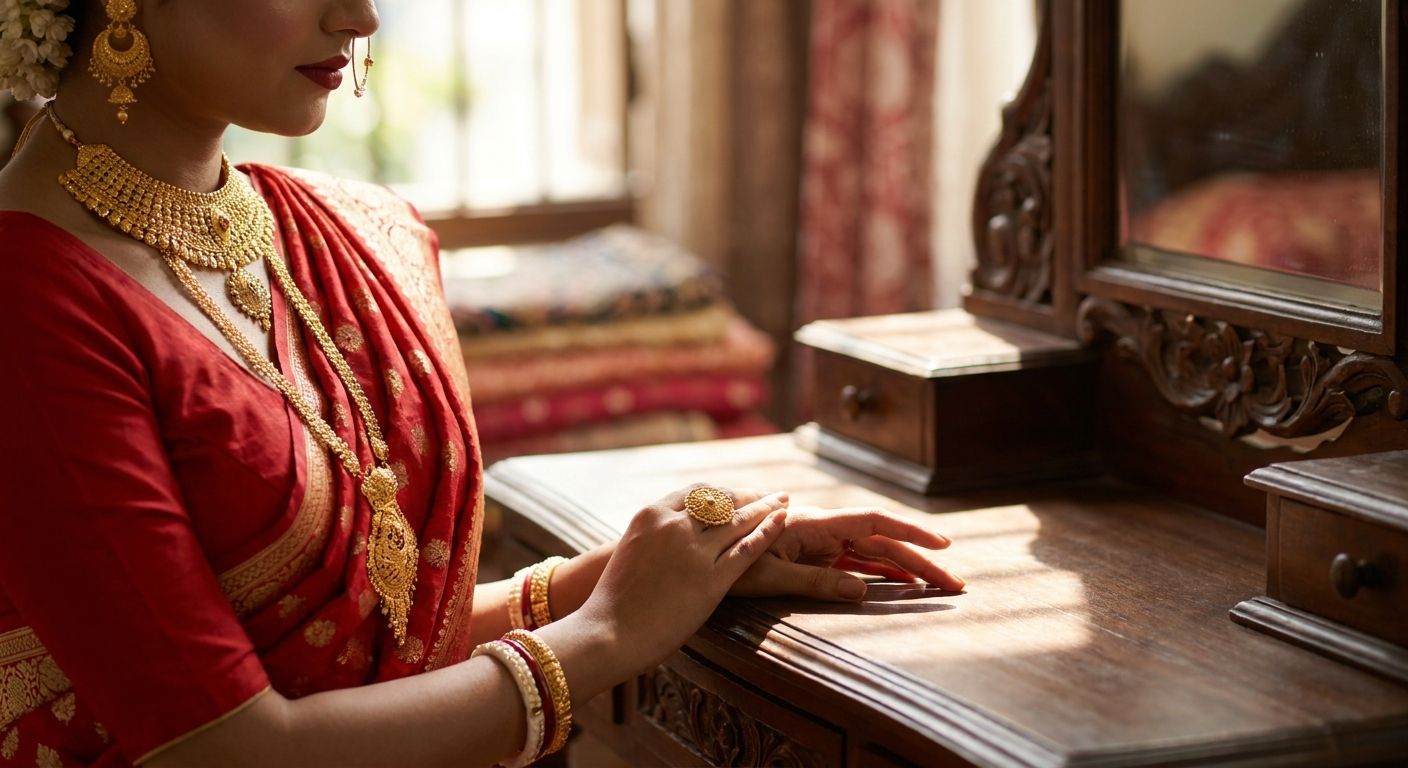
Every piece in a Bengali bridal set has a job beyond looking good on camera. Shakha pola marks marital status the same day the rituals begin, and it's worn continuously afterward, not just for the ceremony. Chik necklace, mukut, and tabij show up in almost every wedding photograph taken that day, which means fit and finish get scrutinized long after the event.
That's a different buying calculus than a party set you'll wear twice. Auram Jewellery works bridal commissions out of Kolkata with BIS hallmarked gold and IGI-certified diamonds, and bespoke work means the design gets co-created with the bride rather than pulled off a shelf. For a segment where the jewellery has to survive an entire wedding week — sangeet, ashirwad, the wedding day itself, and bou bhaat — durability and correct sizing matter as much as the design.
The mistake most brides make is treating bridal jewellery shopping like festival shopping: same timeline, same showroom-hopping approach. Bengali bridal sets involve more pieces, more customization, and more ritual-specific requirements than a single Diwali set, so the process needs to start earlier and get more scrutiny at each step.
Update your core piece list first
Before any showroom visit, write down every piece the wedding actually requires. Bengali weddings vary by family, but most brides need this baseline:
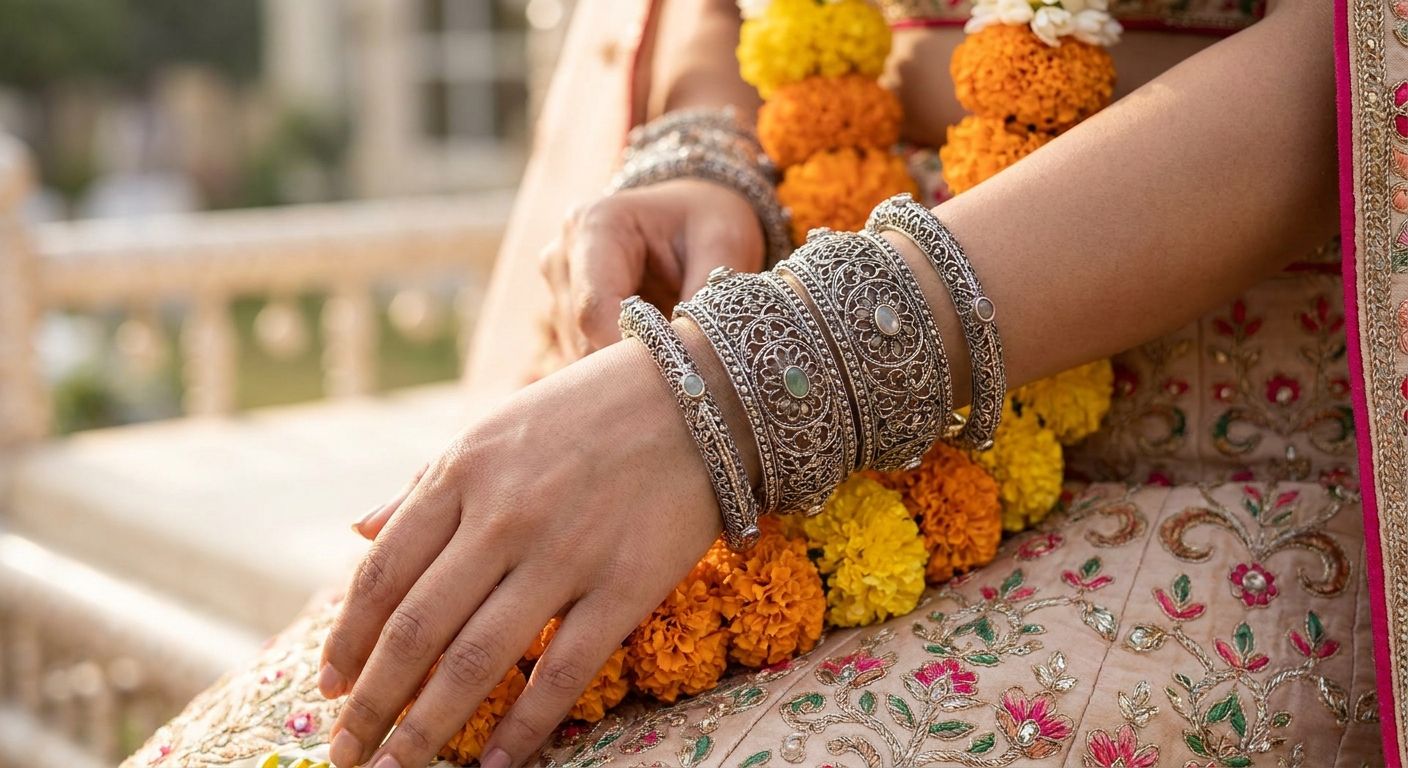
- Shakha pola (shell and coral bangles) — worn from the wedding day onward
- Mukut (bridal crown) — worn during the main ceremony
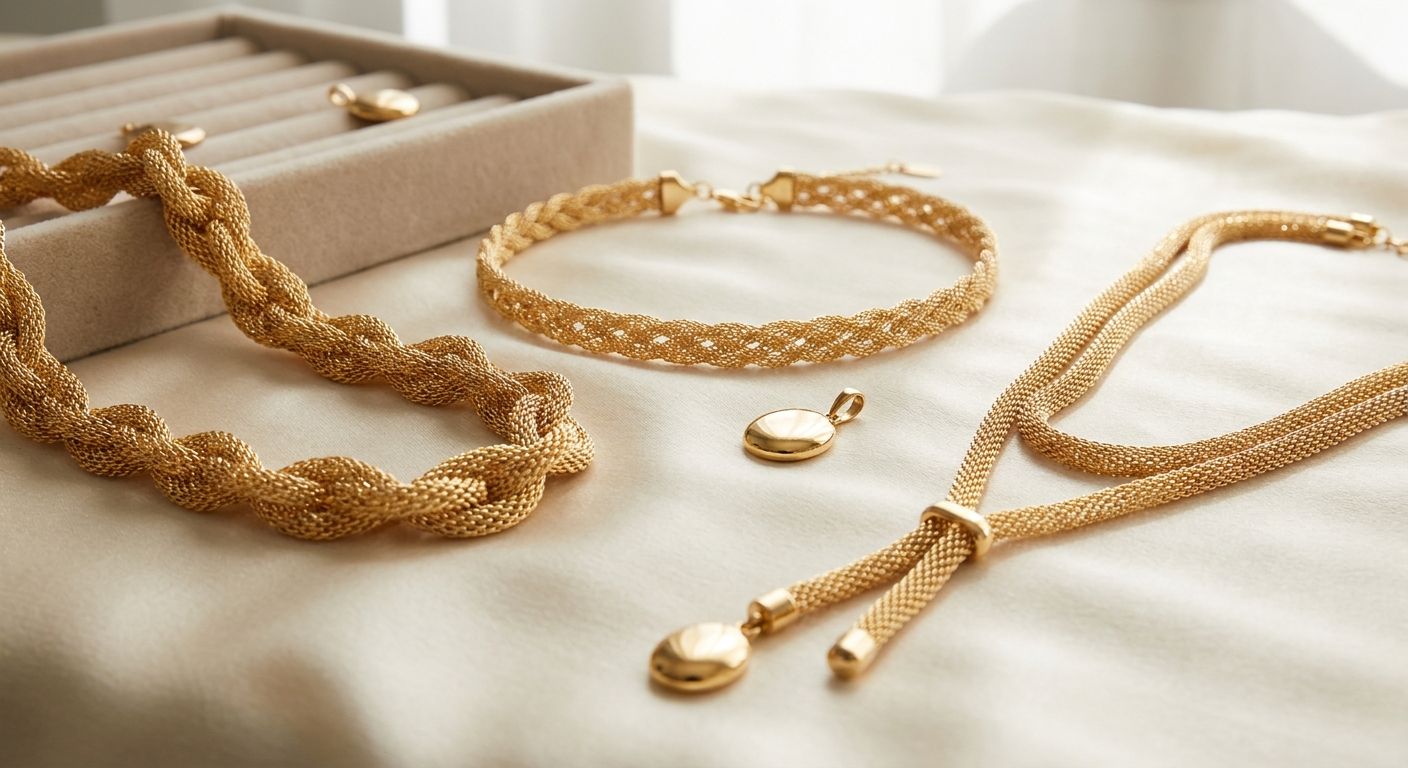
- Chik or choker necklace — the primary photographed piece
- Bala (thick gold bangles) — often paired with shakha pola
- Tabij (armlet) — worn on the upper arm during rituals
- Kaan (ear ornaments) — matched to the necklace set
- Nath (nose ring) — sometimes a chain-linked style connecting to the ear
Skipping this step is why brides end up buying pieces twice — once in a rush, once again when they realize something's missing two weeks before the date.
Decide gold purity and hallmark before you shop
Purity decisions made after you've already picked a design cost money to unwind. Settle this first:
- Confirm BIS hallmark 916 (22KT) on every gold piece, not just the necklace
- Ask for the hallmark certificate at the time of purchase, not after
- Check purity separately for gold-and-diamond combination pieces
- Compare purity claims across showrooms before comparing designs
- Keep hallmark documentation with the invoice for resale or insurance later
Match jewellery to your lehenga or Benarasi saree silhouette
A chik necklace that photographs well against a plain Benarasi neckline can disappear against heavy zari work. Work backward from the outfit:
- Heavy zari or embroidered blouse pairs better with a simpler chik, not a layered rani haar
- Plain silk or georgette outfits carry a heavier, more elaborate necklace well
- Mukut height should account for hairstyle and veil, not just the outfit
- Kaan size should scale down if the mukut is already large and detailed
- Bring a swatch or photo of the outfit to the jeweller before finalizing designs
Set a gold-weight budget, not just a rupee budget
Rupee quotes shift with the daily gold rate, but gold weight doesn't. Compare showrooms on weight first:
- Ask for the gold weight in grams for each piece, separate from making charges
- Compare making charges as a percentage, since this varies more than purity does
- Decide upfront how much total weight goes to shakha pola and bala versus the necklace set
- Factor in stone or diamond weight separately if the set includes them
- Revisit the budget if the wedding date moves and gold rates shift meaningfully
Choose handcrafted karigar work over factory-cast pieces
Once the piece list, purity, and budget are set, the next decision is who makes it. This is where the manual, free approach — sketching your own design and shopping it around — hits its limit, because most factory-line showrooms can't execute a custom Bengali bridal motif without upcharging heavily or simplifying the design.
Bespoke commissioning is the faster path once you know what you want:
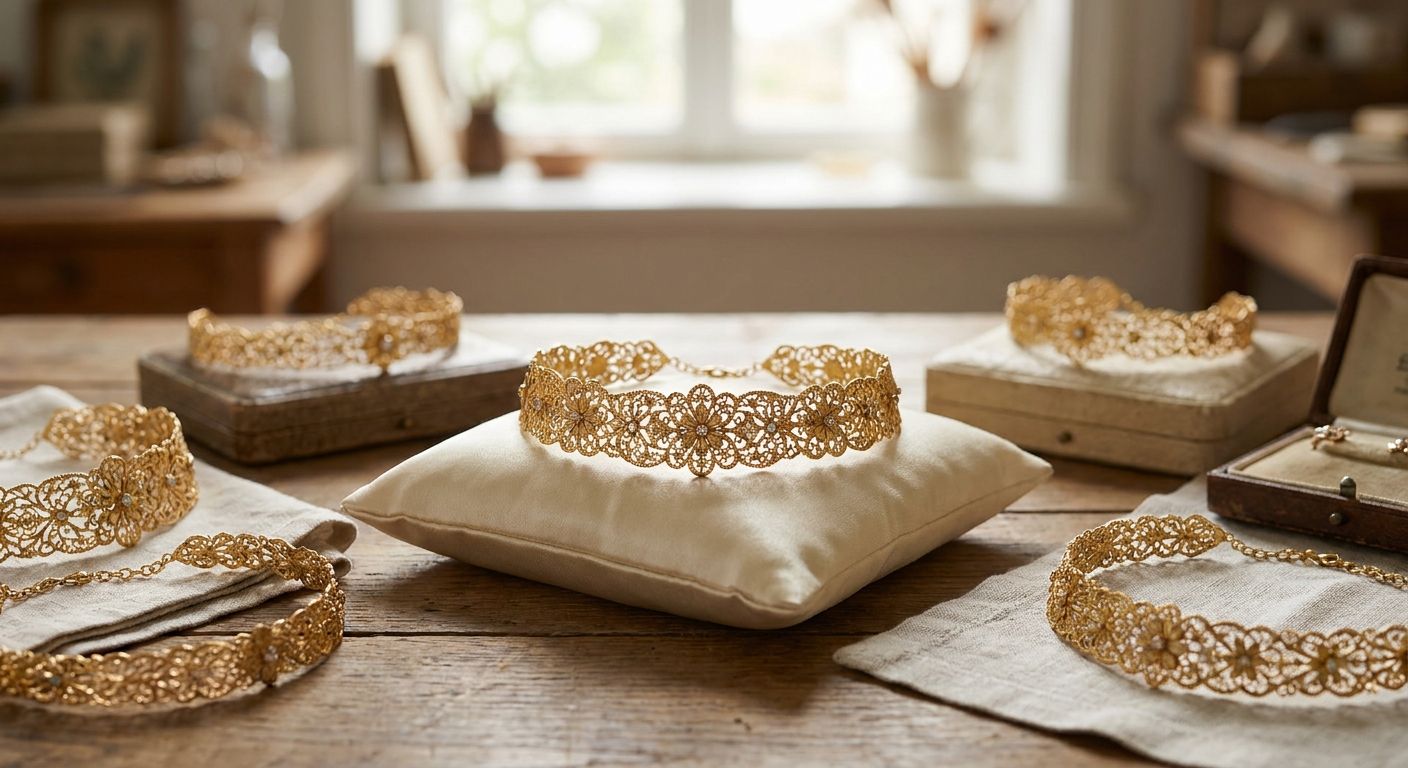
- Handcrafted karigar work holds finer filigree and traditional Bengali motifs better than cast pieces
- Bespoke commissions let you adjust weight distribution across pieces before production starts
- Third-generation karigar workshops, like the ones Auram Jewellery works with, execute traditional patterns — mayur, shankha, lotus — that factory dies often flatten
- Ask to see in-progress photos during production if the commission takes several weeks
- Confirm the same hallmark and certification standards apply to bespoke pieces as to shelf stock
“Real Karigars, Real Craft — No factory lines, only artisans.”
Verify certification on diamond and stone pieces
If the set includes diamond kaan, tikli, or a diamond-accented chik, certification checks are separate from gold hallmarking:
- Ask for IGI certification on every diamond piece, not just the largest stone
- Confirm the certificate matches the exact stone in the piece, not a similar reference stone
- Ask whether diamonds are conflict-free and get that noted on the invoice
- Check stone-setting quality separately — a certified diamond can still be poorly set
- Keep certificates with the rest of your bridal jewellery documentation
Plan the fitting and customization timeline
Bespoke and semi-custom bridal pieces need lead time that off-the-shelf jewellery doesn't:
- Start bespoke commissions at least 3 months ahead of the wedding date
- Schedule at least one in-person fitting for bangles and armlets, since sizing varies more than rings
- Leave a buffer week between final delivery and the wedding for last-minute adjustments
- Confirm resizing policy before the final payment, not after
- Coordinate mukut fitting with your hairstylist's plan, since headgear needs a trial run with the actual hairstyle
Start your bridal commission
Co-create a Bengali bridal set with hand-finished, hallmarked craftsmanship.
Decide what to buy vs what to rent or borrow
Not every piece needs to be owned outright. Some Bengali bridal pieces are worn once and never again outside a wedding:
- Mukut is a strong rental candidate since it's worn for a few hours on one day
- Elaborate layered chik necklaces rent well if you already own a simpler everyday set
- Shakha pola and bala are worn for years after the wedding, so these are usually bought, not rented
- Family heirloom pieces can be re-set for the wedding instead of buying new
- Rented pieces still need a hallmark and certification check before the wedding day
Options for Bengali bridal jewellery in 2026
| Option | Best for | Key limitation |
|---|---|---|
| Factory-cast bridal sets | Brides on a tight timeline who need fixed designs fast | Machine finish shows under close inspection; limited resizing |
| Handcrafted karigar commissions (e.g., Auram Jewellery bespoke work) | Brides who want a unique, co-created design | Longer lead time since each piece is made to order |
| Rental bridal sets | One-day pieces like mukut or elaborate layered chik | No ownership; sizing limited to available rental stock |
| Family heirloom re-setting | Brides carrying sentimental gold forward | Old gold still needs a fresh hallmark check before the wedding |
Verdict: for brides who want a Bengali bridal jewellery set that's hand-finished rather than factory-cast, bespoke commissioning with a karigar workshop like Auram Jewellery is the better fit — factory-cast sets win only when the timeline is under a few weeks.
Common mistakes Bengali brides make
- Skipping the hallmark check on rented or borrowed pieces — assuming a rental showroom's gold is automatically hallmarked
- Buying the full set before finalizing the outfit — leads to a chik necklace that clashes with the final lehenga or saree
- Comparing showroom quotes by rupee price instead of gold weight — daily gold rate swings make rupee-only comparisons misleading
- Waiting until the final month to start bespoke commissions — hand-finished work needs weeks, not days, to execute properly
- Not certifying diamond kaan or tikli separately from the main set — assuming one certificate covers every stone in the set
FAQ
What is Bengali bridal jewellery called?
There's no single umbrella term — it's referred to piece by piece as shakha pola, mukut, chik or topor set, tabij, bala, kaan, and nath. Together these make up a full Bengali bridal jewellery set for 2026 weddings.
What is shakha pola made of?
Shakha pola pairs a white conch-shell bangle (shakha) with a red coral or coral-dyed bangle (pola). Some brides layer gold bala bangles alongside them rather than replacing them.
How much gold does a Bengali bride typically wear?
There's no fixed weight — it depends on family tradition and budget. What matters more than quantity is buying BIS hallmarked 916 gold so purity is verified regardless of how much you wear.
Is 22KT or 18KT gold better for bridal jewellery?
22KT (916 hallmark) is the standard for traditional Bengali bridal pieces because of its color and cultural expectation. 18KT works better for diamond-set pieces where a harder alloy holds stones more securely.
Can Bengali bridal jewellery be customized?
Yes, bespoke commissioning lets you adjust motifs, weight distribution, and sizing before production starts. Workshops working with third-generation karigars can execute traditional patterns like mayur and shankha motifs by hand rather than casting them.
Should you rent or buy bridal jewellery in 2026?
Rent one-day pieces like an elaborate mukut or a layered chik you won't wear again; buy shakha pola and bala since these get worn for years after the wedding. The split depends on how much of the set carries lasting use.
What does BIS hallmark 916 mean?
BIS hallmark 916 certifies the gold is 91.6% pure, equivalent to 22 karat. It's issued by the Bureau of Indian Standards and should appear on the invoice and the piece itself.
How early should bridal jewellery commissions start before the wedding?
Start bespoke commissions at least three months before the wedding date. That leaves room for fittings, adjustments, and a buffer week before the event.
One last thing
The piece brides underestimate most is the nath, or nose ring — many treat it as an afterthought bought in the final week, but it's one of the harder pieces to resize on short notice because it has to sit correctly against the nostril shape, not just look right in a mirror. Fit that early, alongside the mukut trial, and the rest of the bridal jewellery decisions in 2026 get noticeably easier to sequence.