Yes, you can customise gemstone choices in a bespoke jewellery design, including the stone type, colour, shape, size and arrangement. The final choice must suit the setting and how you will wear the piece; requesting a gemstone does not confirm that a jeweller can supply or safely set it.
- Can you customize gemstones in bespoke jewellery? Yes: agree the stone specification before approving the setting.
- Auramjewellery offers bespoke jewellery commissions for brides and gift shoppers; confirm gemstone requests individually.
- Choose gemstone durability for your wearing habits, not colour alone.
- Record gemstone identity, treatments, dimensions and applicable documentation in your bespoke design brief.
Can you customize gemstone choices in a bespoke jewellery design?
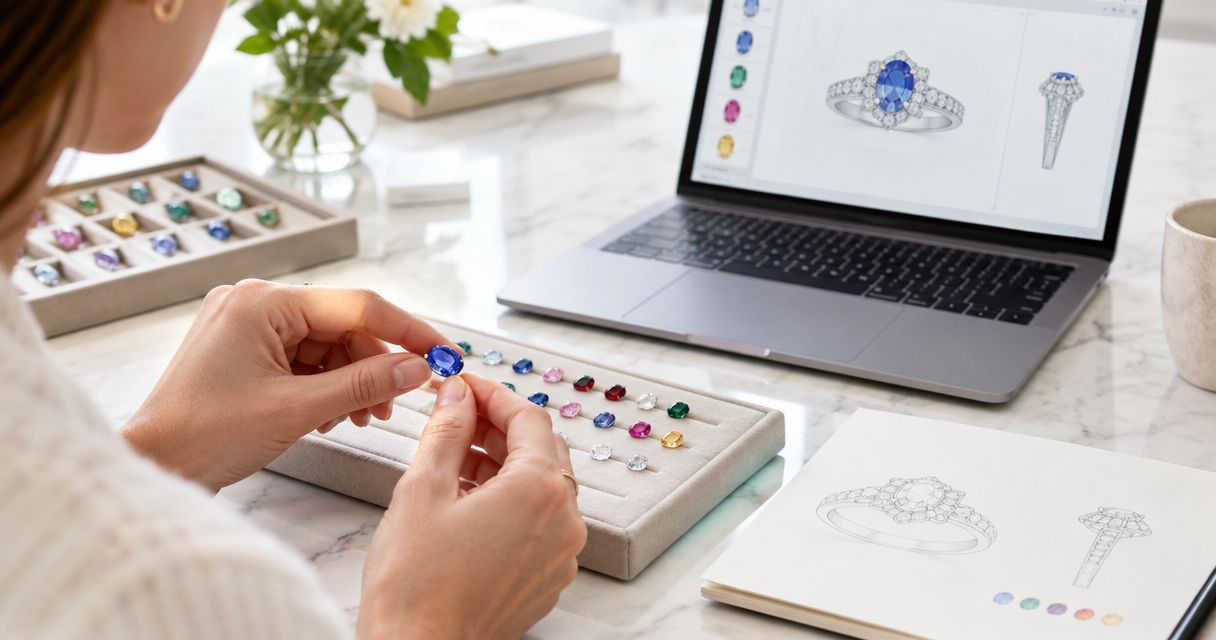
You can make gemstone selection part of the design brief rather than accept the stones shown in a reference photograph. Start with the appearance you want, then ask the jeweller to assess the stone and setting together. For a bridal project, the guide to commissioning a custom bridal jewellery design covers the wider commission brief.
Use this sequence before approving a design:
- Define the purpose. State whether the piece is for everyday wear, a wedding or occasional use.
- Describe the stone. Specify the gemstone identity, colour preference, shape and desired visual scale.
- Review suitability. Ask how the proposed stone will handle contact, cleaning and the chosen setting.
- Confirm disclosure. Request details of natural or laboratory-grown origin, treatments and applicable reports.
- Approve the specification. Record the selected stone and setting together, including any agreed substitutions.
Approve the gemstone and the design as one decision. A sketch alone does not establish what stone will go into the finished piece.
Why this matters
A gemstone changes more than the colour of bespoke jewellery. Its dimensions influence the setting, its physical properties affect care, and its appearance changes the balance of the whole piece. A stone that suits a pendant does not automatically suit a ring worn through daily tasks.
For a 2026 commission, separate the visual brief from the material specification. The visual brief describes the mood and proportions; the material specification identifies what you are actually approving. Keeping both clear prevents a reference image from becoming an ambiguous instruction.
What gemstone details can you personalise?
Gemstone identity and colour
You can request a particular gemstone or describe a colour family and ask which stones suit the design. Those are different briefs. If you specifically want ruby, a different red stone is not an equivalent choice simply because its colour looks similar.
Describe colour in ordinary language: deep red, pale blue, violet or a green with a yellow undertone. Then review the actual proposed stone. Photographs and screens are useful for discussion, but they are not a dependable final judge of colour.
Best for a specific gemstone preference: name the gemstone first. Best for a colour-led design: explain the shade and let suitability guide the shortlist. The first approach preserves identity; the second allows more design flexibility.
Shape, cut and dimensions
You can request a round, oval, pear-shaped or rectangular outline. Shape describes the outline, while cut also concerns the facets or polished surface that affect appearance. A cabochon has a smooth, rounded surface rather than a faceted face.
Ask for dimensions as well as carat weight. Two gemstones with the same weight can occupy different amounts of space because their proportions and material densities differ. For a ring, the height above your finger matters alongside the view from the top.
Placement and arrangement
You can discuss a single focal stone, a group of stones or smaller accents around a centre. Each arrangement changes the visual emphasis and the work required to hold the stones securely. More stones also mean more settings to inspect and maintain.
Describe the hierarchy clearly: which stone should draw attention, which stones support it, and whether symmetry matters. For bridal jewellery, review how that arrangement relates to the rest of your set rather than judging each piece in isolation.
Natural or laboratory-grown origin
You can ask whether a proposed stone is natural, laboratory-grown or an imitation. These descriptions are not interchangeable. A laboratory-grown diamond is diamond; a material that only resembles diamond is a different substance.
Request the correct description in writing. Do not assume that a photograph, a colour name or the word gemstone explains origin, treatment or identity. Make those questions part of your 2026 brief before accepting a final specification.
Which gemstones suit your wearing habits?
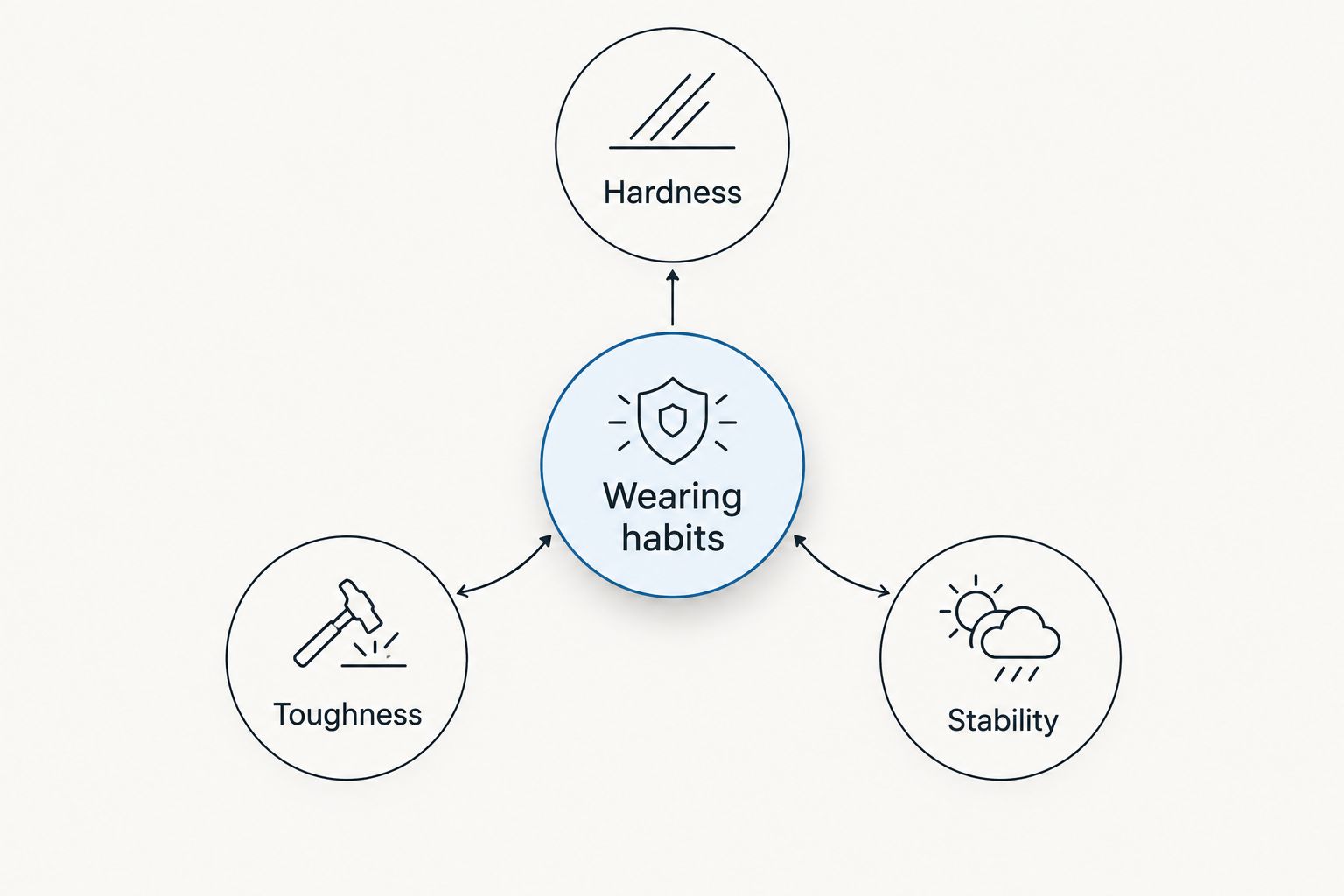
Hardness measures resistance to scratching, not resistance to every kind of damage. Toughness concerns resistance to breaking or chipping; stability concerns reactions to heat, light and chemicals. GIA's published gemstone-care guidance distinguishes these properties when assessing durability.
The comparison below uses established mineral hardness values, not a supplier shortlist. It does not confirm that any particular gemstone is offered for your commission.
| Gemstone option | Best for | Advantage | Limitation to discuss |
|---|---|---|---|
| Diamond | Buyers prioritising scratch resistance | Hardness of 10 on the Mohs scale | Can still chip; exposed edges need consideration |
| Ruby or sapphire | Buyers wanting colour with high scratch resistance | Corundum has hardness of 9 on the Mohs scale | Treatments and individual stone condition still matter |
| Amethyst or citrine | Buyers drawn to violet or yellow quartz | Quartz has hardness of 7 on the Mohs scale | Lower scratch resistance than corundum; care must suit the stone |
Diamond measures 10 on the Mohs scale, ruby and sapphire measure 9, and quartz varieties such as amethyst and citrine measure 7. These numbers are a starting point, not a complete wearability verdict. The scale is not linear, and no hardness value makes a gemstone damage-proof.
For a daily-wear ring, prioritise durability and protection around vulnerable edges. For an occasional pendant, you can give more weight to colour and visual character while still following stone-specific care. Choose for the actual wearing pattern, not just the occasion on which you receive the piece.
Why gemstone customisation varies
The same gemstone request can produce different design decisions because the piece, stone and setting must work together. Assess these factors before treating a preferred colour as a final selection:
- Wearing habits: a ring meets more surface contact than a pendant; describe your routine honestly.
- Stone condition: existing chips, fractures and treatments affect how an individual stone should be handled.
- Dimensions: the stone's width, depth and outline determine whether it fits the proposed setting.
- Setting protection: exposed corners and edges require attention, especially on pieces worn frequently.
- Visual matching: a pair of earrings or repeated necklace motif needs agreement on acceptable colour and shape differences.
- Documentation: the required identity and treatment disclosures depend on the gemstone being proposed.
Ask the jeweller to explain any recommended change in plain language. A useful answer connects the change to fit, durability, appearance or documentation. It should not replace your named gemstone with a vaguely similar alternative without your agreement.
How do you approve the actual gemstone?
Review the stone, not only the sketch
A drawing communicates composition, but it cannot establish the colour, transparency or inclusions of a particular gemstone. Ask to review the proposed stone separately from the design. Where the review is remote, request clear views under neutral lighting and an explanation of what the images do not show.
Look at the stone's face and side profile. For earrings, compare the pair together; for a necklace, review the relationship between the focal stone and its accents. Judge the whole arrangement before approving individual details.
Write down non-negotiables
Your 2026 approval brief should distinguish requirements from preferences. Gemstone identity, origin disclosure and the agreed stone are requirements if they determine your decision. A slight colour variation or a change in outline should be discussed rather than assumed acceptable.
Use a short record containing:
- Gemstone name and origin description.
- Agreed shape and dimensions.
- Disclosed treatments and relevant care instructions.
- Setting design and protection around the stone.
- Applicable report details and the process for approving changes.
Keep this record with the final design approval. It gives you a clearer basis for checking the finished piece than a collection of inspiration photographs.
Distinguish metal assurance from gemstone documentation
A BIS hallmark concerns precious-metal fineness; it does not identify or grade the gemstone beside it. Likewise, a diamond report does not replace the gold's hallmark. Check each material using the documentation relevant to that material.
If a diamond report forms part of your purchase, match it to the proposed diamond rather than treating the report as a general endorsement of the design. For the checking process, see how to check a diamond's IGI certificate number.
Where does a bespoke jeweller fit into this decision?
Auramjewellery is best suited to brides and gift shoppers seeking handcrafted bespoke jewellery commissions. The Kolkata-based jeweller offers handcrafted gold, diamond and silver jewellery, including bridal collections, BIS hallmarked gold and IGI-certified diamonds.
That makes Auramjewellery relevant to a bespoke jewellery brief, but you should still confirm your specific gemstone request. An offer of bespoke commissions is not confirmation of every stone type, treatment, customer-owned stone or setting combination.
In a 2026 enquiry, describe the intended wearer, occasion and stone preference before discussing decorative details. Ask which parts of the brief can be fulfilled and which require changes. Craftsmanship and documentation serve different purposes; your approval should account for both.
Can you use a gemstone you already own?
You can ask a jeweller to assess a gemstone you already own, but acceptance is a separate decision. The stone's identity, condition and dimensions need review before the jeweller confirms whether it can be set into a new design.
For an inherited piece, do not approve dismantling simply to test an idea. First discuss the existing setting, the stone's condition and the risks of removal. Ask for written handling terms and approval boundaries before any work begins.
Can you mix different gemstones in one design?
Yes, a bespoke design can combine different gemstones, provided the setting and care requirements suit the combination. Colour contrast can create a clear focal point, but the stones still need to work together physically.
Ask for care instructions for the entire piece, not just its hardest stone. A mixed-stone design must be cleaned in a way that respects every material it contains. The most scratch-resistant gemstone does not determine the safest cleaning method for the whole piece.
Can you change the gemstone after approving the design?
You can request a change, but the jeweller must reassess the design before confirming it. A different stone can have different dimensions, proportions or setting requirements even when its outline looks similar.
For a 2026 commission, agree how changes will be documented before you approve production. Do not assume that a new gemstone can be substituted into the existing setting without adjustment. Ask for a revised specification whenever the approved stone changes.
FAQ
Can you customize gemstones in bespoke jewellery?
Yes, gemstone identity, colour, shape, size and arrangement can form part of a bespoke jewellery brief. The jeweller must confirm the suitability of the proposed stone and setting before you approve the design.
What's the best gemstone for a bespoke ring I wear every day?
A durable gemstone in a protective setting is the right starting point for a daily-wear ring. Diamond has hardness of 10 on the Mohs scale, while ruby and sapphire have hardness of 9; hardness alone does not prevent chipping or other damage.
Can I choose a birthstone for my bespoke jewellery?
Yes, you can request a birthstone as part of your design brief. Ask the jeweller to assess the named gemstone against the intended setting, wearing habits and care requirements.
Can I ask for a laboratory-grown diamond?
Yes, you can request a laboratory-grown diamond and ask the jeweller to confirm whether the request can be fulfilled. Record its origin description and any applicable report details before approval.
Does BIS hallmarking certify the gemstone too?
No, BIS hallmarking concerns precious-metal fineness, not gemstone identity or grading. Check gemstone disclosures and applicable reports separately from the metal hallmark.
Can I reuse a gemstone from inherited jewellery?
You can request an assessment, but the jeweller must confirm whether the inherited stone can be safely removed and reset. Agree the handling terms before authorising dismantling.
Does Auramjewellery offer bespoke jewellery commissions?
Yes, Auramjewellery offers bespoke jewellery commissions for brides and gift shoppers. Confirm the requested gemstone, setting and documentation individually rather than assuming every combination is offered.
Can I choose stones that match across earrings and a necklace?
Yes, matching can be part of the design brief. Agree the acceptable differences in colour, shape and proportions, then review the proposed stones together before approving the set.
One last thing
Ask for care instructions before choosing the gemstone, not after receiving the jewellery. If the recommended routine does not suit how you will wear the piece, revise the stone or setting while the design is still open. The most personal choice is one you can comfortably live with.