Not every diamond stud earring is built the same way, and the setting you choose decides how much sparkle you get, how safe the stone stays day to day, and how the earring wears over 2026 and beyond. Best overall: solitaire prong-set studs. Best for everyday durability: bezel-set studs. Best for bridal wear: halo-set studs. Best value for visual size: martini-set studs.
- Solitaire prong-set diamond stud earrings win overall for balancing sparkle, security, and resale value in 2026.
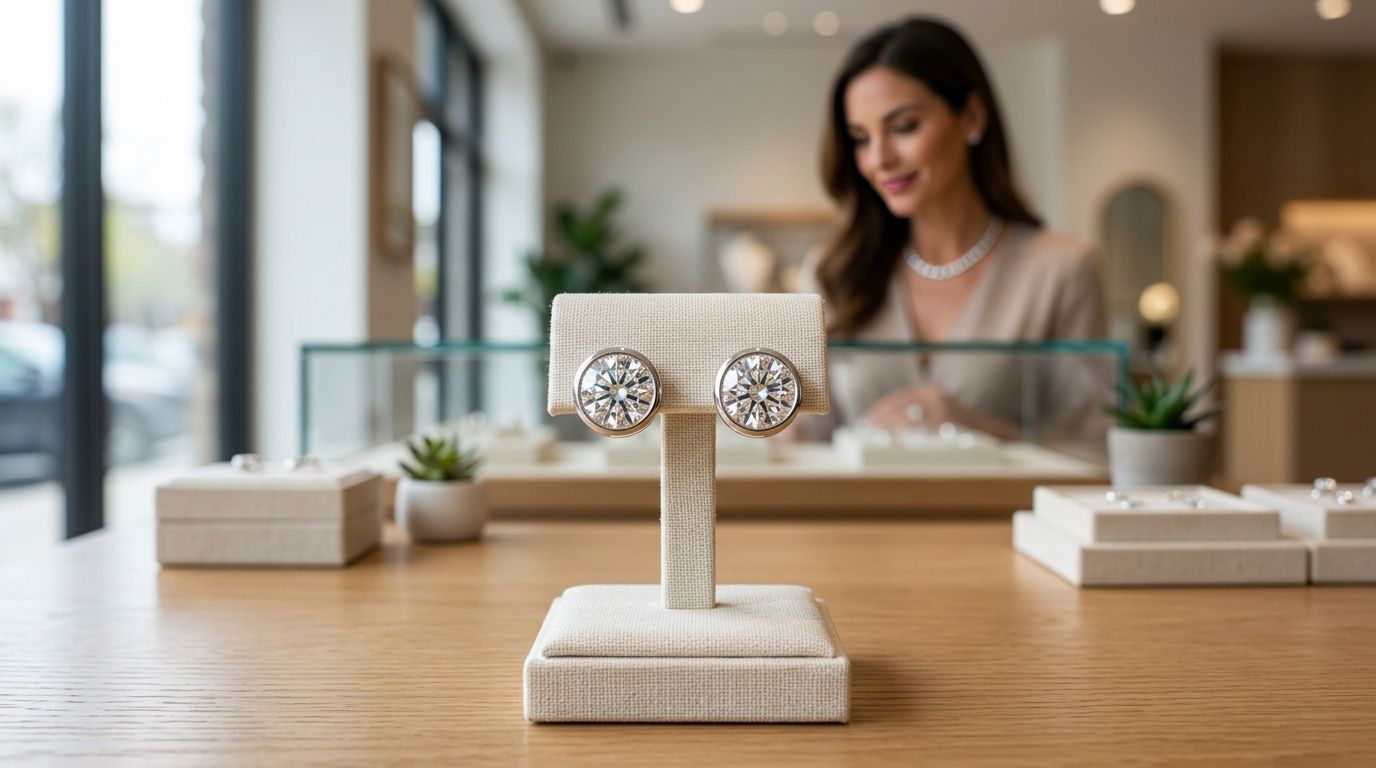
- Bezel-set studs protect the diamond edge best, making them the pick for daily wear and active routines.
- Halo-set diamond stud earrings look larger for the same center stone, which suits bridal and reception looks.
- Martini-set studs expose more of the diamond's surface, giving more visible sparkle per carat than heavier settings.
- Auram Jewellery makes all five styles as bespoke commissions in BIS hallmarked gold with IGI-certified diamonds.
Why this matters
A diamond stud earring is worn against the skin for years, often daily, so the setting matters as much as the stone. A poorly chosen prong height snags on hair and scarves; a bezel that's too thick dulls the stone's brilliance; a halo that's too wide can look dated by 2028.
Most buying guides rank studs by carat weight alone, which tells you nothing about how the earring will actually behave on your ear. This guide ranks by setting style and use case — the decision that actually determines comfort, security, and how the diamond catches light.
Auram Jewellery, a Kolkata-based jeweler working with third-generation karigars, builds diamond stud earrings to order rather than off a factory line, so every setting below can be commissioned in the metal purity and stone quality you specify.
What makes the best diamond stud earrings
- Certification — IGI-certified diamonds and BIS hallmarked gold (916 for 22KT, or 18KT for a firmer daily-wear alloy)
- Setting security — prong count and depth, or bezel thickness, that hold the stone through years of daily wear
- Light performance — how much of the diamond's pavilion is exposed to catch light from multiple angles
- Comfort for the earlobe — backing type (screw-back vs push-back) and total earring weight
- Craftsmanship — hand-set stones from a named karigar versus machine-cast settings
- Versatility — whether the design reads as everyday jewellery or purely occasion wear
Diamond stud earrings at a glance
| Style | Best for | Standout feature | Key limitation |
|---|---|---|---|
| Solitaire prong-set | Everyday and gifting | Maximum light exposure on the stone | Prongs need periodic tightening checks |
| Bezel-set | Active daily wear | Full metal rim guards the diamond edge | Slightly less sparkle than open settings |
| Halo-set | Bridal and reception | Center stone reads larger than its carat | Adds visible metal and weight to the ear |
| Martini-set | Sleek, minimal look | Diamond sits nearly flush, low profile | Fewer prongs mean less grip margin |
| Three-stone cluster | Maximum sparkle per rupee of stone cost | Uses smaller stones for a fuller look | Individual stones read smaller up close |
1. Solitaire prong-set studs: best diamond stud earrings for everyday wear
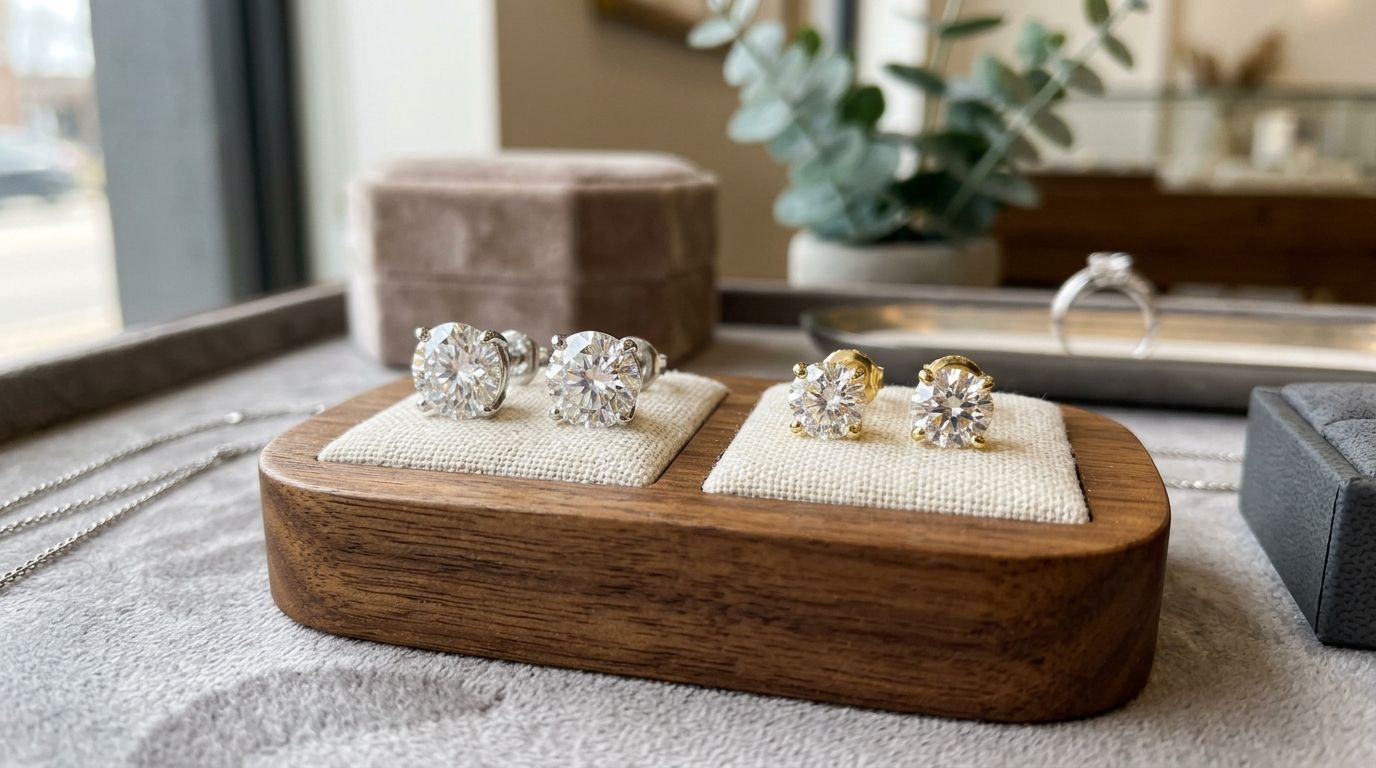
A solitaire stud holds a single diamond in a 4-prong or 6-prong setting that leaves most of the stone open to light. It's the setting most people picture when they hear "diamond stud earrings," and it's the safest starting point for a first commission.
Solitaire prong-set pros:
- Highest light return of any setting on this list
- Works for both daily wear and formal occasions without looking out of place
- Easiest style to resize or reset later if you upgrade the center stone
Solitaire prong-set cons:
- Prongs can catch on fine fabric or hair over years of wear
- Requires an annual prong check to keep the stone secure
Best for: anyone buying their first pair of diamond stud earrings, and gift shoppers who want a design that never looks dated. Verdict: Buy.
2. Bezel-set studs: best diamond stud earrings for active daily wear
A bezel setting wraps a thin rim of gold fully around the diamond's girdle, so there's no prong edge exposed at all. It's the setting jewelers recommend for someone who showers, exercises, or works with their hands while wearing earrings.
Bezel-set pros:
- No prongs to catch or bend, so the stone stays protected during sports or travel
- Cleaner, more modern silhouette than a prong setting
- Lower long-term maintenance than open settings
Bezel-set cons:
- The metal rim blocks some light from entering the side of the stone
- Looks slightly smaller than a prong-set diamond of the same carat
Best for: buyers who want one pair of diamond studs to wear through gym sessions, travel, and office days without switching earrings. Verdict: Buy.
3. Halo-set studs: best diamond stud earrings for bridal wear
A halo surrounds the center diamond with a circle of smaller pave stones, which makes the whole earring read larger than the center stone's actual carat weight. This is the setting most requested for bridal and reception looks in 2026, where the earring needs to hold its own against a heavier jewellery set.
Halo-set pros:
- Center stone appears noticeably larger for its carat weight
- Pairs well with statement necklaces and maang tikka without visually disappearing
- Extra facets from the surrounding stones add sparkle from more angles
Halo-set cons:
- More total metal and stone weight, which some wearers feel by the end of a long wedding day
- Higher stone count means more settings to inspect over time
Best for: brides and reception guests who want their diamond stud earrings to photograph well next to a full bridal set. Auram Jewellery's bridal jewellery guide for Bengali brides covers how earrings sit alongside a full set. Verdict: Buy for bridal; Hold for daily wear.
4. Martini-set studs: best diamond stud earrings for a minimal look
A martini setting uses just three prongs arranged low around the stone, so the diamond sits almost flush with the earlobe. It's named for the way the setting curves like a martini glass stem, and it's become popular for buyers who want visible diamond with minimal visible metal.
Martini-set pros:
- Diamond appears larger and more prominent since less metal surrounds it
- Sits closer to the ear, which suits smaller earlobes
- Lower total gold weight than halo or heavier prong designs
Martini-set cons:
- Three prongs offer less grip margin than a 4- or 6-prong solitaire
- Not the best pick for anyone rough on jewellery day to day
Best for: buyers who want a diamond stud that looks bigger than its actual carat weight without adding a halo. Verdict: Buy for occasional wear; Wait if you want a daily-wear piece.
5. Three-stone cluster studs: best diamond stud earrings for sparkle per rupee
A cluster setting groups three or more smaller diamonds together instead of using one larger center stone. Because smaller diamonds cost less per carat than a single larger stone of equivalent total weight, this setting delivers a fuller look without the price jump of a big solitaire.
Cluster stud pros:
- More total sparkle points than a single-stone setting of similar overall carat weight
- Smaller individual stones are typically easier to source and match
- Reads as a fuller, denser design from arm's length
Cluster stud cons:
- Up close, individual stones look smaller than one solid center diamond
- More settings to check for security over the years
Best for: gift shoppers and first-time diamond buyers who want visual impact without committing to one large center stone. Verdict: Buy.
How this list was ranked
Each setting was judged against the six criteria above — certification, security, light performance, comfort, craftsmanship, and versatility — rather than by carat weight or brand name alone. That's why a solitaire prong-set stud, not the flashiest option on paper, takes the overall spot: it scores well across every category instead of excelling at just one.
“The setting decides how the diamond behaves for the next ten years — the stone itself is only half the decision.”
Commission your diamond stud earrings
Work directly with Auram Jewellery's karigars on setting, metal purity, and stone choice.
Which diamond stud earrings should you choose?
If you're buying one pair to wear for years across every occasion, the solitaire prong-set stud is the default answer — it holds up to daily wear, resets easily, and never looks out of place. Choose bezel-set if you're rough on jewellery day to day, halo-set if the earrings need to carry a bridal look, and martini or cluster settings if you want maximum visual sparkle without the weight of a heavier design.
Whichever setting you land on, confirm two things before you commission it in 2026: IGI certification on the stone and BIS hallmarking on the gold. Those two checks protect the purchase regardless of which style you pick.
Diamond earrings rarely travel alone — many buyers pair studs with a matching pendant. Auram Jewellery's diamond pendant set guide and diamond nosepin guide cover how to match stone cut and setting across a full set.
FAQ
What is the best setting for diamond stud earrings in 2026?
Solitaire prong-set studs are the best all-around choice in 2026 because they maximize light return while staying easy to reset or upgrade later. Bezel-set studs are the better pick if you wear earrings during sports or daily manual work.
Are bezel-set or prong-set diamond studs better for daily wear?
Bezel-set studs protect the diamond's edge better because a full metal rim guards the girdle, making them the stronger choice for daily wear. Prong-set studs show more sparkle but need an annual check to keep the prongs tight.
How much carat weight is typical for diamond stud earrings?
Everyday diamond stud earrings commonly run smaller, while bridal and statement studs move toward larger center stones. The right weight depends on earlobe size, setting style, and how often the earrings will be worn.
What should I check before buying diamond stud earrings in India?
Confirm IGI certification on the diamond and BIS hallmarking (916 for 22KT gold, or 18KT marking for a firmer alloy) before committing to a purchase. These two checks matter more than the setting style you choose.
Is a halo setting worth it for diamond stud earrings?
A halo setting is worth it if you want the center stone to look larger than its actual carat weight, which suits bridal and reception wear. It adds more metal and stone weight, so it's less ideal for daily use.
Can diamond stud earrings be custom commissioned?
Yes, jewelers working with in-house karigars can commission diamond stud earrings to a specified setting style, metal purity, and stone certification rather than selling only pre-made stock. This lets buyers match studs to an existing pendant or bridal set.
What's the difference between screw-back and push-back diamond studs?
Screw-back closures thread onto the post and stay locked in place, making them the safer choice for daily wear and travel. Push-back closures are quicker to put on but carry a higher chance of an earring slipping loose during the day.
One last thing
The setting you pick today outlasts trends — a well-made bezel or solitaire stud from 2026 will still look correct in 2036, while a heavily styled cluster design tied to one season's trend won't age the same way. If you're only buying one pair of diamond stud earrings for the next decade, weight the decision toward setting security over how large the stone photographs on day one.