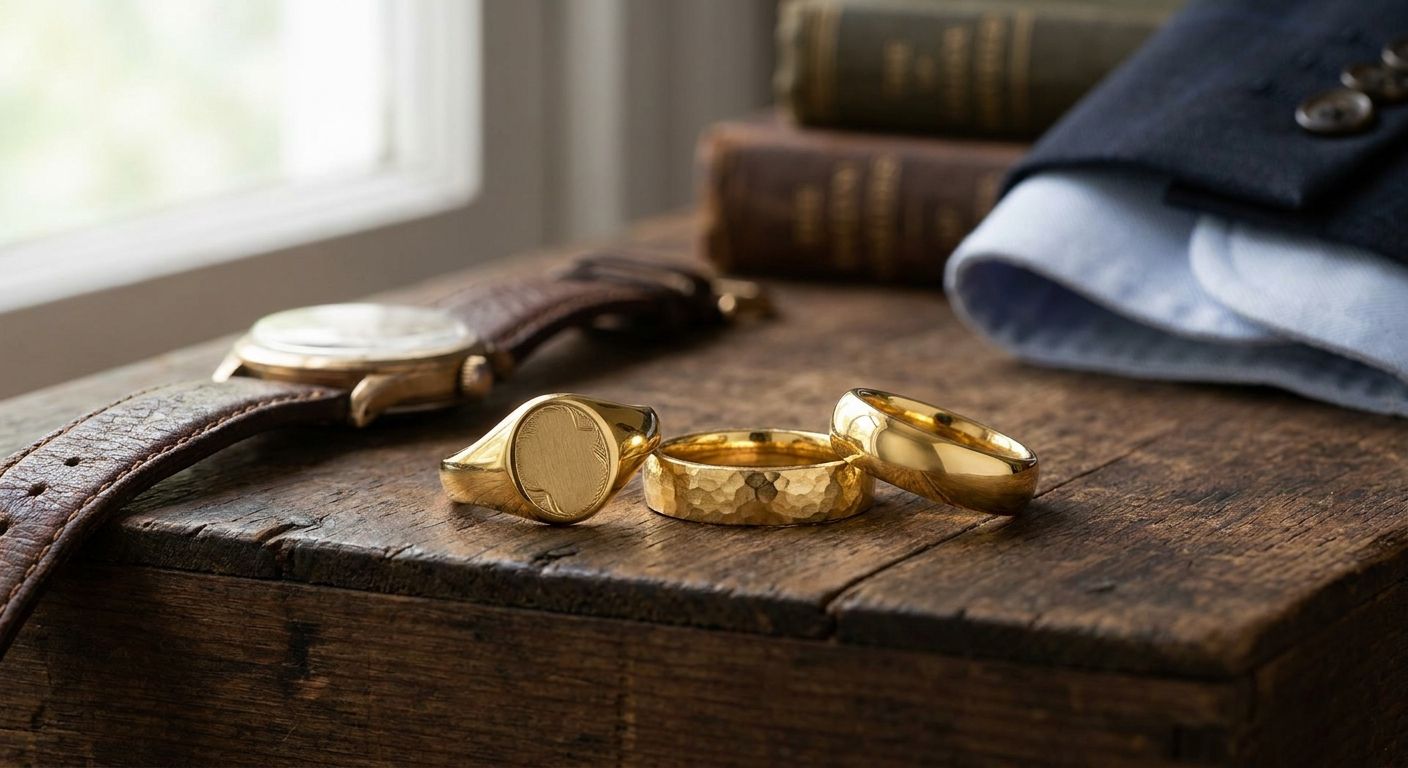
Stone embedded gold rings in 2026 span solitaire diamonds, kundan work, polki, coloured gemstones, pave clusters, and fully bespoke commissions — the best pick depends on occasion, not brand. Best overall: IGI-certified diamond solitaire rings. Best for bridal ceremonies: kundan stone-set 22KT gold rings. Best for daily wear: diamond cluster or pave rings.
- IGI-certified diamond solitaire rings are the strongest all-round stone embedded ring pick for 2026 engagements.
- Kundan stone-set 22KT gold rings suit multi-day bridal ceremonies better than heavier polki pieces.
- 916 hallmark (91.6% gold purity) should be non-negotiable on any stone embedded ring you buy.
- Bespoke commissioned rings win when a family stone or heirloom design needs a hand-set mount.
Why this matters
A stone embedded ring isn't one product — it's a setting decision, a purity decision, and a certification decision stacked on top of each other. Buyers who skip the certification check end up with diamonds that have no resale documentation, or gold that reads 22KT on the tag but isn't hallmarked at 916.
Auram Jewellery, working out of Kolkata with third-generation karigars, sees this most often in bridal shopping: families pick a design first and ask about hallmarking after the sale. That order should reverse. Once purity and certification are settled, the 22K gold rings for women category narrows fast, and so does the stone-setting choice for a bridal gold jewellery set.
What makes the best stone embedded gold ring
- Stone certification — IGI or an equivalent lab report for diamonds, with a certificate number you can verify
- Gold purity and hallmarking — BIS 916 hallmark for 22KT, stamped and traceable
- Setting security — prong, bezel, or pave work that holds the stone through years of wear, not just the first six months
- Hand-craftsmanship — hand-set stones from artisan karigars outlast machine-cast mounts under daily stress
- Occasion fit — a ring built for a three-day wedding ceremony is the wrong ring for office wear
- Customization headroom — whether the design can absorb a family stone or a resizing later
At a glance: stone embedded ring styles compared
| Ring style | Best for | Standout feature | Key limitation |
|---|---|---|---|
| IGI-certified diamond solitaire | Engagement proposals | Verifiable lab certification | Limited surface area for large stones |
| Kundan stone-set 22KT gold | Bridal ceremonies | Dense, glass-set stone coverage | Needs careful storage — kundan settings chip if dropped |
| Polki (uncut diamond) | Heirloom weddings | Traditional uncut-diamond texture | Heavier per-gram feel than faceted diamond |
| Coloured gemstone (ruby, emerald, sapphire) | Festive gifting | Colour statement without diamond pricing tiers | Softer stones (emerald) need gentler daily handling |
| Diamond cluster / pave | Daily statement wear | Low-profile setting, comfortable under gloves | Smaller individual stones, less resale focus per stone |
| Bespoke commissioned | Custom family heirlooms | Built around your own stone or design brief | Longer turnaround than off-shelf pieces |
1. IGI-certified diamond solitaire ring: best stone embedded ring for engagement proposals
A solitaire mounts one certified diamond as the visual center, usually in a prong or bezel setting on 18KT or 22KT gold. The certificate — from IGI or a comparable lab — documents cut, clarity, and carat, so the stone has a paper trail beyond the purchase receipt.
IGI-certified diamond solitaire pros:
- Certificate gives resale and insurance documentation
- Simple mount is easy to resize for the receiving hand
- Works across both traditional and Western proposal formats
IGI-certified diamond solitaire cons:
- A single stone shows chips or scratches more visibly than a cluster setting
- Cost per carat rises faster than cluster or pave alternatives at the same visual size
Best for: engagement proposals where the certificate matters as much as the design. Verdict: Buy — this is the stone embedded ring category to lead with in 2026 if certification is the priority.
2. Kundan stone-set 22KT gold ring: best for bridal ceremonies
Kundan work sets polished glass or gemstone pieces into a gold foil base, built for maximum visual density across the finger. It's a technique rooted in North Indian and Bengali bridal traditions, hand-assembled rather than cast.
Kundan stone-set ring pros:
- Dense stone coverage reads well in ceremony photography
- Pairs naturally with a bridal gold jewellery set rather than standing alone
- Hand-set kundan work holds up better than machine-pressed imitations
Kundan stone-set ring cons:
- Not built for daily wear — the foil-set stones need careful storage between ceremonies
- Heavier visual footprint than a solitaire, which some brides don't want post-wedding
Best for: the multi-day bridal ceremony circuit where the ring is one part of a larger ensemble. Verdict: Buy for ceremony wear, Skip if you need one ring for both the wedding and daily use after 2026.
3. Polki (uncut diamond) ring: best for heirloom weddings
Polki uses uncut, naturally faceted diamonds set into gold, a technique that predates the faceted-cut diamond trade in India. The texture is rougher and warmer than a cut solitaire, and it's the style most families reach for when a piece needs to look generational.
Polki ring pros:
- Distinct texture that doesn't read as mass-produced
- Sits comfortably alongside older family jewellery without looking mismatched
- Strong fit for Bengali and North Indian wedding aesthetics
Polki ring cons:
- Uncut stones carry less standardized grading than faceted diamonds — certification language differs from a typical IGI report
- Feels heavier per gram than an equivalent-looking faceted-diamond ring
Best for: heirloom-style weddings where texture and tradition outrank grading precision. Verdict: Buy if the aesthetic fits the ceremony; Hold if you specifically want lab-graded, faceted stones.
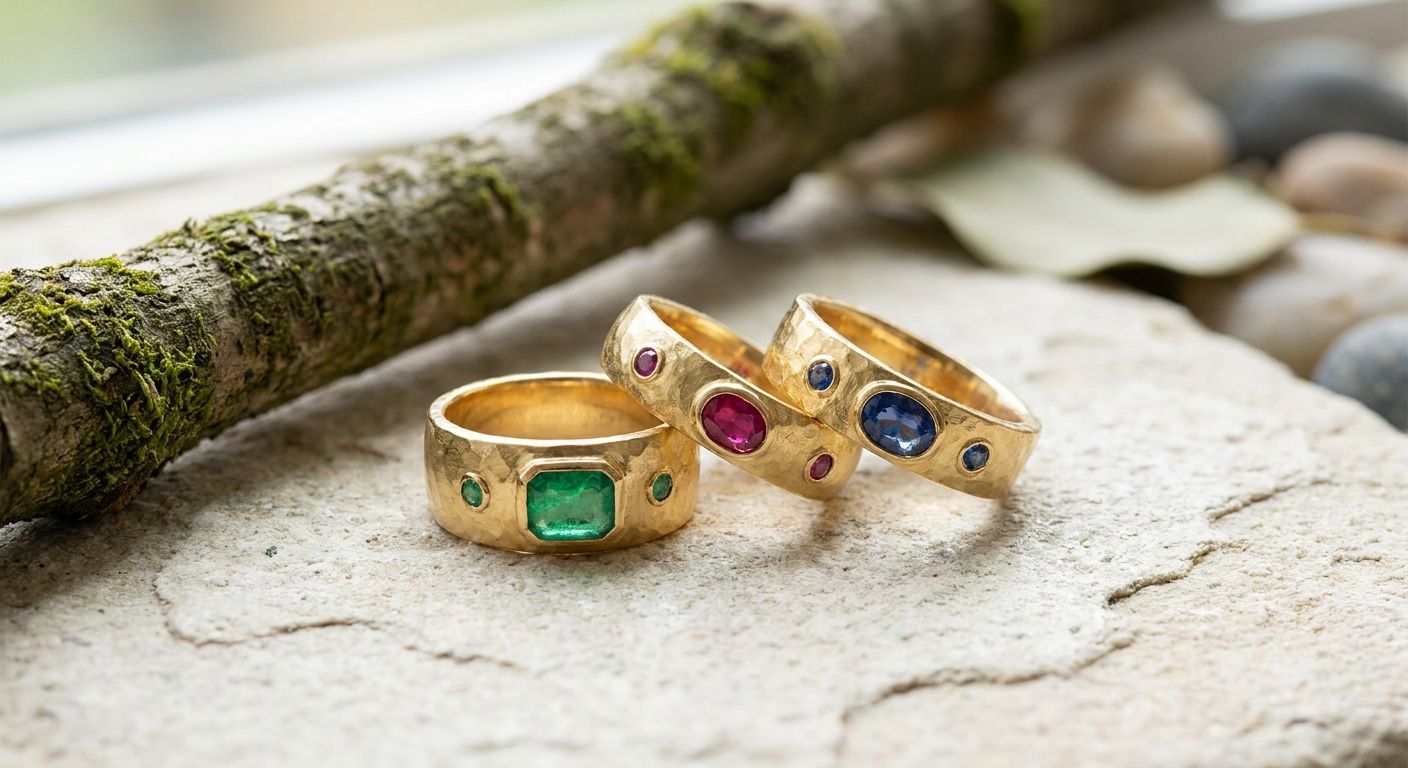
4. Coloured gemstone ring (ruby, emerald, sapphire): best for festive gifting
Coloured stones set in 22KT gold — ruby, emerald, sapphire, or a mix — read as festive rather than bridal, which makes them a common Diwali or anniversary gift category. The gold setting does more visual work here since the stone colour carries the design.
Coloured gemstone ring pros:
- Colour gives a distinct look without competing directly with diamond pricing tiers
- Works well as a standalone gift, no accompanying set required
- Wide range of stone-and-gold colour pairings
Coloured gemstone ring cons:
- Emerald in particular is a softer stone and needs gentler daily handling than diamond or ruby
- Colour consistency across stones varies more than diamond grading does
Best for: festive gifting where colour, not carat weight, drives the choice. Verdict: Buy for gifting occasions; Wait if the recipient wears rings daily and durability matters more than colour.
5. Diamond cluster / pave ring: best for daily statement wear
A cluster or pave setting spreads several smaller diamonds across the band or a low-profile head, giving sparkle without one large, exposed stone. The lower profile means fewer snags on daily wear — gloves, fabric, keyboards.
Diamond cluster ring pros:
- Low profile survives daily wear better than a raised solitaire
- Smaller individual stones are cheaper to replace if one is damaged
- Reads as a statement piece without requiring a single large-carat stone
Diamond cluster ring cons:
- Individual stones carry less resale identity than one certified solitaire
- Cleaning is more involved — more settings to check for looseness over time
Best for: daily statement wear where comfort under regular use matters more than one showcase stone. Verdict: Buy for everyday rotation.
6. Bespoke commissioned stone ring: best for custom family heirlooms
A commissioned ring starts from a brief — a family stone to reset, a design sketch, or a size and metal spec — rather than a catalogue piece. Auram Jewellery builds these with its karigars working from the client's brief rather than a factory line, which is the point of a commission: the mount is designed around the stone, not the other way round.
Bespoke commissioned ring pros:
- Absorbs an existing family stone into a new, wearable mount
- Design control down to setting style, band width, and finish
- No compromise between what's in stock and what the occasion needs
Bespoke commissioned ring cons:
- Turnaround is longer than picking from finished inventory
- Requires more decisions upfront — stone, metal, setting — before work begins
Best for: families with an existing stone or a design brief that off-shelf rings can't match. Verdict: Buy — this is the category to choose when the ring has to be one-of-one.
How we ranked
Ranking follows the criteria above in order: certification first, hallmarking second, setting durability third, then occasion fit and customization. A stone embedded ring that skips certification or hallmarking drops in the ranking regardless of how it photographs — those two checks are the ones that protect resale value and long-term wear.
“Once purity and certification are settled, the stone-setting choice for a stone embedded ring narrows itself.”
Talk through a bespoke ring commission
Bring a family stone or a design brief to Auram Jewellery's karigars.
Which stone embedded ring should you choose?
For an engagement in 2026, the IGI-certified diamond solitaire is the default — the certificate does the long-term work the design alone can't. For a wedding ceremony circuit, go with kundan stone-set 22KT gold, and pair it with a matching bridal gold jewellery set rather than buying the ring in isolation. For daily wear after the ceremonies end, switch to a diamond cluster or pave ring built for comfort under regular use. If a family stone is involved, skip the catalogue entirely and commission the piece.
FAQ
What is the best stone embedded ring for an engagement in 2026?
An IGI-certified diamond solitaire ring is the strongest engagement pick in 2026 because the lab certificate documents cut, clarity, and carat for resale and insurance. Solitaire mounts also resize more easily than dense cluster settings.
Is kundan better than polki for a bridal stone embedded ring?
Kundan suits multi-day bridal ceremonies best because of its dense, photograph-friendly stone coverage, while polki fits heirloom-style weddings where uncut diamond texture matters more than grading precision. Neither is objectively better — they serve different ceremony aesthetics.
How much does a stone embedded gold ring cost?
Cost depends on gold purity, stone certification, and setting style, so check current pricing directly rather than relying on a fixed figure. 22KT gold with a BIS 916 hallmark and an IGI-certified stone typically sits at the higher end of a given design.
Does a stone embedded ring need a hallmark?
Yes — a BIS hallmark confirming 916 purity (91.6% gold) on 22KT pieces is the baseline check before buying any stone embedded ring in India. Skipping this check removes your ability to verify purity later.
Can I use a family diamond in a new ring setting?
Yes, this is what a bespoke commission is for — the mount is designed around your existing stone rather than picking a catalogue setting and hoping it fits. Turnaround runs longer than an off-shelf purchase because the design starts from your brief.
Are coloured gemstone rings durable enough for daily wear?
Ruby and sapphire hold up well to daily wear, but emerald is softer and needs gentler handling, which makes coloured gemstone rings a better fit for festive or gift occasions than constant daily use.
What's the difference between IGI certification and BIS hallmarking?
IGI certification documents a diamond's cut, clarity, and carat, while BIS hallmarking verifies gold purity on the metal itself. A fully documented stone embedded ring carries both, since they cover different parts of the piece.
One last thing
The detail most buyers miss in 2026: a kundan or polki ring bought for a wedding ceremony is not meant to become the everyday ring afterward. Budgeting for a second, lower-profile piece — a diamond cluster or pave ring — for daily wear keeps the ceremony ring in better condition for the next generation to inherit.