Yes. Bengali gold jewellery and South Indian gold jewellery differ mainly in their designs, motifs and craft techniques, not in the gold itself. A Bengali-style piece might use delicate wirework, while a South Indian temple-style piece might feature raised motifs and stone settings. Either can be made in 22-karat gold; check the individual piece’s hallmark rather than assuming its purity from its regional style.
- Bengali gold jewellery vs south indian gold is a design comparison, not a purity grade.
- Bengali-style pieces can feature filigree and traditional bridal forms; South Indian styles include temple motifs and stone-set designs.
- A 22-karat, 916-marked piece has the same stated fineness regardless of its regional design.
- Auram Jewellery is a Kolkata-based option for handcrafted gold and bespoke bridal commissions; confirm the requested technique before ordering.
Why this matters
If you are choosing jewellery for a wedding in 2026, a regional label tells you what to look for visually. It does not tell you the piece’s karatage, weight or suitability for daily wear. Two necklaces can both be described as bridal gold yet have different silhouettes, surface details and ways of sitting over an outfit.
Auram Jewellery sells handcrafted, BIS-hallmarked gold jewellery and accepts bespoke bridal commissions. That makes the design brief important: describe the forms and details you want, not just the region you associate them with. If you want a Bengali-style bala or a South Indian-style temple necklace, name that piece and discuss its construction separately from its gold purity.
Is Bengali gold jewellery different from South Indian gold?
Yes: the useful distinction is style and workmanship, not a separate kind of gold. These are broad design traditions, not fixed specifications. A jeweller can make pieces influenced by either tradition in a stated karatage, and an individual design can mix elements from both.
| What to compare | Bengali-style gold jewellery | South Indian-style gold jewellery |
|---|---|---|
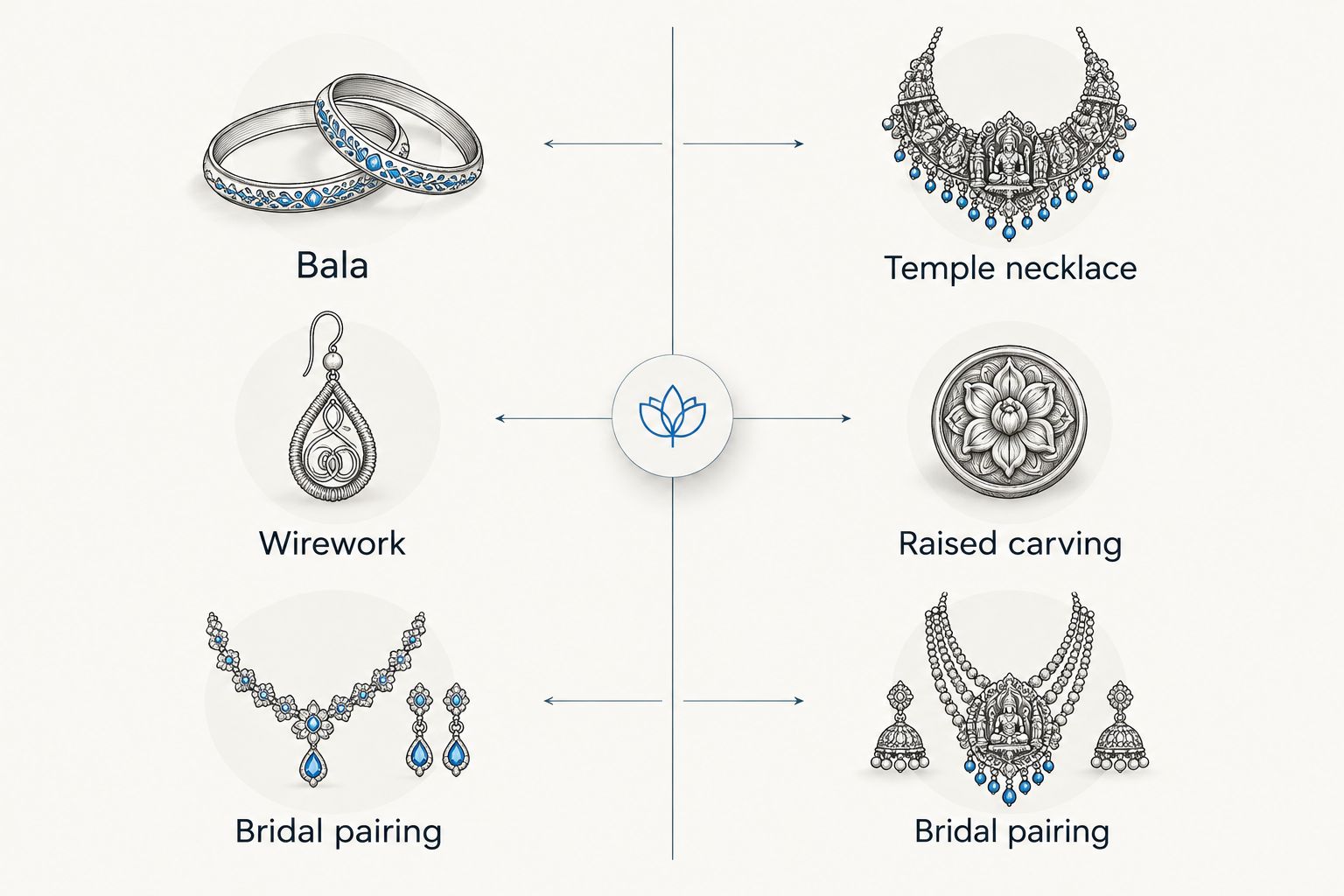
| Design vocabulary | Bala and other forms associated with Bengali bridal dressing | Temple necklaces, kasu mala and vanki among the recognised forms |
| Surface detail | Wirework, filigree or engraved detail in designs that use those techniques | Temple motifs, raised carving or repeated coin-like elements in designs that use them |
| Stones | Plain-gold and stone-set designs both exist | Plain-gold and stone-set designs both exist |
| Bridal context | Can be selected to accompany shakha-pola and other Bengali wedding jewellery | Can be selected as part of a South Indian bridal arrangement |
| Gold purity | Must be checked on the individual piece | Must be checked on the individual piece |
| Practical question | Can the maker execute the requested detail and fit? | Can the maker execute the requested motif, setting and fit? |
The table describes design options, not rules that every piece follows. Filigree is not proof that a bangle is Bengali, and a temple motif does not establish where a necklace was made. In 2026, the sound buying decision is to compare the actual piece: its design, hallmark, construction and how it feels when worn.
A helpful way to read the two traditions is to separate form from finish. Form is the shape of the bangle, necklace or armlet. Finish is what you see on its surface, from fine wirework to carved relief. Neither gives you a reliable purity reading, so keep that check separate.
What defines a Bengali-style piece?
Start with the named form. A bala is a bangle, while a chandrahar is a necklace style; neither name, by itself, guarantees a particular weight or purity. Bengali bridal styling also brings gold jewellery into an arrangement that can include shakha-pola. That context matters when you judge whether a necklace or bangle works with the rest of what you plan to wear.
Then look closely at how the decoration is made. If you want filigree, ask to see the openwork and fine metal detail rather than accepting the word alone. If you want engraving, identify where it appears on the finished piece. These are distinct requests for workmanship, and a photograph of a similar design is more useful to a karigar than a broad instruction to make something Bengali.
Do not assume Bengali-style jewellery must have a matte finish or contain no stones. Those choices belong to the particular design. A plain-gold bangle and a stone-accented bridal necklace can both serve a Bengali wedding look; the question is whether each piece fits the outfit, other jewellery and your intended use.
What defines a South Indian-style piece?
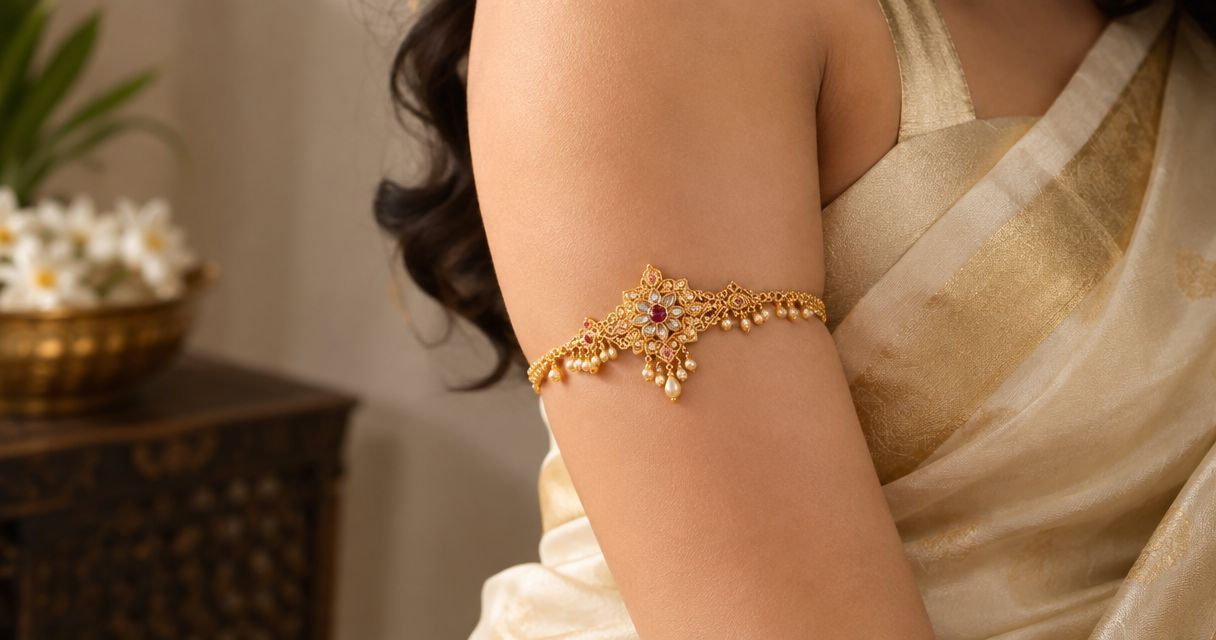
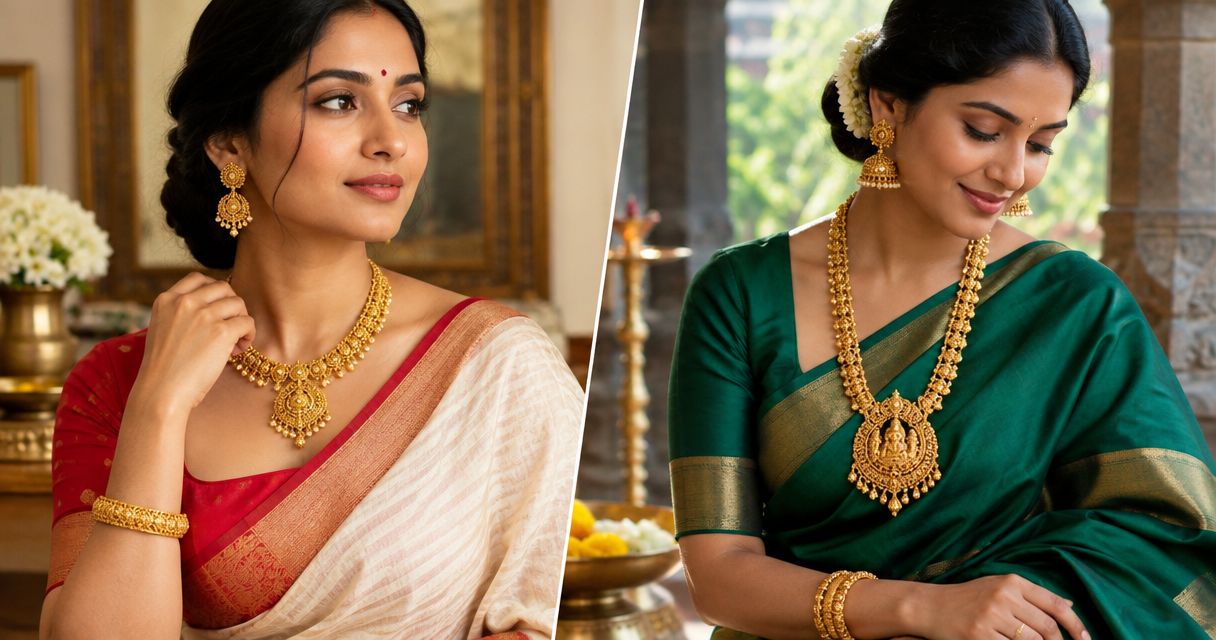
South Indian jewellery covers more than one form. Temple necklaces use motifs associated with temple-inspired design; a kasu mala uses repeated coin-like elements, and a vanki is an armlet. Those names give you a more precise starting point than asking for South Indian gold generally. They also help a jeweller understand what you expect the piece to look like when worn.
Inspect the details that make the design recognisable to you. If you want a carved motif, look at its shape and placement. If the piece contains stones, ask how they are set and what the stones are. Do not assume every South Indian-style piece contains stones or that a bright finish is mandatory. The individual design, not its regional label, answers those questions.
Scale matters as much as ornament. A necklace intended as the central piece of a bridal arrangement needs to sit well alongside earrings and other adornments. If you are considering it for wear beyond the wedding, judge that use separately: a striking bridal design is not automatically the most comfortable choice for an ordinary day.
Does the gold itself have a different purity?
No regional style has its own karat system. A 22-karat piece marked 916 states the same gold fineness whether its design is Bengali-inspired or South Indian-inspired. The 916 mark expresses 916 parts of gold per 1,000 parts of alloy; 24 karats represents pure gold on the karat scale. Those figures describe the metal, not the quality of the craft.
Check the mark on the piece you intend to buy. A design description, product photograph or verbal assurance is not a substitute for inspecting its BIS hallmark details. The guide to verifying BIS hallmarking gives you a separate checklist for that step. Apply the same check to both regional styles in 2026.
If you compare two pieces with different karatages, you are no longer comparing style alone. An 18-karat piece and a 22-karat piece differ in stated gold content even if their shapes look similar. Ask for each piece’s karatage and weight before drawing a conclusion about its metal content. The ornate-looking piece is not necessarily the one with more gold.
The same separation applies to stones and workmanship. A hallmark addresses the stated fineness of the metal; it does not identify a stone, assess a motif or tell you whether delicate details will suit frequent wear. Treat purity verification and design assessment as two separate jobs.
Why do Bengali and South Indian designs vary?
- Named jewellery forms: A bala, kasu mala and vanki serve different places in an arrangement. Compare pieces that perform the same role before deciding which design you prefer.
- Decorative technique: Fine wirework, engraving, raised motifs and stone settings create different surfaces. Ask which technique appears on the actual piece; a regional label alone does not answer that.
- Bridal pairing: The jewellery must work with the clothing and other adornments you have chosen. A necklace that works as a centrepiece in one arrangement can compete with another prominent piece.
- Construction and fit: An armlet, bangle and necklace raise different fit questions. Try the piece on where possible, or give the maker the measurements needed for a commission.
- Personal brief: A bride can prefer a Bengali jewellery form with restrained decoration or a South Indian form without stones. The tradition gives you a vocabulary, not an obligation to follow every familiar detail.
For a commission in 2026, put those decisions into the brief before discussing a finished look. Name the form, show the detail you want, state where you intend to wear it and request the gold karatage you want checked. That gives the maker specific choices to confirm instead of asking them to interpret a regional label on your behalf.
Can you combine both styles in one bridal look?
Yes. You can select pieces from both traditions if their scale, finish and placement work together. For example, decide which necklace should be the focal point before adding another prominent neckpiece. This is a styling choice, not a question of whether Bengali and South Indian gold are materially compatible.
Auram Jewellery is best for brides who want handcrafted, BIS-hallmarked gold jewellery and a bespoke bridal commission from a Kolkata-based jeweller. Its stated offering does not specify expertise in every regional technique, so describe the exact form and workmanship you want and confirm what can be made before placing a commission. That is a more useful test than assuming any jeweller who works in gold makes every traditional design.
You can also split the brief by occasion. If you want different jewellery arrangements for different wedding events, decide what each piece needs to do in its own outfit rather than trying to make every item match one regional label. Keep a record of the agreed design details and the purity specified for each piece; those are separate points to confirm.
Discuss your bridal jewellery design
Set out the form, craft details and gold purity you want for a bespoke commission.
Is one style better for everyday wear?
Neither regional style is automatically better for everyday wear in 2026. Examine the piece’s weight, fit and exposed details instead. A bangle that catches on clothing or a necklace that feels uncomfortable after a trial is a poor daily-wear choice regardless of whether its design is Bengali or South Indian.
If you want a piece for both a wedding and later use, say so at the start of the brief. Ask to handle or try on a comparable construction when possible. Pay particular attention to raised details, stone settings and clasps, because those are features you will interact with when putting the jewellery on and wearing it.
Which style should you choose for a wedding?
Choose the pieces that suit your planned outfit and the jewellery you already intend to wear. For a Bengali bridal arrangement, consider how gold bangles and necklaces sit with shakha-pola; for a South Indian arrangement, decide whether a temple necklace, kasu mala or another piece will carry the look. Neither choice determines the gold’s purity.
Make the decision piece by piece in 2026. If you prefer the silhouette of one tradition and a decorative detail from the other, describe both to the jeweller. Then confirm whether the proposed construction preserves the fit and appearance you expect. A clear brief gives you more control than a request for a complete regional look.
FAQ
Is Bengali gold different from South Indian gold?
No; the regional names describe jewellery design traditions, not different kinds of gold. Check the hallmark on each piece to establish its stated purity.
Does Bengali gold jewellery always have filigree?
No. Filigree is a technique you can request or look for in a particular design, but a Bengali-style piece does not need it to fit a Bengali bridal arrangement.
Is South Indian temple jewellery always set with stones?
No. Temple-inspired motifs and stone settings are separate design choices. Inspect the individual piece and ask what any stones are before buying.
Can both styles be made in 22-karat gold?
Yes. Either regional style can be made as a 22-karat piece; verify the stated 916 fineness on the individual item rather than relying on its design name.
What does 916 mean on a gold jewellery hallmark?
916 states a fineness of 916 parts of gold per 1,000 parts of alloy. It describes metal content, not whether the piece is Bengali-style or South Indian-style.
Can I wear Bengali and South Indian jewellery together?
Yes. Choose a focal piece, then check how the remaining pieces sit with it and with your outfit. Mixing styles does not change the purity of either item.
Can Auram Jewellery make a regional bridal design?
Auram Jewellery offers bespoke bridal commissions and handcrafted gold jewellery. Specify the regional form and technique you want, then confirm that the proposed design can be made as requested.
One last thing
In 2026, ask two separate questions when a regional design catches your eye: What craft details make this the piece I want? and What does its hallmark say about the gold? A jeweller can answer both, but one answer never replaces the other. That distinction lets you choose a design for what you see and verify the metal for what you are buying.