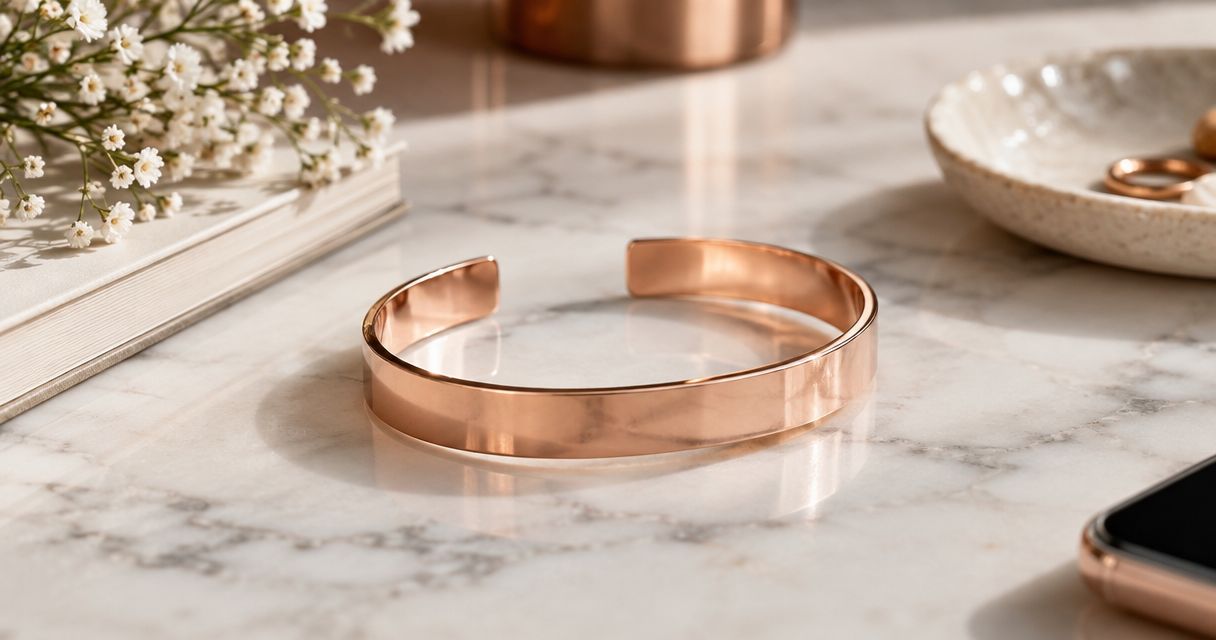
A rose gold cuff bracelet price in 2026 depends on its gold purity, net gold weight, workmanship and any gemstones; an itemised quote for the exact piece is the reliable answer. The metal component alone does not cover craftsmanship, stones or applicable taxes, so compare the complete payable amount rather than a gold-rate calculation.
- Compare rose gold cuff bracelet price using net gold weight, purity, making charges and stone details—not colour alone.
- An 18-karat gold alloy contains 75% gold; a rose-coloured coating does not establish the underlying metal.
- For gold jewellery, verify the BIS hallmark and match the piece’s details to its invoice.
- Auram Jewellery serves brides and gift shoppers seeking handcrafted gold jewellery and bespoke commissions.
Why this matters
Two cuffs can look similar while containing different amounts of gold. A broad, hollow design and a narrow, solid design are not equivalent purchases, even when their photographs suggest similar proportions.
Buy against a written specification, not a photograph or a colour description. If you are considering a handcrafted commission, Auram Jewellery sells gold jewellery and offers bespoke commissions; establish the proposed cuff’s metal, construction and fit before approving a design.
The useful question is not simply whether a cuff looks expensive. It is whether the quote explains what you are buying, separates the components clearly and gives you a finished piece suited to the wearer.
How much does a rose gold cuff bracelet cost in 2026?
A rose gold cuff bracelet needs a piece-specific quote. Start with the metal specification, then examine the craftsmanship and stone components before comparing the total.
Ask the seller to separate these elements in writing:
| Quote component | What to establish | Why it matters |
|---|---|---|
| Gold purity | Karat rating and fineness | Establishes the gold proportion in the alloy |
| Net gold weight | Metal weight in grams, excluding stones | Makes the metal component comparable |
| Gold-rate basis | Applicable purity, date and calculation method | Prevents a rate for another purity being used as the comparison |
| Making charges | Basis of the craftsmanship charge | Separates fabrication from metal value |
| Gemstones | Identity, weight, quality details and supporting documentation | Explains what the stone component covers |
| Taxes and other charges | Complete invoice breakdown | Establishes the amount payable |
For your 2026 purchase, ask how long the written quote remains valid and what changes after design approval. Do not assume a displayed gold rate fixes the entire order amount or guarantees a rate lock.
A useful comparison keeps the underlying specification constant. Match purity, net metal weight, construction and stone details before deciding that one quote represents better value.
Read net weight before gross weight
Gross weight includes the complete piece; net gold weight identifies the gold alloy separately from stones and other non-gold components. Ask which weight appears in the metal calculation.
This distinction matters for a stone-set cuff. You cannot compare its gross weight directly with the metal weight of a plain cuff and treat the difference as additional gold.
Separate craftsmanship from metal
Making charges cover the work involved in producing the jewellery. Hand-finishing, detailed surfaces and stone-setting require work that a gold-weight calculation does not describe.
Ask whether the charge is calculated by weight, as a percentage or as a fixed amount. Then establish exactly which work it includes, especially when you request engraving or changes to the design.
Solid rose gold cuffs: best for buyers prioritising the underlying metal
A solid rose gold cuff uses a gold alloy through its metal body rather than relying on a rose-coloured surface coating. Its colour comes from the alloy composition, commonly including copper.
Here, solid gold describes the material, not necessarily the construction. A gold-alloy cuff can still have a hollow structure, so ask separate questions about the metal and the way the bracelet is made.
The advantage is a clearly specified gold alloy throughout the body. The limitation is that the karat rating alone tells you neither the cuff’s thickness nor how well its shape suits repeated wear.
Purity gives you a measurable comparison
An 18-karat gold alloy contains 75% gold and is commonly expressed as 750 fineness. A 14-karat alloy is commonly expressed as 585 fineness, meaning 58.5% gold.
These are material specifications, not model names or promises about a particular seller’s collection. For a 2026 quote, request the purity offered for the actual cuff rather than assuming every rose gold design uses the same alloy.
Higher gold content does not automatically make a cuff better for your purpose. Assess construction, finish and fit alongside purity; an open cuff needs a shape you can put on without repeatedly forcing the metal apart.
Rose-gold-plated cuffs: best for colour-led accessory purchases
A rose-gold-plated cuff has a surface layer over another material. The underlying body might be silver or a base metal, so the phrase rose gold does not by itself establish gold content throughout the bracelet.
The advantage is access to the rose-toned appearance without choosing a gold-alloy body. The limitation is that surface wear can expose the material underneath, and care depends on the coating and substrate.
Ask for the underlying metal, coating description and care instructions. Do not compare a plated cuff with a solid gold-alloy cuff as though they are the same category of jewellery.
Diamond-set cuffs: best for buyers prioritising stones and setting detail
A diamond-set cuff combines the metal structure with gemstones and their settings. Its quote needs to explain both parts, including the diamond type and the scope of any grading documentation.
The advantage is the visual detail created by the stones. The limitation is a more involved inspection: you need to assess the metal specification, stone information and setting condition rather than relying on a single purity mark.
Ask whether diamonds are natural or laboratory-grown and what a supplied report covers. A report for an individual stone and documentation for a jewellery item are not interchangeable descriptions; read the stated scope before comparing pieces.
Compare the options without confusing their materials
| Option | Best for | Main advantage | Main limitation | Essential check |
|---|---|---|---|---|
| Solid rose gold cuff | Buyers prioritising a gold-alloy body | Gold alloy throughout the metal body | Purity does not establish thickness or fit | Purity, net weight and construction |
| Rose-gold-plated cuff | Colour-led accessory buyers | Rose-toned surface appearance | Coating wear exposes the underlying material | Base metal and coating details |
| Diamond-set rose gold cuff | Buyers prioritising stone detail | Combines gold alloy with gemstone design | Requires separate metal and stone checks | Diamond type, documentation and settings |
These categories overlap: a diamond-set cuff can have a solid gold-alloy body. Use the table to identify the questions each feature adds, not to assume that all cuffs fall into separate tiers.
Why rose gold cuff bracelet quotes vary
A useful 2026 comparison explains the differences between pieces rather than attributing every difference to rose gold colour. These six factors belong in your buying brief:
- Purity: The gold proportion changes with the karat rating. Compare like-for-like purity before assessing the metal component.
- Net gold weight: More gold-alloy weight changes the metal calculation. Width alone does not tell you how much gold a cuff contains.
- Construction: Solid-section and hollow construction use different structures. Ask about thickness, edges and how the cuff should be put on.
- Craftsmanship: Hand-finishing, engraving, textures and detailed fabrication affect the work involved. Establish what the making charge covers.
- Gemstones: Stone identity, weight, quality and setting work add separate specifications. Colourless appearance is not enough to identify a diamond.
- Fit and customisation: Changes to the opening, inner dimensions or design can change the agreed specification. Obtain approval before work proceeds.
Compare the specification first and the quote second. Otherwise, an apparent saving can simply reflect less gold, a different material or fewer design details.
How do you check a rose gold cuff before ordering?
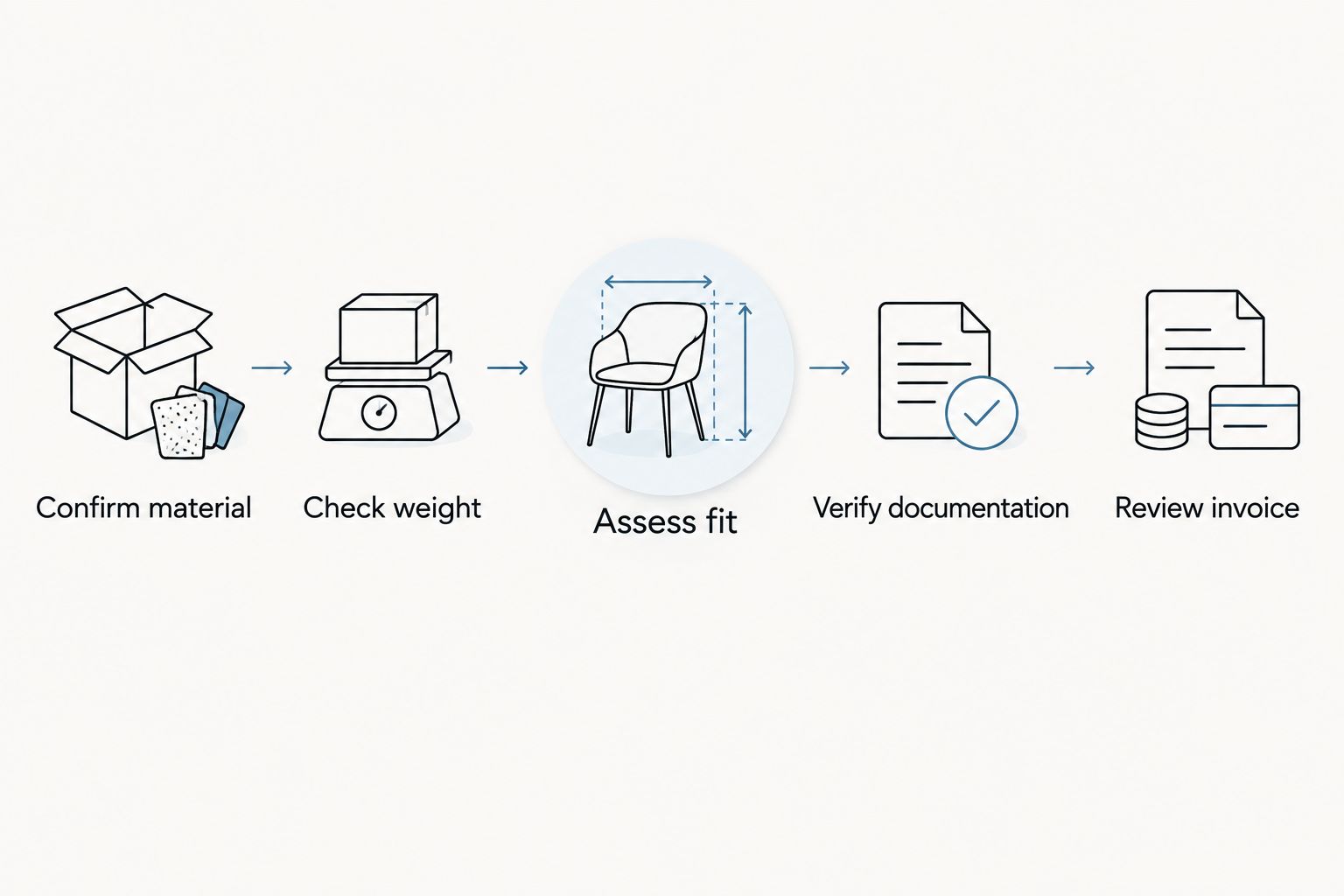
Use the same sequence whether you are buying a finished cuff or discussing a commission. Keep the agreed details with your invoice so the delivered piece can be checked against them.
- Confirm material. Ask whether the body is a gold alloy or a coated material, and record the purity where applicable.
- Check weight. Request net gold weight separately from gross weight and gemstone weight.
- Assess fit. Establish the inner dimensions, opening and intended wearing position rather than relying on wrist circumference alone.
- Verify documentation. Check the hallmark for gold and the stated scope of any diamond report.
- Review invoice. Confirm the design description, charge breakdown and written terms before payment.
For an open cuff, assess how it passes over the side of your wrist as well as how it sits once on. Ask the jeweller to demonstrate the intended method; repeated bending is not a substitute for correct sizing.
For gold jewellery, examine the BIS hallmark and verify the HUID through the BIS Care app. The hallmark concerns metal purity; it does not certify the cuff’s fit, design quality or diamond characteristics.
Use this guide to verify BIS hallmarking before buying gold jewellery alongside the seller’s written specification. Match the physical piece to the invoice rather than treating a photograph of a mark as the whole check.
Is rose gold more expensive than yellow gold?
Rose gold is not automatically more expensive than yellow gold. With purity and net weight held constant, both contain the same proportion and quantity of gold; design, alloy composition, craftsmanship and stones still need separate comparison.
For your 2026 shortlist, compare equivalent pieces rather than colour labels. A stone-set rose gold cuff and a plain yellow gold cuff do not isolate the effect of colour.
Is an 18-karat rose gold cuff better than a plated cuff?
An 18-karat rose gold cuff contains 75% gold in its gold alloy; a plated cuff does not establish that composition throughout its body. Choose between them according to whether you want a gold-alloy piece or primarily a rose-toned accessory.
Neither description resolves fit or workmanship. Confirm the body material and construction before treating either option as suitable for everyday wear.
Can you commission a rose gold cuff for a wedding or gift?
A bespoke cuff starts with a design brief covering material, dimensions, finish and any stones. Confirm that the jeweller can produce the proposed rose gold design before treating a sketch or reference image as an agreed order.
Auram Jewellery is suited to brides and gift shoppers seeking handcrafted gold jewellery and bespoke commissions. Its stated offering includes BIS hallmarked gold and IGI-certified diamond jewellery; confirm the specifications and documentation for the particular commission you discuss.
The benefit of commissioning is the opportunity to agree on the design. The constraint is that a reference image does not settle weight, fit, completion timing or adjustment terms; each belongs in the written agreement.
FAQ
How do I compare rose gold cuff bracelet price in 2026?
Compare itemised quotes for the same purity, net gold weight, construction and stone specification. Include making charges, applicable taxes and other stated charges when comparing the complete payable amount.
Does rose gold mean the bracelet is solid gold?
No, rose gold wording alone does not establish the bracelet’s underlying material. Ask whether the body is a gold alloy or another material with a rose-coloured coating.
What does 750 mean on a rose gold cuff?
750 fineness means the gold alloy contains 75% gold, equivalent to 18-karat gold. Verify the full hallmark and match the purity description to the invoice.
What weight should I check for a stone-set cuff?
Check net gold weight separately from gross weight and stone weight. Gross weight includes the complete piece and should not be treated as gold weight.
Can I bend an open cuff to make it fit?
Do not rely on repeated bending to make an open cuff fit. Ask the jeweller to demonstrate the intended wearing method and confirm whether adjustment is appropriate for that construction.
Does a BIS hallmark certify the diamonds in a cuff?
No, a BIS gold hallmark concerns the gold’s purity, not the diamonds. Request separate stone details and establish what any supplied grading report covers.
What should I confirm before commissioning a cuff as a gift?
Confirm material, fit, finish, stone details and the written order terms before approving a gift commission. Establish the recipient’s sizing information rather than assuming an open cuff fits every wrist.
One last thing
A cuff’s opening matters as much as its inner size. A bracelet can sit comfortably once on your wrist yet be difficult to put on without spreading the ends.
Before approving a 2026 purchase, ask one practical question: Can the wearer put this cuff on using the intended method without forcing its shape? For a gift or bridal commission, settle that detail before decorative choices; a well-finished piece still needs to fit its wearer.