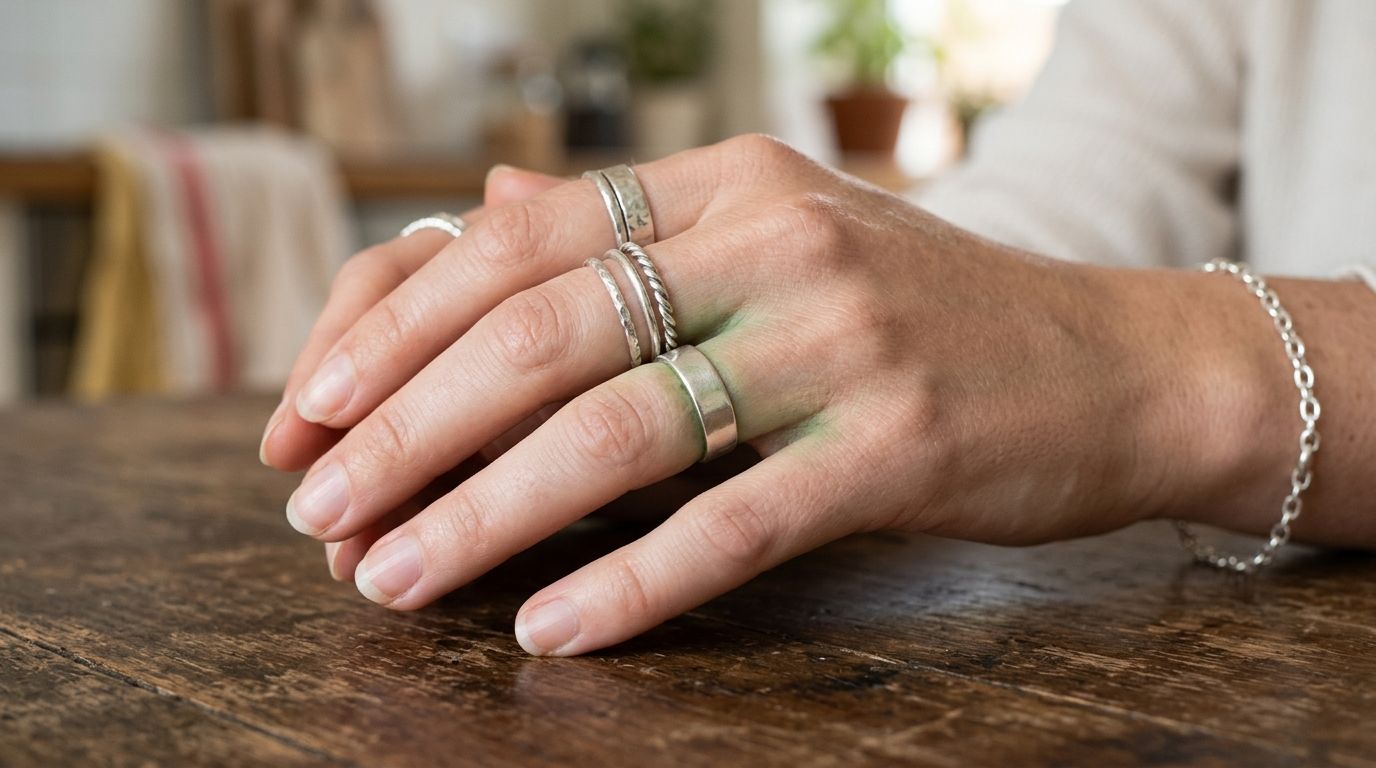
Sterling silver jewellery can turn skin green, but it isn't the silver doing it — it's the copper alloy inside reacting with sweat, skin oil, and everyday products to form a thin layer of copper salts on your skin. Pure fine silver (99.9%) almost never causes this because it contains no copper to oxidize. The green tint is a chemical reaction, not an allergy, and it washes off with soap and water.
- Sterling silver (92.5% purity) turns skin green from copper oxidation, not from an allergic reaction.
- Fine silver (99.9% purity) rarely reacts because it has almost no copper content.
- Sweat, humidity, chlorinated pool water, and sulfur-based cosmetics speed up the discoloration.
- Green skin fades with soap and water; persistent itching or rash points to a nickel allergy instead.
- BIS hallmarked 925 silver from Auram Jewellery reduces the risk with tested, consistent alloy ratios.
Why this matters
Most people panic the first time they see a green ring line and assume they're allergic to silver. That's usually wrong, and the fix is different depending on the actual cause.
An allergic reaction to metal — usually nickel, not silver — shows up as redness, itching, or a rash. A green stain is a copper oxidation byproduct sitting on the surface of your skin, not inside it. Confusing the two means people either avoid silver jewellery for the wrong reason or keep wearing pieces that are genuinely irritating their skin.
Before buying any silver piece in 2026, it helps to know how to verify silver purity before checkout — the hallmark stamp tells you exactly how much copper you're dealing with.
Does silver jewellery turn skin green?
Yes, and the likelihood depends entirely on the alloy. Here's how the common types compare:
| Silver type | Purity | Turns skin green? | Why |
|---|---|---|---|
| Fine silver | 99.9% | Rarely | Almost no copper to oxidize |
| Sterling silver | 92.5% | Sometimes | Copper reacts with sweat and acids |
| Silver-plated | Thin silver layer over base metal | Often | Plating wears, exposing base metal underneath |
| Silver with rhodium coating | 92.5% + coating | Rarely, until coating wears | Coating blocks skin contact temporarily |
Sterling silver is the industry standard for jewellery because pure silver is too soft to hold detailed designs. That 7.5% of copper is what gives sterling silver its strength — and its occasional green streak.
Sterling silver (92.5% purity): most likely to turn skin green
Sterling silver is copper-alloyed silver, and copper oxidizes when it meets acids in sweat, lotion, or perfume. The result is copper carbonate or copper sulfate — the compound responsible for that greenish-black ring on your finger or wrist.
This reaction is more common on people with naturally acidic skin (lower pH), in humid climates, and during summer months when sweat production increases. It's cosmetic, not medical, and it doesn't mean the silver is fake or poor quality.
Verdict: expect occasional green tinting with sterling silver, especially in humid conditions — it's normal, not a defect.
Fine silver (99.9% purity): rarely turns skin green
Fine silver is too soft for rings and bangles that take daily wear, so it's mostly used in coin bars, ingots, and some delicate pendant work. Because it carries almost no copper, it rarely produces the green residue sterling silver does.
The tradeoff is durability — fine silver scratches and bends more easily than sterling silver, which is why most silver jewellery brands, including pieces in Auram Jewellery's silver collections, use the sterling standard for anything worn regularly.
Silver-plated jewellery: turns green fastest as the plating wears
Silver-plated pieces have a thin layer of silver electroplated over a base metal — often brass, copper, or a nickel alloy. Once that plating rubs off from friction or repeated washing, the base metal underneath is directly exposed to skin, and that's when green stains show up fastest and most visibly.
This is the biggest reason cheap fashion jewellery turns skin green within weeks while solid sterling silver takes months or years, if it happens at all.
Verdict: silver-plated pieces are the least predictable — treat any green reaction as a sign the plating has worn through.
Why the green reaction varies from person to person
- Skin pH — more acidic skin speeds up copper oxidation
- Sweat volume — higher perspiration means more moisture triggering the reaction
- Climate and humidity — hot, humid conditions in much of India accelerate tarnish and skin reactions alike
- Cosmetics and lotions — sulfur compounds in some skincare and perfumes react directly with silver's copper content
- Chlorinated water — pool water and some tap water sources contain chlorine that reacts with copper
- Alloy composition — higher copper content (lower silver purity) means a stronger reaction
A piece that stains one person's skin might never stain another's, even with the exact same purity stamp.
“A green stain is copper reacting with your skin's surface — not the silver itself, and not an allergy.”
Is green skin from silver jewellery dangerous?
No, a green stain from silver jewellery is a harmless surface reaction between copper and sweat, and it poses no health risk. It washes off with regular soap and water within a day or two.
If the area under the ring or bracelet becomes red, swollen, or itchy rather than just discolored, that points to a metal allergy — most commonly to nickel — rather than the copper-oxidation staining described here.
Does green skin mean I'm allergic to silver?
Green skin does not mean you're allergic to silver — true silver allergies are extremely rare, and the discoloration is a chemical reaction, not an immune response. Genuine metal allergies almost always trace back to nickel content in the alloy, not the silver.
If you consistently react to jewellery with itching or rash, ask for nickel-free sterling silver or move to fine silver or gold pieces instead.
How do you stop silver jewellery from turning skin green?
You stop silver jewellery from turning skin green by keeping it dry, removing it before swimming, showering, or applying lotion, and storing it in an airtight pouch when not worn. A thin coat of clear nail polish on the inside of a ring band is a common home fix, though it wears off over time.
Choosing higher-purity silver or a rhodium-coated piece also reduces how often the reaction happens.
For everyday pieces meant to handle Indian humidity and daily wear, browse silver jewellery for men or silver jewellery for teenage girls from Auram Jewellery — both collections use BIS hallmarked 925 silver with tested alloy ratios, which keeps the copper reaction predictable rather than erratic.
Check silver purity before you buy
See how to read hallmark stamps on Auram Jewellery's silver pieces.
FAQ
Does silver jewellery turn skin green?
Yes, sterling silver (92.5% purity) can turn skin green because of copper oxidation reacting with sweat and skin acids. Fine silver (99.9% purity) rarely causes this since it contains almost no copper.
Is turning skin green a sign of fake silver?
No, a green stain does not mean the silver is fake — it's a normal reaction from the copper alloy present in genuine sterling silver. Fake or silver-plated pieces actually turn green faster once the thin plating wears off.
What's the best silver purity to avoid green stains?
Fine silver at 99.9% purity is best for avoiding green stains, though it's softer and less common in everyday jewellery. BIS hallmarked 925 sterling silver is the practical middle ground for durability with a manageable reaction risk.
How much does climate affect silver turning skin green?
Humid, hot climates speed up the sweat-copper reaction significantly, which is why the issue shows up more in tropical regions of India than in cooler, drier ones. Air conditioning and keeping jewellery dry reduces the effect.
Can lotion or perfume make silver turn skin green faster?
Yes, cosmetics and perfumes containing sulfur compounds react directly with the copper in sterling silver and speed up the green staining. Applying lotion before putting on jewellery, rather than after, reduces direct contact.
Is green skin from silver jewellery an allergic reaction?
No, green skin is a chemical reaction between copper and sweat, not an allergic response. A real metal allergy shows up as itching, redness, or swelling and is usually caused by nickel content, not silver.
Does gold jewellery turn skin green too?
Lower-karat gold, such as 10K or 14K, can turn skin green because it's alloyed with copper and other base metals, similar to sterling silver. Higher-karat gold like 22KT, the standard used in Indian bridal jewellery, contains far less copper and rarely stains skin.
How do you clean green stains off skin from silver jewellery?
Green stains from silver jewellery wash off with plain soap and warm water within a day or two. No special treatment is needed since the discoloration sits on the skin's surface rather than reacting with it chemically.
One last thing
The green reaction actually tells you something useful: it confirms the piece contains real copper-alloyed silver rather than a cheap base-metal fake with a thin silver wash. Counterintuitively, a silver ring that never turns your skin green at all is worth checking more closely, not less — it might mean the piece is coated in a way that's hiding the base metal underneath rather than genuinely being higher-purity silver.