Silver jhumka haar necklaces pair bell-shaped jhumka drops with a layered haar chain, and the right design changes with the occasion, the blouse neckline, and how much shine you want. This guide ranks six silver jhumka haar styles by real use case so you pick the one that actually fits your 2026 wardrobe instead of guessing from a catalog photo.
- Bengali filigree silver jhumka haar wins for bridal and ceremonial wear in 2026.
- Oxidized silver jhumka haar is the best silver jhumka haar for daily ethnic wear.
- Kundan-work silver jhumka haar suits pastel lehengas and sangeet functions best.
- All six styles are 925 sterling silver, BIS hallmarked, from Kolkata karigars.
- Bridal statement jhumka haar carries the heaviest layering — reserve it for the wedding day.
Why this matters
A silver jhumka haar is not one product — it is a family of designs that behave differently on the body. Filigree work moves and needs care; oxidized finish hides tarnish but dulls under stage lights; kundan settings look rich but need gentler handling in humid outdoor functions.
Getting the design wrong means a haar that pulls at your ears by hour three of a wedding, or a finish that looks flat next to a heavily embroidered blouse. Auram Jewellery crafts each of the six styles below through the same hand process, hallmarks every piece 925 silver, and the difference between them is entirely in how they wear, not in how they're marketed.
Buying silver jewellery in India in 2026 also means checking purity marks. The Bureau of Indian Standards runs a hallmarking scheme for silver alongside gold, and a stamped 925 mark is the baseline check before you look at design at all.
Best overall, best for daily wear, best for sangeet
Best overall: Bengali filigree silver jhumka haar. Best for daily wear: oxidized silver jhumka haar. Best for sangeet and cocktail events: chandbali-fusion silver jhumka haar. Best for festive pujas: temple-style silver jhumka haar.
What makes the best silver jhumka haar design in 2026
- Purity mark — look for a 925 sterling silver stamp with BIS hallmarking, not silver-plated brass dressed up as jhumka.
- Bell craftsmanship — jhumka bells should be hand-shaped with even edges and a clean chime, not one-mold casting.
- Stone setting — kundan and stonework should be hand-set by a karigar, not glued into a base.
- Haar drape — the chain and layering should sit flat against the collarbone without tugging at the earlobes.
- Finish — oxidized, rhodium, or polished finish should match the occasion and the outfit's tone.
- Weight balance — jhumka drops need to stay light enough for a full day of wear at weddings and functions.
Silver jhumka haar designs at a glance
| Design | Best for | Standout feature | Key limitation |
|---|---|---|---|
| Bengali filigree silver jhumka haar | Traditional bridal ceremonies | Hand-worked filigree (jaali) lattice | Delicate wirework needs careful storage |
| Oxidized silver jhumka haar | Daily ethnic wear | Antique finish that hides tarnish between wears | Less shine under evening or reception lighting |
| Kundan-work silver jhumka haar | Sangeet and pastel lehengas | Hand-set kundan in a floral bell pattern | Setting needs care in humid, sweaty conditions |
| Temple-style silver jhumka haar | Festive pujas and temple visits | Deity and lotus motifs in traditional relief | Heavier build, not ideal for all-day desk wear |
| Chandbali-fusion silver jhumka haar | Sangeet and cocktail events | Crescent chandbali arc fused with jhumka bells | Wider silhouette needs a higher-cut blouse |
| Bridal statement silver jhumka haar | Wedding day | Multi-layer haar with graduated jhumka drops | Heaviest of the six, best for one ceremony only |
1. Bengali filigree silver jhumka haar: best silver jhumka haar for bridal ceremonies
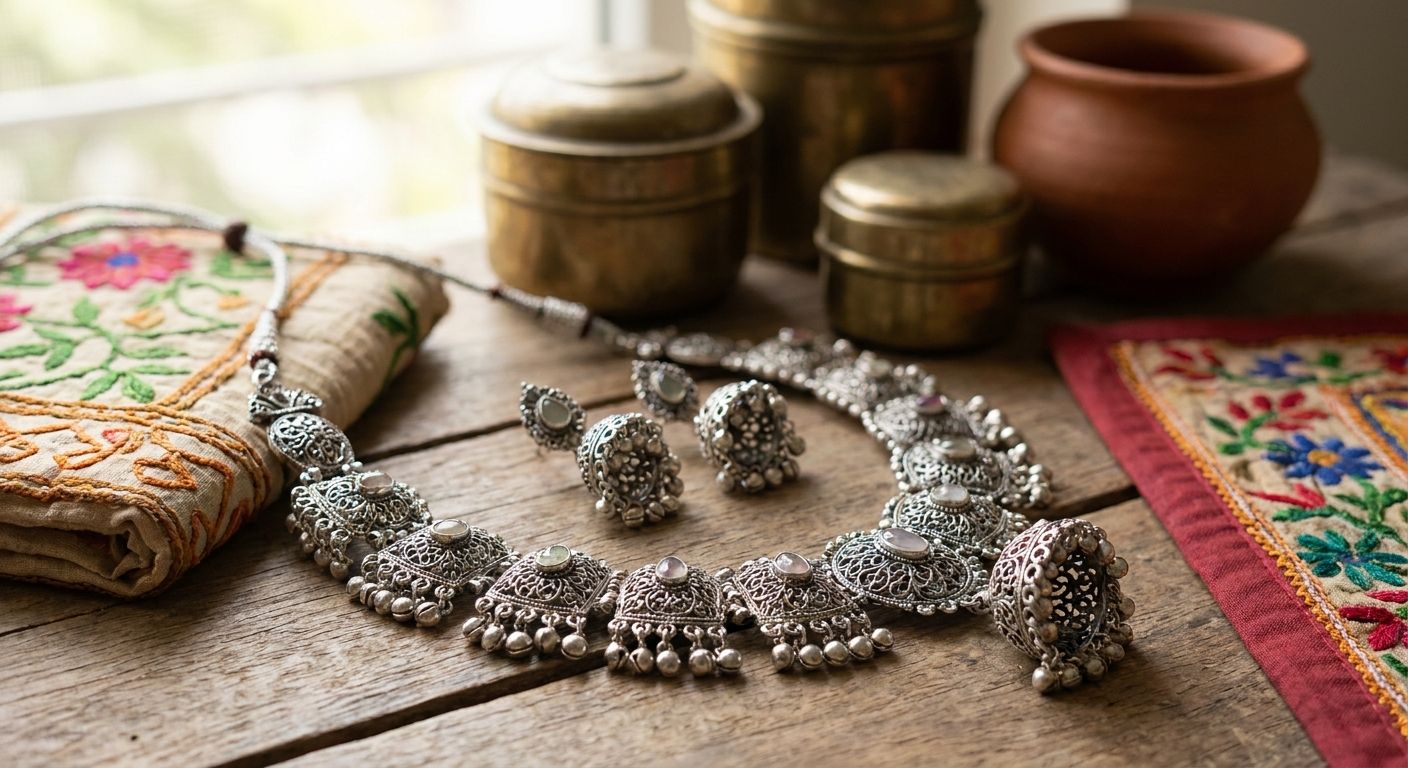
This design uses the jaali filigree technique associated with Bengal's silver workshops — fine silver wire bent and soldered into a lattice before the jhumka bells are attached. Every piece from Auram Jewellery carries the 925 hallmark, and the wirework is done entirely by hand, not cast.
Bengali filigree silver jhumka haar pros:
- Filigree lattice is hand-worked, no cast shortcuts
- Reads naturally against red-and-white bridal saree palettes
- Hallmarked 925 silver on every haar
Bengali filigree silver jhumka haar cons:
- The wire lattice needs careful storage away from other jewellery
- Too intricate for daily wear given the fine detailing
Best for: brides and families following Bengali wedding rituals in 2026. Verdict: Buy.
2. Oxidized silver jhumka haar: best for daily ethnic wear
Oxidized silver takes on a dark, antique finish through a controlled chemical process that darkens the recessed detailing of the jhumka bells while leaving the raised surfaces bright. That contrast is what makes oxidized pieces easy to wear repeatedly without looking dull.
Oxidized silver jhumka haar pros:
- Dark finish resists visible tarnish between wears
- Lightweight bell drops built for daily comfort
- Versatile with kurtas, casual sarees, and everyday festive dressing
Oxidized silver jhumka haar cons:
- Less reflective shine under bright evening or stage lighting
- The oxidized coat wears down over years of daily use and needs occasional re-darkening
Best for: everyday festive dressing and function-hopping. Verdict: Buy.
3. Kundan-work silver jhumka haar: best for sangeet and pastel lehengas
Kundan-work jhumka haar sets floral bell motifs with hand-set kundan stones, giving a richer look than plain silver without the weight of a full gold-and-kundan set. The technique traces back to Mughal-era court jewellery and remains standard for festive and sangeet wear across India in 2026.
Kundan-work silver jhumka haar pros:
- Hand-set kundan in a floral bell arrangement
- Complements ivory, pastel, and light lehenga palettes
- Lighter on the ear than gold-and-kundan equivalents
Kundan-work silver jhumka haar cons:
- Kundan settings need gentle handling to avoid stones loosening over years
- Humid outdoor functions can dull the foil backing behind the stones
Best for: sangeet, mehendi, and pastel-outfit functions. Verdict: Buy.
4. Temple-style silver jhumka haar: best for festive pujas and temple visits
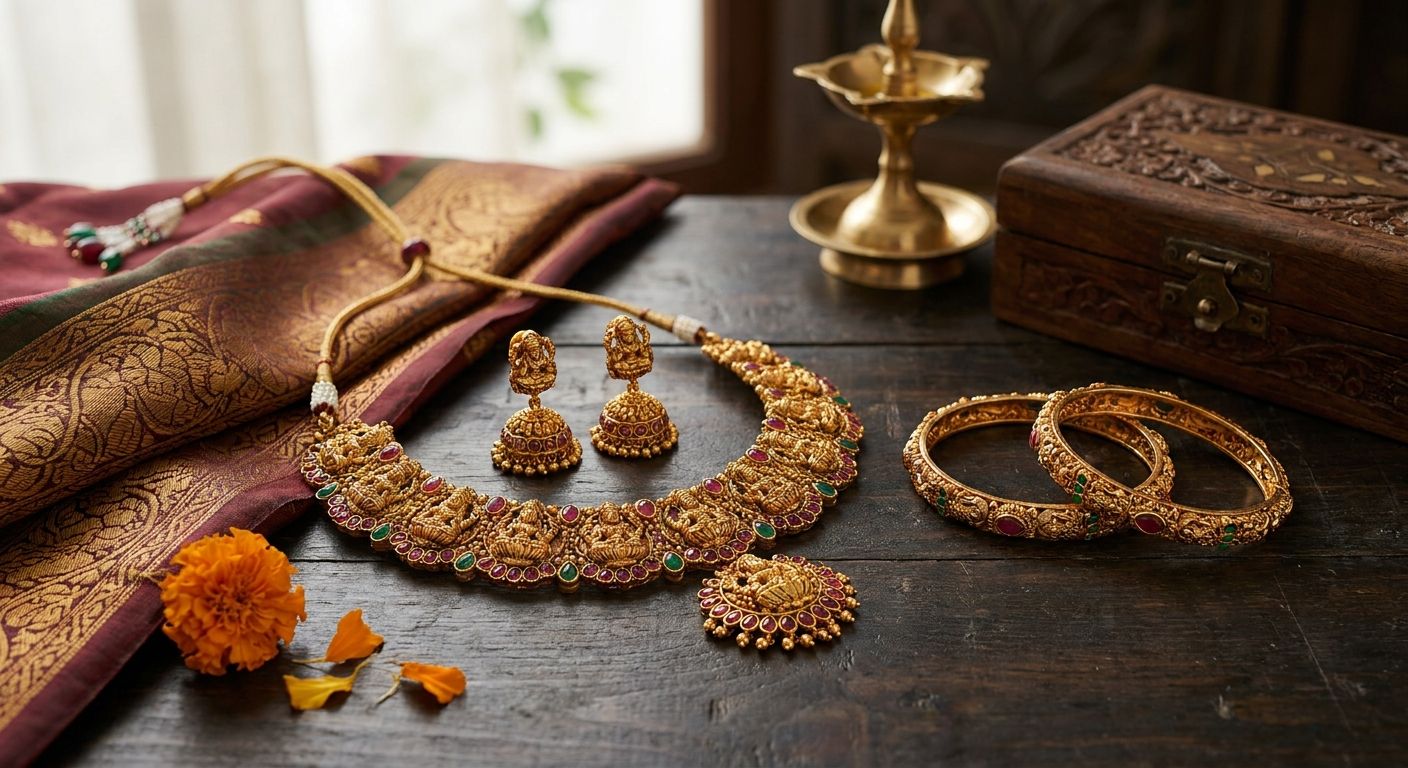
Temple-style jhumka haar carries deity, lotus, and peacock motifs cast in the raised relief associated with South Indian temple jewellery, adapted here into a silver jhumka haar format. The motif work is denser than the filigree or oxidized styles, which gives it a more devotional, festive character.
Temple-style silver jhumka haar pros:
- Deity and lotus reliefs carry traditional temple detailing
- Pairs well with silk sarees for pujas and temple functions
- Sturdy build that holds up during rituals and handling
Temple-style silver jhumka haar cons:
- Heavier than the filigree or oxidized styles
- Motif density can feel busy against heavily embroidered blouses
Best for: puja mornings, temple visits, and festive occasions with a devotional theme. Verdict: Buy.
5. Chandbali-fusion silver jhumka haar: best for sangeet and cocktail events
This design fuses the crescent chandbali arc with a classic jhumka bell drop, giving width and movement without adding much weight. It sits between traditional jhumka and modern chandbali, which makes it flexible across Indo-western and traditional outfits alike.
Chandbali-fusion silver jhumka haar pros:
- Crescent arc adds visual width without heavy weight
- Bells still carry the classic jhumka chime
- Works with both Indo-western and traditional outfits
Chandbali-fusion silver jhumka haar cons:
- The wider silhouette needs a higher-cut blouse or neckline
- Less traditional than a pure jhumka for solemn ceremonies
Best for: reception and cocktail-style functions. Verdict: Buy for the right event; skip for solemn rituals.
6. Bridal statement silver jhumka haar: best for the wedding day look
The bridal statement version stacks multiple layers of haar chain with graduated jhumka drops, using the same filigree and kundan techniques as the smaller designs but scaled up for one big occasion. It is built to be the single statement piece against a simpler blouse.
Bridal statement silver jhumka haar pros:
- Graduated multi-layer haar adds visual height for bridal photography
- Combines filigree and kundan detailing in one piece
- Works as a standalone statement against minimal blouse embroidery
Bridal statement silver jhumka haar cons:
- Heaviest of the six designs — not comfortable for standing through a long ceremony
- Needs a firm blouse hook or dupatta support to sit correctly
Best for: the bride's main wedding-day silver look, kept distinct from a family's gold bridal jewellery sets worn on other functions. Verdict: Buy for one event, not for repeat wear.
How we ranked these silver jhumka haar designs
Each design was weighed against the six criteria above — purity mark, bell craftsmanship, stone setting, drape, finish, and weight balance — against its actual use case rather than a single leaderboard. That's why the list reads as a decision tree: filigree for ceremony, oxidized for daily wear, kundan for sangeet, temple for pujas, chandbali for cocktail events, and bridal statement for the wedding day itself.
“Real Karigars, Real Craft — No factory lines, only artisans.”
Which silver jhumka haar design should you choose?
If you're buying one piece and unsure where to start, the Bengali filigree silver jhumka haar is the safest pick for bridal or ceremonial occasions in 2026 — it's the most traditional silhouette and pairs with the widest range of bridal outfits. If you want a silver jhumka haar you'll actually wear every week, the oxidized silver jhumka haar wins on comfort and low upkeep.
Buyers building a full function wardrobe often pair a gold jhumka earring design for daytime events with a heavier silver jhumka haar for the evening, keeping metals and finishes distinct across the week's functions.
Co-create your silver jhumka haar
Work directly with Auram's Kolkata karigars on a bespoke commission.
FAQ
What is a silver jhumka haar?
A silver jhumka haar is a layered silver necklace chain finished with bell-shaped jhumka drops along the bottom edge. It's worn for festive, bridal, and ceremonial occasions across India, and designs range from filigree to kundan-set to oxidized finishes.
Is silver jhumka haar better than gold jhumka haar for daily wear?
Silver jhumka haar, especially an oxidized finish, is generally lighter and easier for daily wear than a gold jhumka haar. Gold jhumka haar tends to be reserved for higher-occasion or bridal wear given the weight and value involved.
How much silver purity should a jhumka haar have?
Look for 925 sterling silver with a BIS hallmark stamp on the piece. That purity mark confirms the silver content and separates genuine jhumka haar from silver-plated alternatives.
Can silver jhumka haar be worn with bridal gold jewellery?
Silver jhumka haar is usually worn on separate functions from a bride's main gold bridal set rather than layered together on the wedding day itself. It fits better on sangeet, mehendi, or reception functions where the outfit calls for a lighter metal tone.
How do you clean an oxidized silver jhumka haar?
Wipe an oxidized silver jhumka haar with a dry, soft cloth after wear and avoid soap, perfume, or water contact, which can strip the oxidized coating faster. Store it separately in a cloth pouch away from other jewellery.
What's the difference between jhumka haar and jhumka earrings?
Jhumka haar is a necklace chain finished with bell-shaped drops, while jhumka earrings are the standalone bell-shaped earpiece worn on the ear. Many buyers pair a jhumka haar with matching or contrasting jhumka earrings for a full set.
Is kundan-work silver jhumka haar suitable for humid weather functions?
Kundan-work silver jhumka haar can be worn in humid weather, but the foil backing behind the stones is more sensitive to sweat and moisture than a plain silver or oxidized design. For long outdoor functions, an oxidized or temple-style jhumka haar holds up better.
Which silver jhumka haar design suits Bengali bridal ceremonies best?
Bengali filigree silver jhumka haar is the closest match to traditional Bengali bridal ceremony wear, using the same jaali wirework techniques seen in regional silver craft. It pairs naturally with red-and-white bridal sarees worn during Bengali wedding rituals.
One last thing
The detail buyers miss most in 2026 is finish mismatch, not design choice — a kundan jhumka haar photographed under warm indoor lighting can look completely different under a reception's cooler LED setup, so ask to see the piece under both types of light before committing to one for your main event.