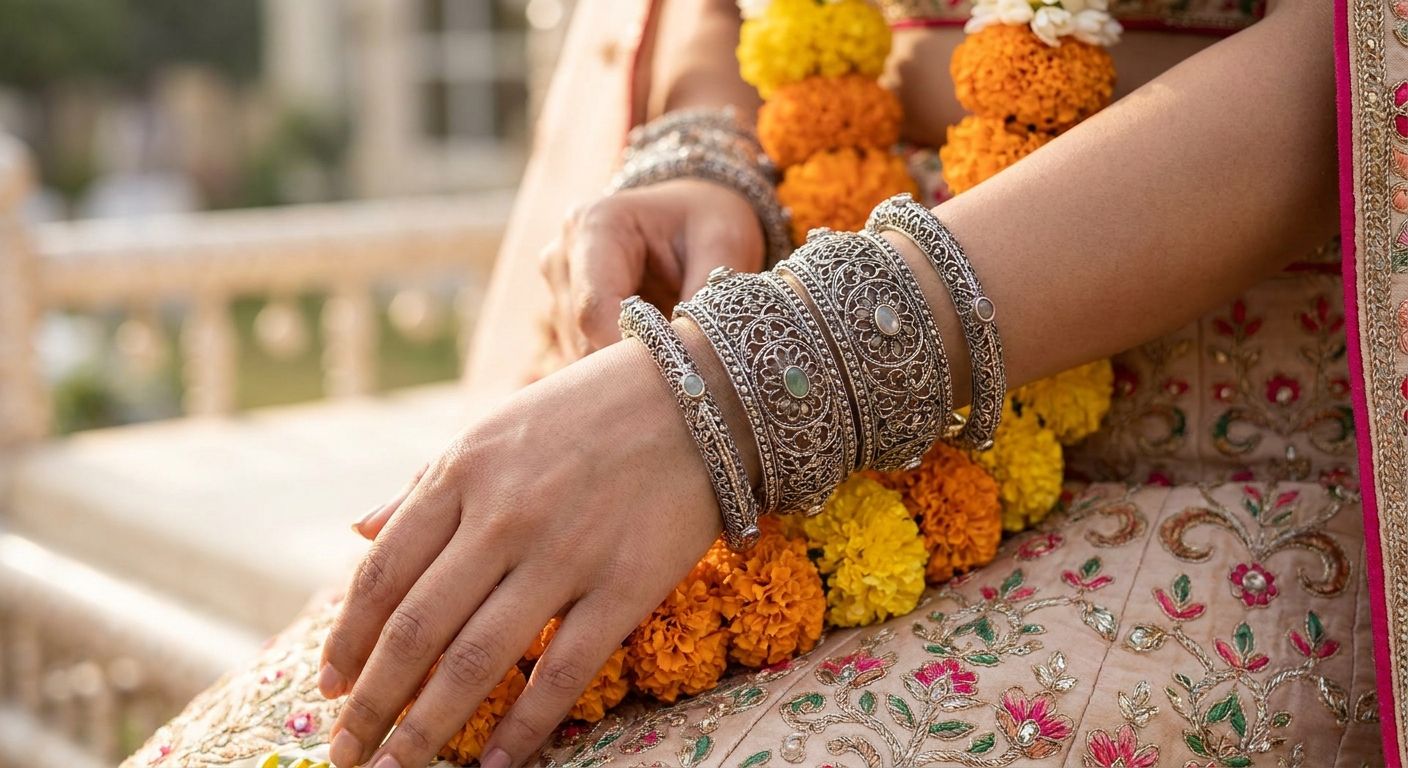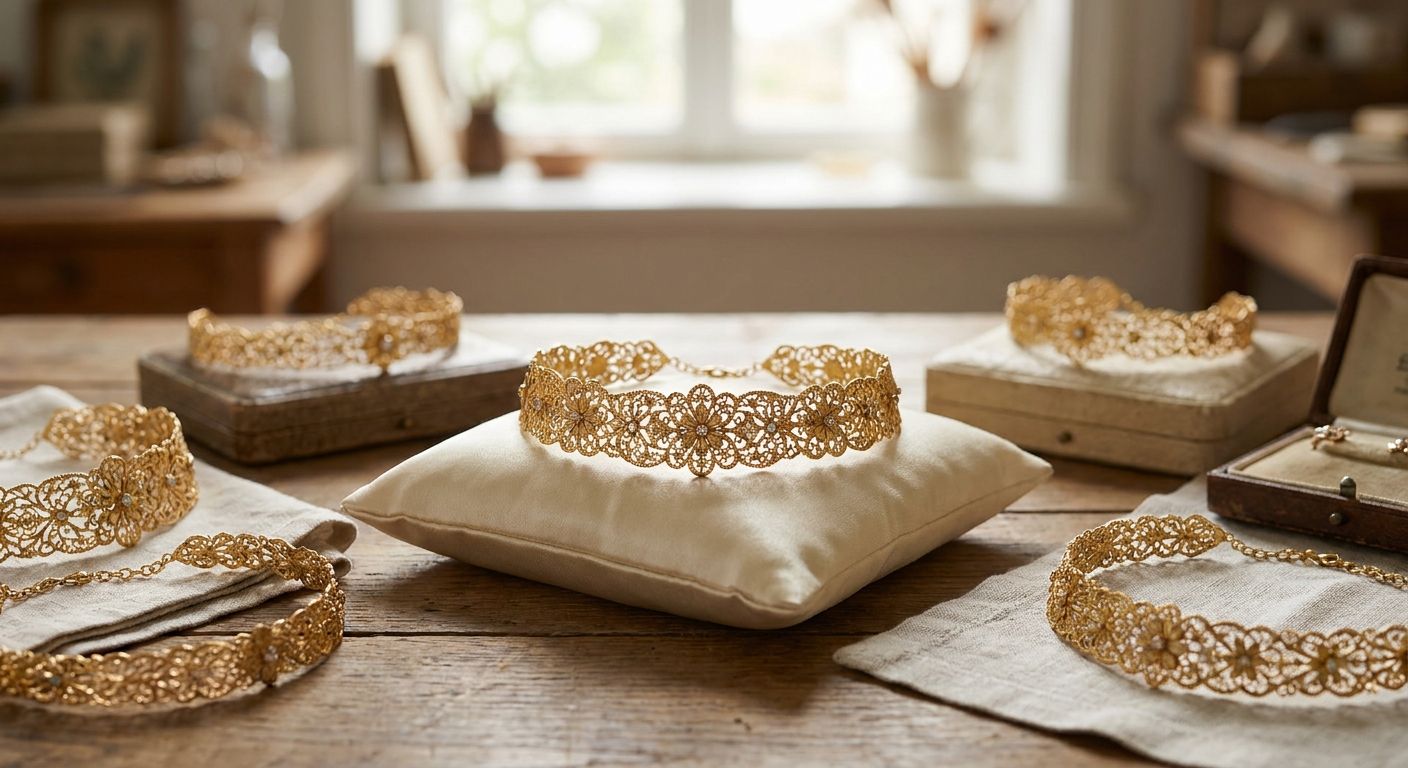
Golap bala design tops the list of Bengali gold bala designs for 2026 because it pairs the rose-carving tradition Bengali goldsmiths are known for with a wrist-fit that works for both bridal wear and heirloom gifting. Best overall: Golap Bala. Best for daily wear: Hawa Bala. Best for stacking: Taar Bala.
- Golap bala design leads for 2026 Bengali brides wanting a rose-motif gold kada with heirloom weight.
- Hawa bala suits daily wear because the hollow build cuts weight without dropping the karat.
- Taar bala stacks best when brides layer two or three kadas on one wrist.
- Every design below comes hand-fabricated in BIS hallmarked 22KT/916 gold through Auram Jewellery.
Why this matters
A bala is not a bangle you buy once and forget. It sits on the wrist through pujo mornings, wedding rituals, and decades of daily wear, so the difference between a cast piece and a hand-fabricated one shows up within a year. Bengali goldsmithing has named vocabulary for this — golap, patal, hawa, taar, kap, nakshi — and each name describes a distinct build method, not just a surface pattern. Picking the wrong one for your use case means a heavy bridal bala on your wrist at the office, or a delicate daily-wear piece that can't survive a wedding season of handling. Auram Jewellery works with third-generation karigars in Kolkata who still cut and finish these designs by hand, which is the baseline this ranking uses.
What makes the best Bengali gold bala design
- Hand fabrication over casting — carved or hammered work holds detail longer than a mould-cast piece
- BIS hallmark and stated purity — 916 (22KT) is the standard for traditional Bengali gold jewellery
- Weight distribution at the wrist — a bala should sit flush without gapping or digging in
- Motif authenticity — rose, lotus-petal, and wave patterns trace back to specific regional goldsmithing schools
- Finish durability — antique matte and high-polish finishes age differently under daily contact
- Bespoke sizing — wrist measurements vary enough that off-the-shelf sizing often needs adjustment
Bengali gold bala designs at a glance
| Design | Best for | Standout feature | Key limitation |
|---|---|---|---|
| Golap Bala | Bridal and wedding-day wear | Carved rose motif in solid gold | Heavier build, less ideal for daily office wear |
| Patal Bala | Pujo and festive occasions | Lotus-petal edge detailing | Petal edges need careful handling to avoid bending |
| Hawa Bala | Everyday wear | Hollow construction, lighter on the wrist | Thinner walls dent more easily than solid gold |
| Taar Bala | Stacking and layering | Twisted-wire finish that pairs with other kadas | Reads plain when worn alone |
| Kap Bala | Antique and heritage styling | Domed profile with an oxidised or matte finish | Matte finish shows fingerprints and needs more upkeep |
| Nakshi Bala | Gifting and anniversaries | Fine engraved surface work | Engraving depth limits resizing later |
1. Golap Bala: best Bengali gold bala design for bridal wear
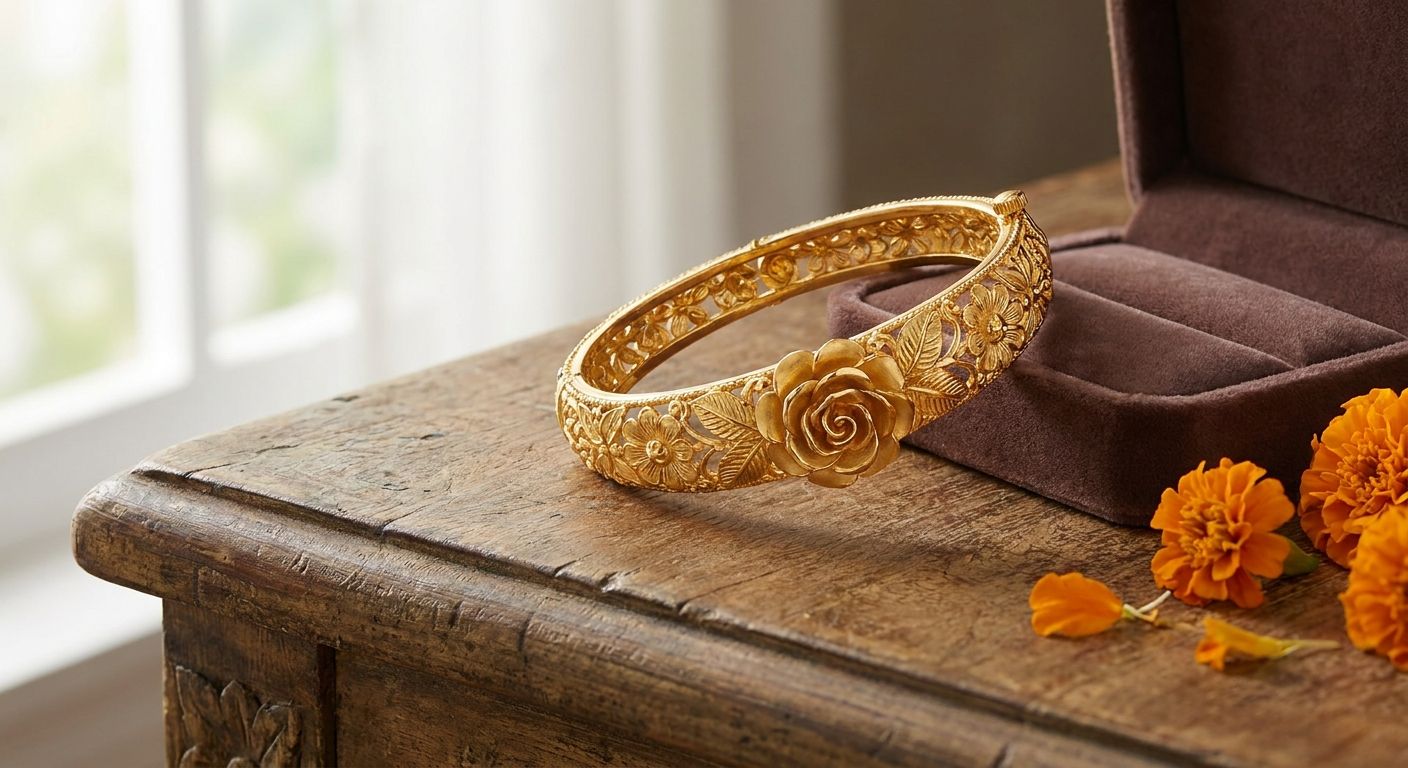
The golap bala design takes its name from golap, the Bengali word for rose, and the motif is carved directly into solid 22KT gold rather than stamped on. Karigars build the rose in raised relief around the full circumference of the kada, which is why it reads as a statement piece even under a heavy bridal sari sleeve. It is the design most searched under golap bala design because it is the one Bengali brides specifically ask for by name.
Golap bala pros:
- Carved rose motif holds detail for decades because it is worked, not moulded
- Sits well as a standalone bridal piece without needing a second kada
- Available as a bespoke commission with wrist-specific sizing
Golap bala cons:
- Heavier gold weight makes it less comfortable for daily wear
- Deep carving needs periodic cleaning to keep rose detailing crisp
- Custom orders take longer than picking a ready piece
Best for: brides who want one bala to carry the whole bridal look. Verdict: Buy.
2. Patal Bala: best for pujo and festive wear
Patal bala uses a lotus-petal border worked around the edge of the kada instead of a full-surface motif. It is a lighter visual statement than golap bala, which is why Bengali households favour it for pujo mornings and festive gatherings rather than the wedding day itself. The petal edges are cut individually and soldered along the rim, a step that takes real hand control.
Patal bala pros:
- Lighter visual weight than golap bala while still reading as traditional
- Petal border pairs well with other festive gold pieces
- Comfortable for extended wear through a full day of rituals
Patal bala cons:
- Raised petal edges can catch on fabric if not finished smoothly
- Less suited to daily wear than hawa bala
Best for: festive and pujo occasions rather than everyday rotation. Verdict: Buy.
3. Hawa Bala: best for everyday wear
Hawa means air in Bengali, and hawa bala is built hollow to keep the gold weight down without dropping the 22KT purity. This is the design category Bengali families reach for when a bala needs to survive daily contact with keyboards, kitchen work, and constant handling rather than sitting in a locker between occasions.
Hawa bala pros:
- Noticeably lighter on the wrist than solid golap or patal bala
- Comfortable for daily wear over months without wrist fatigue
- Costs less gold weight for the same visual size
Hawa bala cons:
- Thinner hollow walls dent more easily under hard knocks
- Less suited to intricate carved motifs than solid designs
- Resizing a hollow piece is harder than resizing solid gold
Best for: buyers who want a bala they can wear every day, not just for occasions. Verdict: Buy.
4. Taar Bala: best for stacking and layering
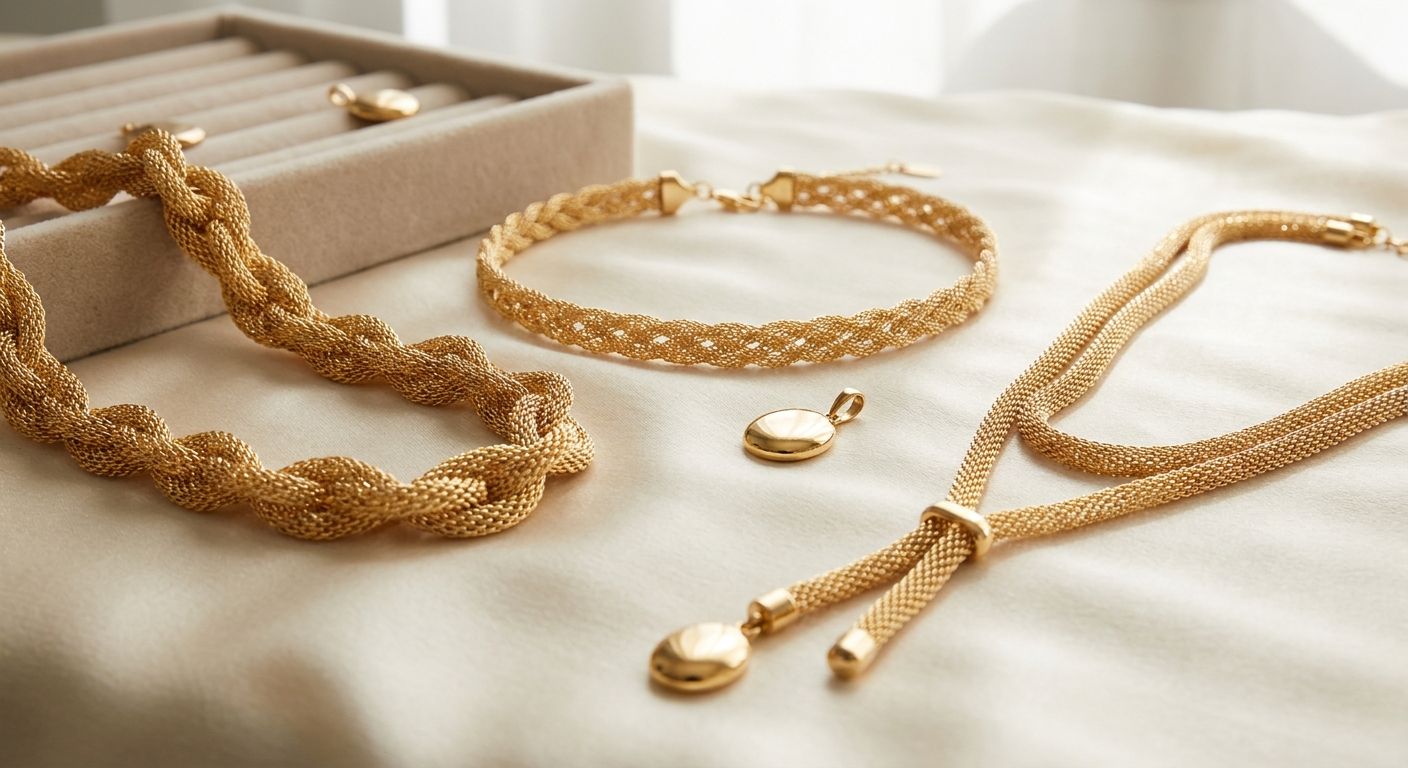
Taar bala is built from twisted gold wire rather than a solid or hollow band, and it is the design Bengali women reach for when they want to wear two or three kadas together on one wrist. The twisted texture gives visual interest without competing with a carved centrepiece bala worn alongside it, which is exactly why it works in a stack and less well solo.
Taar bala pros:
- Pairs naturally with golap or patal bala in a stacked look
- Twisted texture hides minor surface scratches better than a polished band
- Generally lighter than a solid carved bala
Taar bala cons:
- Reads plain and understated when worn as a single piece
- Twisted wire construction limits how deep any engraving can go
Best for: buyers building a layered wrist look rather than a single statement piece. Verdict: Buy for stacking, skip if you want one standalone kada.
5. Kap Bala: best for antique heritage styling
Kap bala has a domed cross-section rather than the flat or rounded profile of the other designs, and it is almost always finished in an oxidised or matte tone rather than mirror polish. Families that want a bala matching older heirloom pieces or an antique-jewellery aesthetic for 2026 weddings tend to commission this shape specifically.
Kap bala pros:
- Domed profile gives it a distinct silhouette from flatter bala designs
- Matte or oxidised finish suits antique and heritage jewellery sets
- Pairs well with temple-style or nakshi jewellery
Kap bala cons:
- Matte finish shows fingerprints and oil more than a polished band
- Fewer buyers recognise the shape by name, which limits resale familiarity
Best for: buyers matching an antique or heritage jewellery set. Verdict: Hold unless you already own matching heritage pieces.
6. Nakshi Bala: best for gifting and anniversaries
Nakshi refers to fine engraved patternwork, and a nakshi bala carries that engraving across the full band rather than a raised motif like golap bala. Because the engraving can be customised — initials, a date, a specific pattern — it is the design most often chosen as a gift for anniversaries rather than a bridal purchase.
Nakshi bala pros:
- Engraving can be personalised for a specific gifting occasion
- Detailed surface work suits a considered, one-off gift
- Works well as a smaller, lighter bala than a full bridal piece
Nakshi bala cons:
- Fine engraving depth limits how much the piece can be resized later
- Less substantial as a standalone bridal statement than golap bala
Best for: anniversary or milestone gifting rather than bridal wear. Verdict: Buy for gifting.
“If a bala gaps at the wrist or digs in when you close your fist, the sizing is wrong regardless of how good the carving looks.”
How this ranking was built
Each design above is ranked against the six criteria set out earlier: hand fabrication, hallmark purity, wrist fit, motif authenticity, finish durability, and bespoke sizing availability. Golap bala design ranks first because it satisfies all six for a bridal use case specifically, not because it beats every other design on every dimension — hawa bala genuinely wins on daily-wear comfort, and taar bala genuinely wins on stackability. No single Bengali gold bala design is best for every wrist and every occasion in 2026, which is why this list sorts by use case rather than a single leaderboard.
Commission your bala design
Work with Auram Jewellery's karigars on a bespoke golap, hawa, or nakshi bala.
Which Bengali gold bala design should you choose?
For a 2026 bridal purchase, golap bala design is the default pick — it is the one most Bengali brides search for by name, and it holds up as a standalone piece under bridal wear. If daily wear matters more than a single occasion, move to hawa bala for the lighter build. If you already wear one bala and want to add to it, taar bala is the stacking option. Buyers matching an heirloom set should look at kap bala, and anyone buying a gift rather than a bridal piece should default to nakshi bala. Auram Jewellery builds all six as bespoke commissions in BIS hallmarked 22KT gold, so the design decision matters more than which jeweller can technically produce it.
Bengali bridal buyers researching a golap bala design alongside a full look can also compare full bridal gold jewellery sets or look at gold noa bangle designs as a lighter alternative to a solid bala.
FAQ
What is a golap bala design?
A golap bala design is a Bengali gold kada carved with a raised rose motif around its full circumference. It is the traditional bridal bala pattern most associated with Bengali gold jewellery.
Is golap bala better than a plain gold bala for daily wear?
No. Golap bala is heavier and carved for bridal or occasion wear, while a hawa bala's hollow build makes it lighter and better suited to daily use.
What gold purity is used for Bengali bala designs?
Traditional Bengali bala designs are made in 22KT (916) gold with BIS hallmarking, which is the standard purity for this category of jewellery in 2026.
Can a bala be stacked with other bangles?
Yes, taar bala is specifically built for stacking because its twisted-wire texture pairs with a carved centrepiece bala without visually competing with it.
What is the difference between patal bala and golap bala?
Patal bala has a lotus-petal border worked around the rim, while golap bala carries a full carved rose motif across the band. Patal bala is lighter and suits festive wear over bridal wear.
Is a hollow bala weaker than a solid gold bala?
A hollow hawa bala dents more easily under hard impact than a solid golap or patal bala, but it is significantly lighter for the same visual size.
Can Bengali bala designs be customised?
Yes, designs like nakshi bala are commonly personalised with engraving, and Auram Jewellery builds all six designs as bespoke commissions with wrist-specific sizing.
Which bala design suits a gift for an anniversary?
Nakshi bala is the design most often chosen for anniversary or milestone gifting because its engraved surface can be personalised for the occasion.
One last thing
The carving depth on a golap bala design is what separates a hand-fabricated piece from a cast one — run a finger across the rose petals, and a hand-carved bala has uneven, slightly irregular relief where a cast piece feels uniform and shallow. That irregularity is the actual mark of karigar work, not a flaw to avoid.